- 1
Arrive before showtime: the front desk can refuse late entry, with no refund.
- 2
The ring challenge is capped at six guests per show, drawn by lottery.
- 3
The venue is cashless, so bring a Visa, Mastercard, Amex, JCB, Diners or Discover card.
What travelers loved about the Shinjuku sumo show
Most reviewers call the show fun and informative, praising hosts like Shane, John, and Dai for mixing comedy with sumo history.
Many travelers did not expect to laugh so much, and solo guests loved being picked from the crowd to wrestle a wrestler.
Several families wished every guest had a guaranteed chance to step into the ring, since the lottery leaves some out.
 ★★★★★
The show was amazing, so much fun!
Sofia · Luxembourg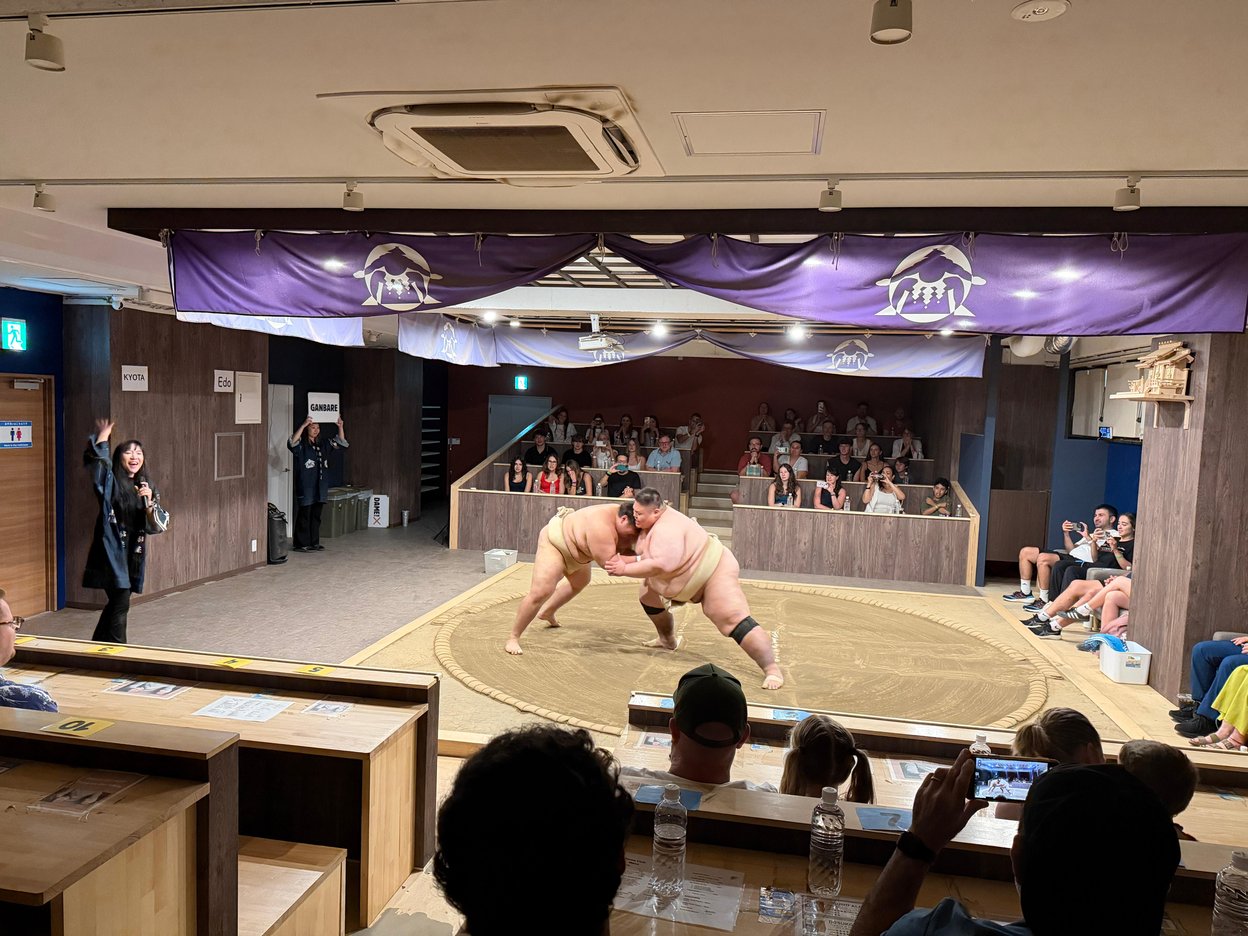 ★★★★★
Really had a blast. Such an engaging, interactive way to learn about sumo training, and very family friendly. Great time with my friends!
Valerie · Singapore ★★★★★
Loved being so close to the sumo wrestlers. Good entertainment, and the wrestlers and crew interacted with us a lot.
Line · Denmark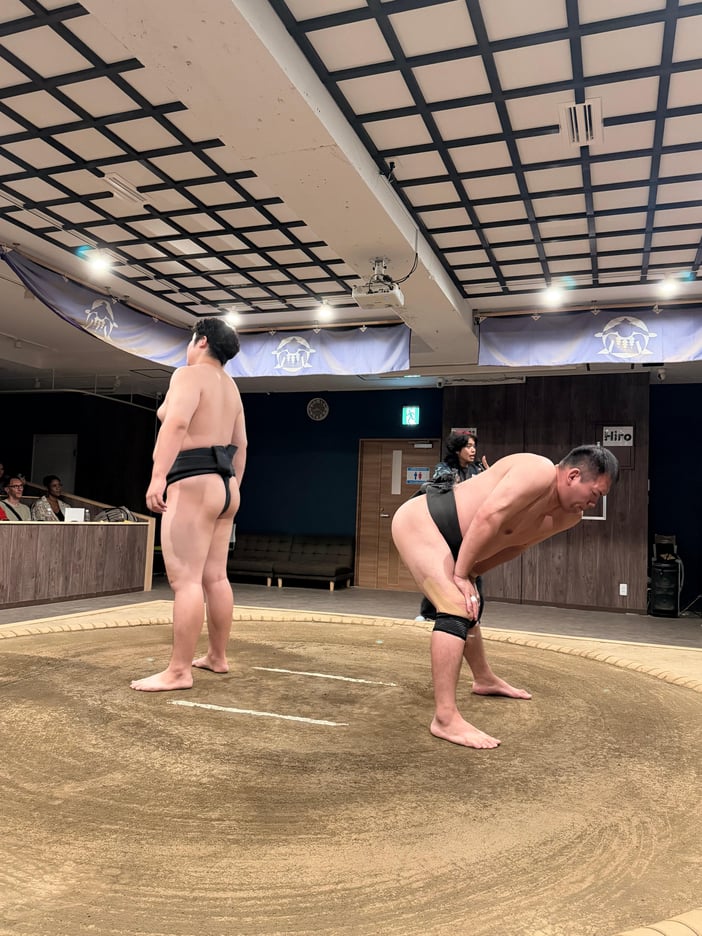 ★★★★★
Really fun and informative show, with terrific staff and very entertaining wrestlers. I'd recommend learning about sumo here.
A traveler · United States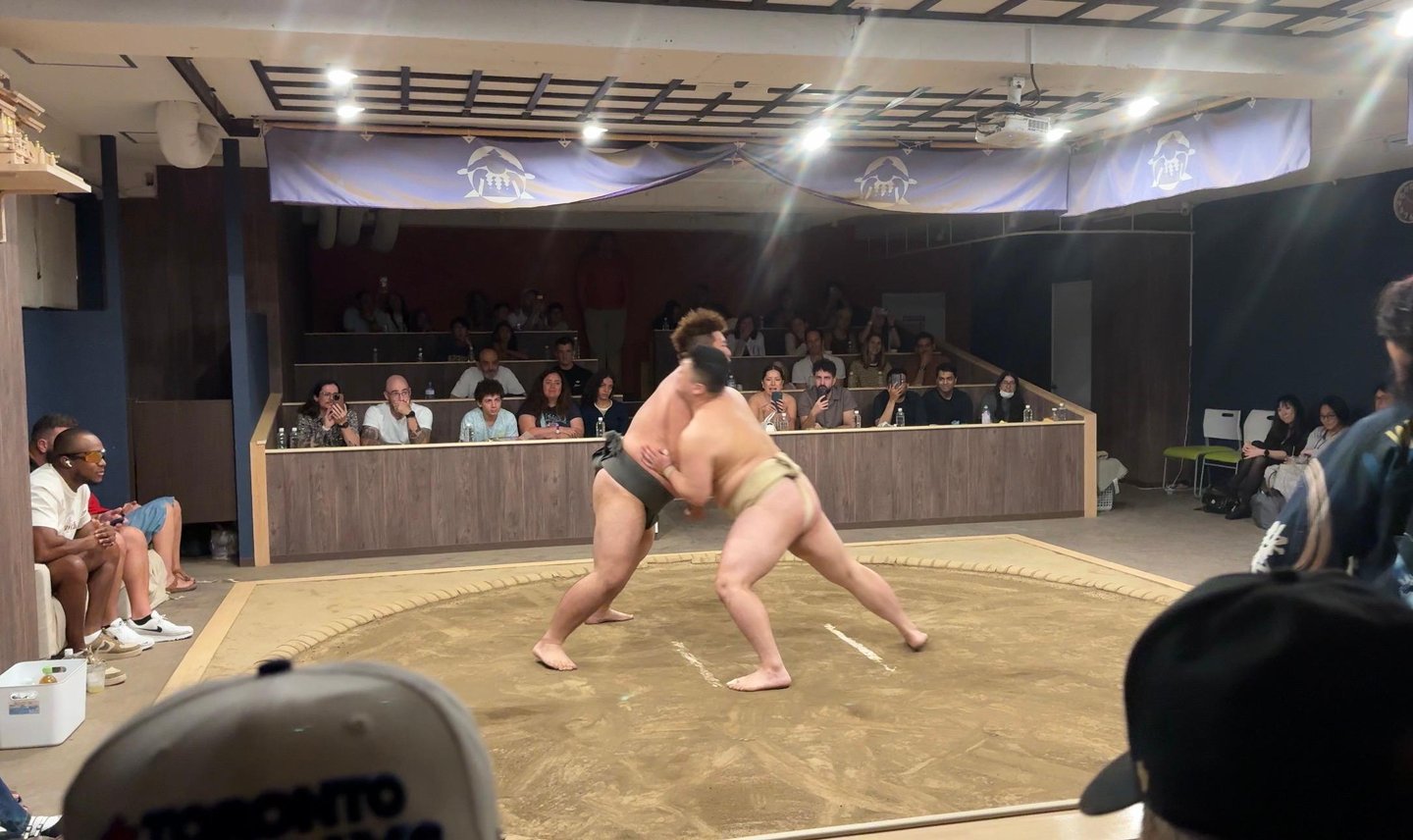 ★★★★★
Really fun and informative. Staff were terrific, wrestlers very entertaining. Highly recommend this sumo experience.
A traveler · United States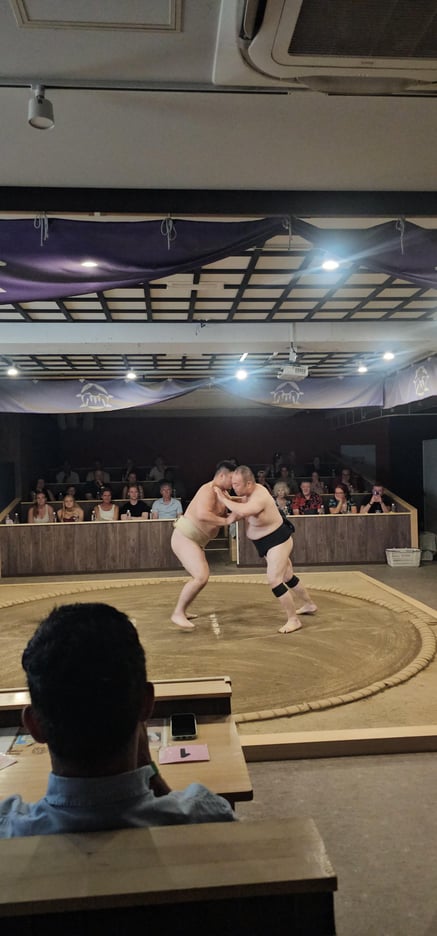 ★★★★★
We learned so much about sumo. The wrestlers were fun, the audience loved their antics, and everyone who wanted to join in could participate.
Gayle · United States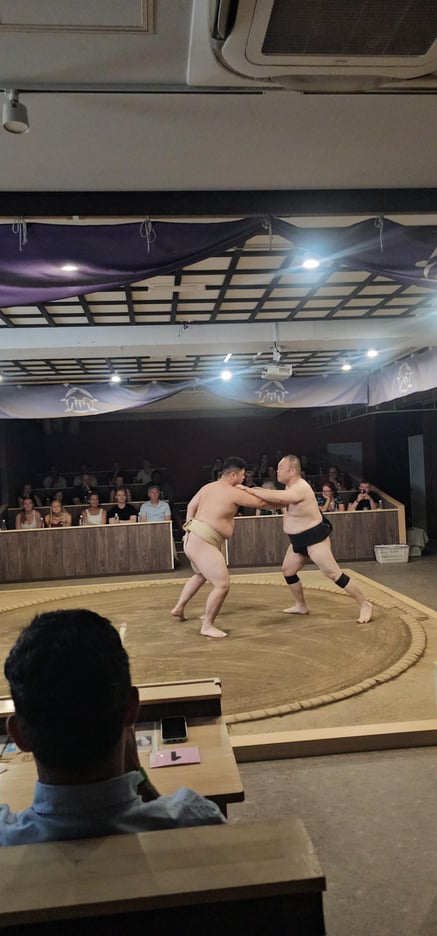 ★★★★★
Really enjoyed the Shinjuku sumo show. Guide Shane was very knowledgeable and made it well worth it. Ryu and Miro were awesome to watch and great with the crowd.
Shaedyn · Australia
Why the Shinjuku sumo show is worth your evening
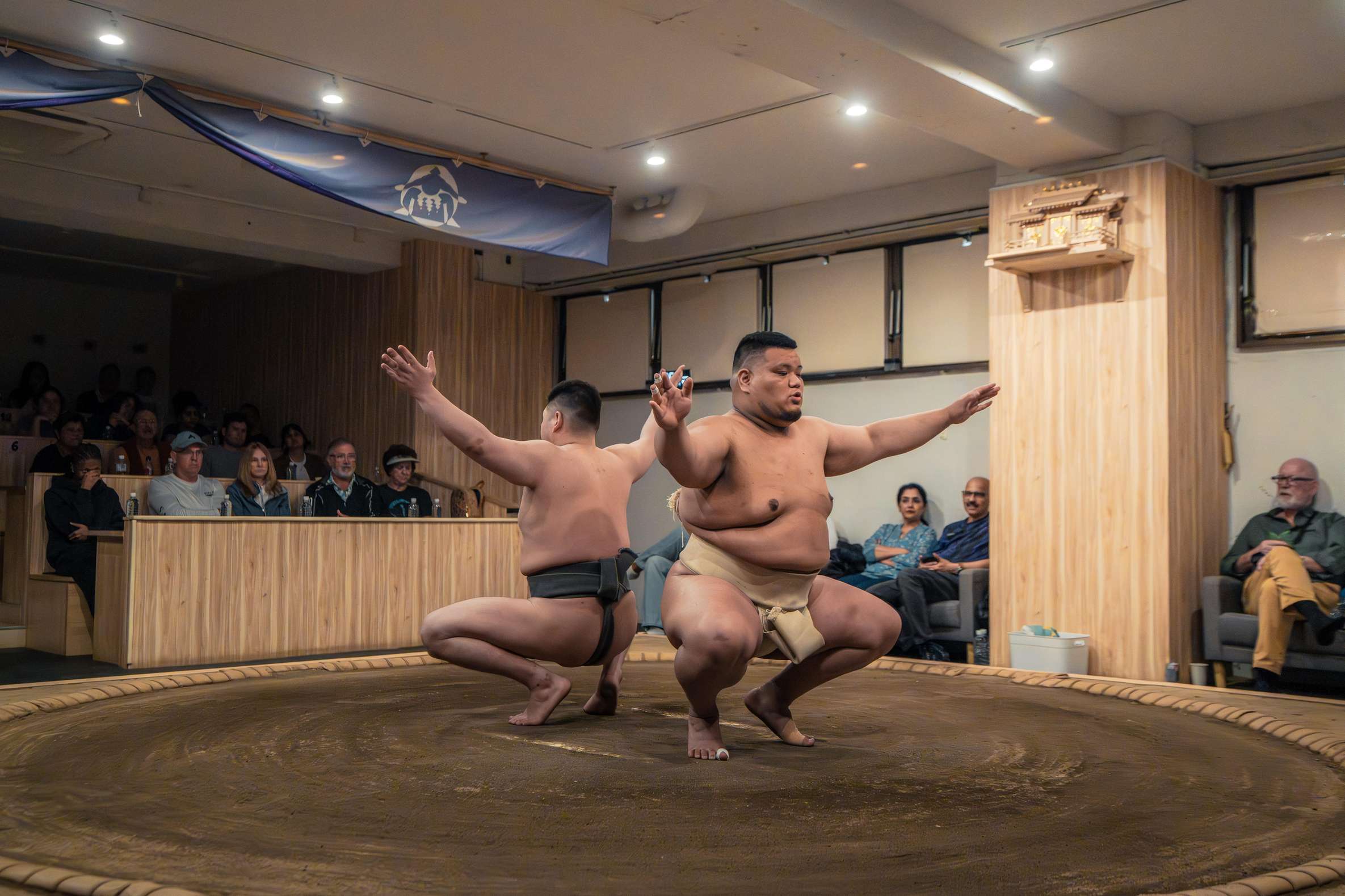
Salt hits the clay, a wrestler stamps his foot, and the room laughs a second later at the MC's translation. That mix is the point.
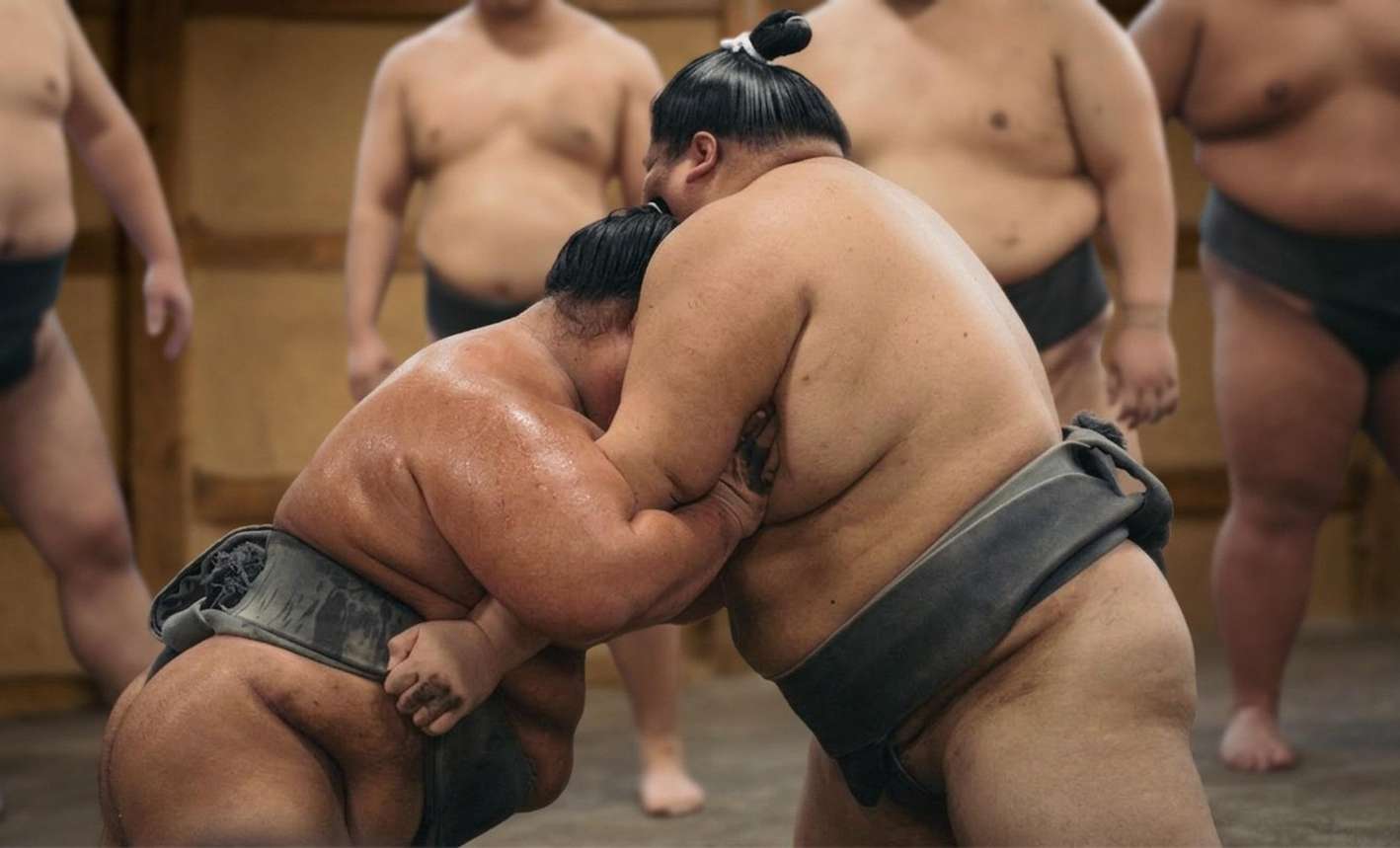
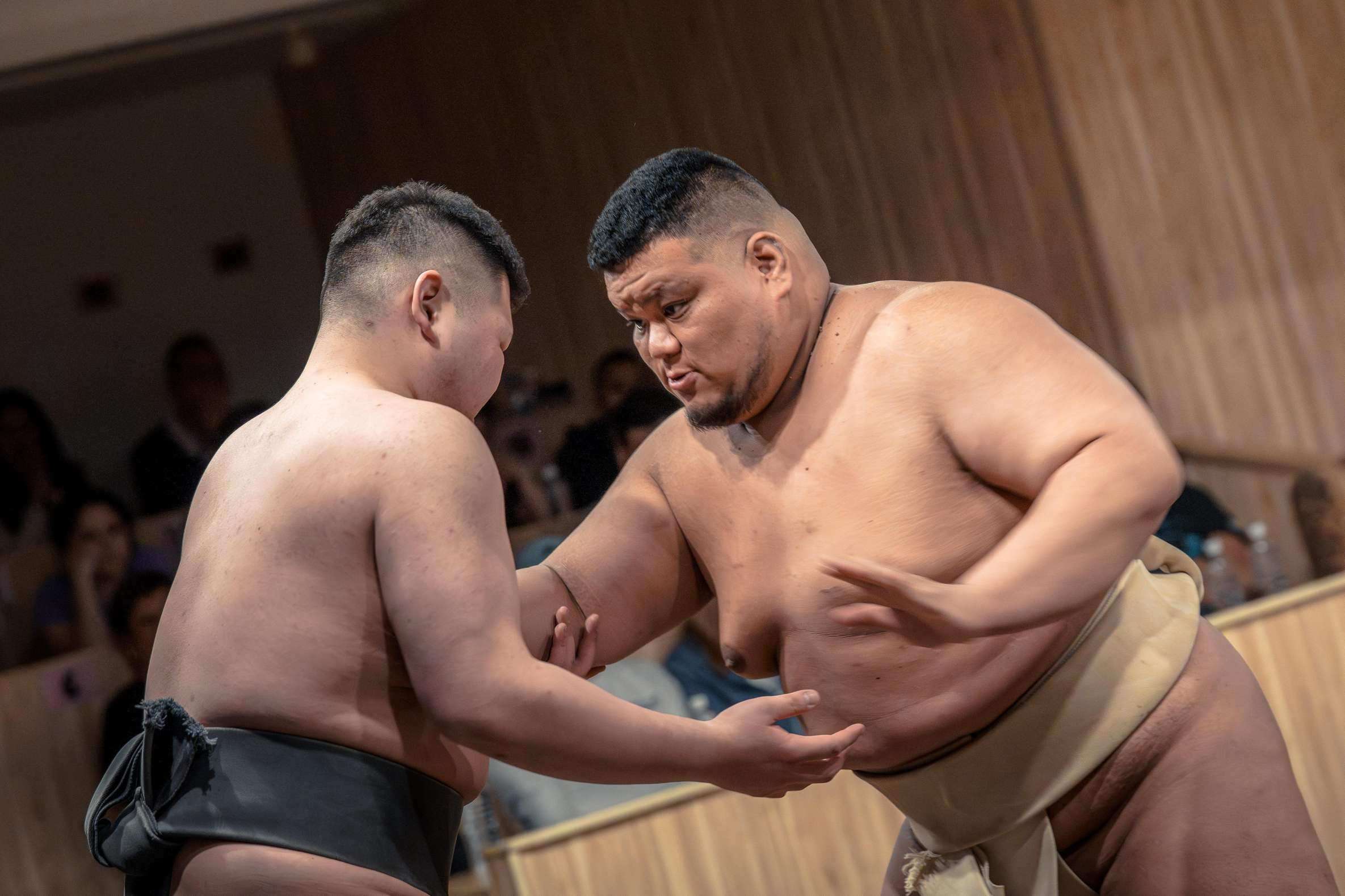
The bouts here are played for entertainment, the venue is small enough that every seat is close, and the performers are genuine retired professionals who spent years in the real sport before anyone handed them a script.
Compare that with the alternatives on the same trip. A stable practice means an early start, a silent hour on the floor and a ban on talking, eating or even flash photography.
A Grand Sumo tournament puts thousands of spectators between you and the ring, sells out in minutes, and only happens in Tokyo in January, May and September. The Shinjuku show runs all year, asks nothing of you but that you sit and cheer, and explains every rule and ritual in English as it goes.
What it is not is a substitute for the real thing. If your dates land on a tournament fortnight and you love the sport, buy tournament tickets instead. For everyone else, a comedy-driven 90 minutes with a chance to step onto the clay is the friendliest first taste of sumo there is.
The demonstrations are performed by genuine retired professional sumo wrestlers, men who competed for a living.
Show bouts are non-competitive demonstrations with no ranked outcome; a tournament decides careers and titles.
The Shinjuku show runs about 90 minutes with no meal attached, so you eat wherever you like afterward.
With those three sorted, the evening argues for itself: retired professionals at close range, an MC who translates each ritual as it happens, and a ring challenge open to the whole room. Book it as a lively night out and it delivers exactly that.

When to see sumo in Tokyo - tournament dates vs year-round shows
Sumo in Tokyo follows two calendars. The official one is short: the Kokugikan hosts tournaments in January, May and September only, each running fifteen days from a Sunday to a Sunday.
The published schedule lists dates up to two years ahead, so it is easy to check your trip before you book anything. Getting a ticket is the hard part, because whole tournaments sell out online within minutes of sales opening.
The other calendar is the one this show belongs to. Entertainment shows run in Shinjuku every month of the year, on fixed schedules, with no lottery against you except for the six ring-challenge spots.
If your dates overlap a tournament and you secured tickets, go and watch the real sport. If they do not, or the tickets vanished before you could click, the show fills the gap honestly: same wrestlers' craft, same rituals, same English explanations, just without a ranking at stake.
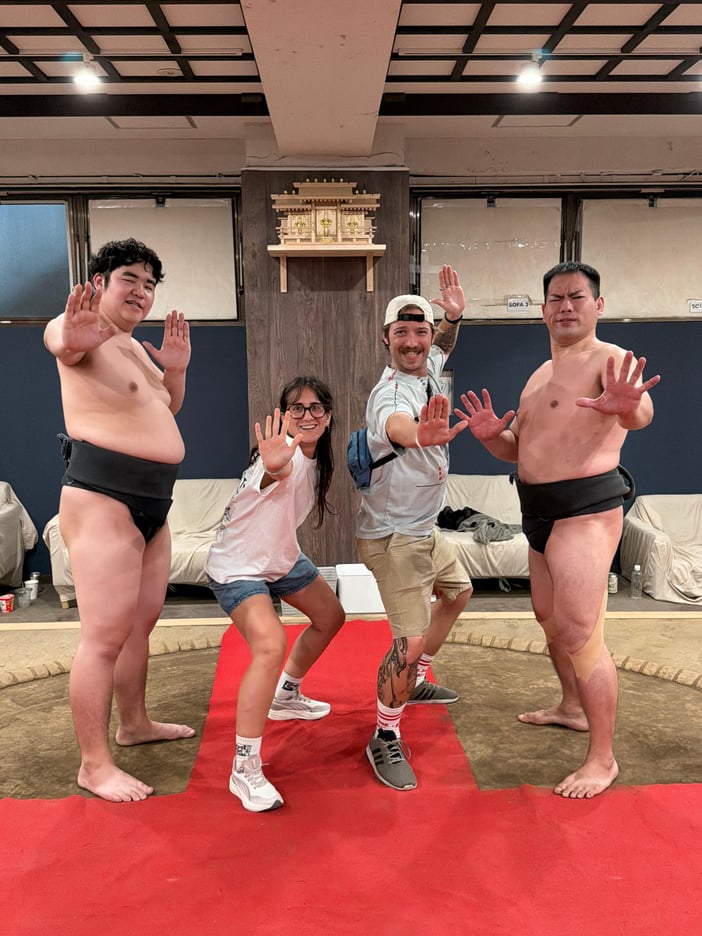
Travelers who time the tournament right often still add a show, because the show is the version where you ask questions, drink a beer and get photographed with the wrestlers afterward.
Where the Shinjuku sumo show is and how to get there
The venue sits on the second floor of the Sekisaku Building in Shinjuku, a multi-floor commercial building of the kind that makes first-timers lose faith at the elevator. The trick is to stay above ground.
Take the East Exit or Central East Exit of Shinjuku Station, which opens straight toward the dining and nightlife blocks around Kabukicho and Golden Gai, and find your way from street level; the underground passages that branch toward the platforms only add confusion.
Once you surface, the addresses resolve quickly: direct paths from the east side run past the big entertainment complexes such as Tokyu Kabukicho Tower and the Shinjuku Toho Building, and the show's building sits among them.
Give yourself a few extra minutes the first time, because a wrong floor in a ten-storey building costs more time than a wrong street.
One detail worth knowing before you set out: entry is only permitted through the front of the building, the door facing the main entrance next to Daiso. Arrive there, not at a side entrance, and check in with time to spare.
What happens at the show - the running order from check-in to photo call
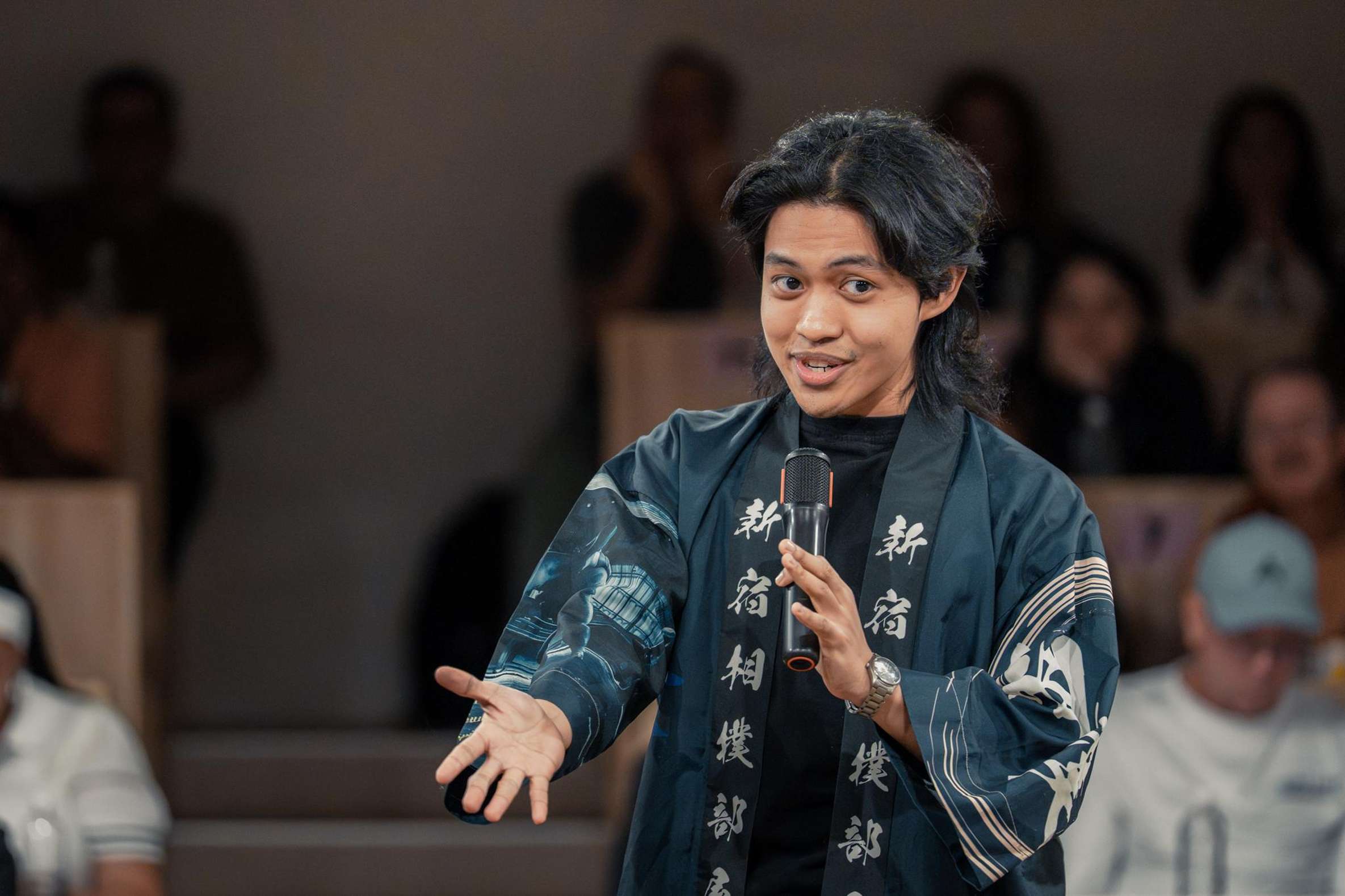
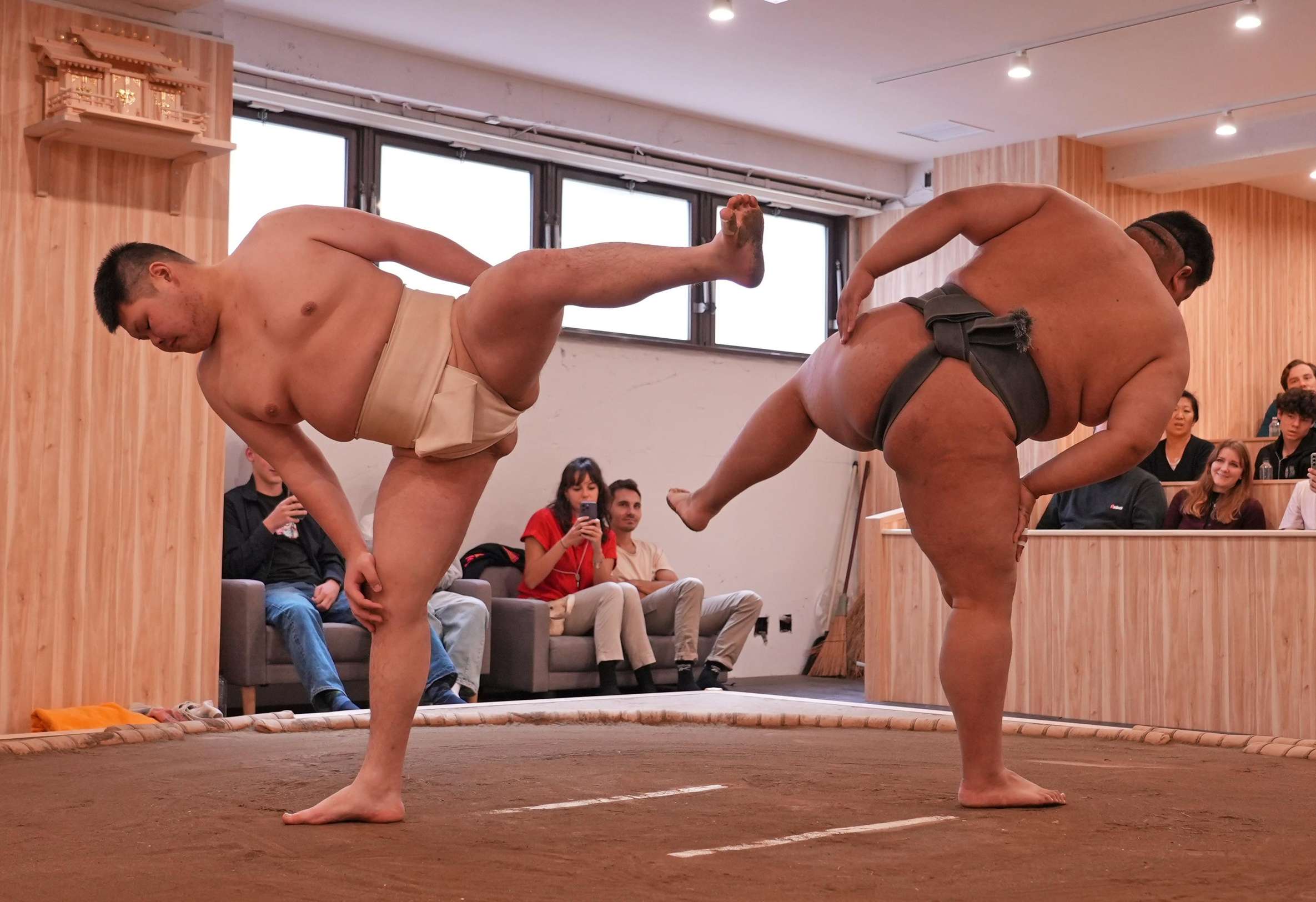
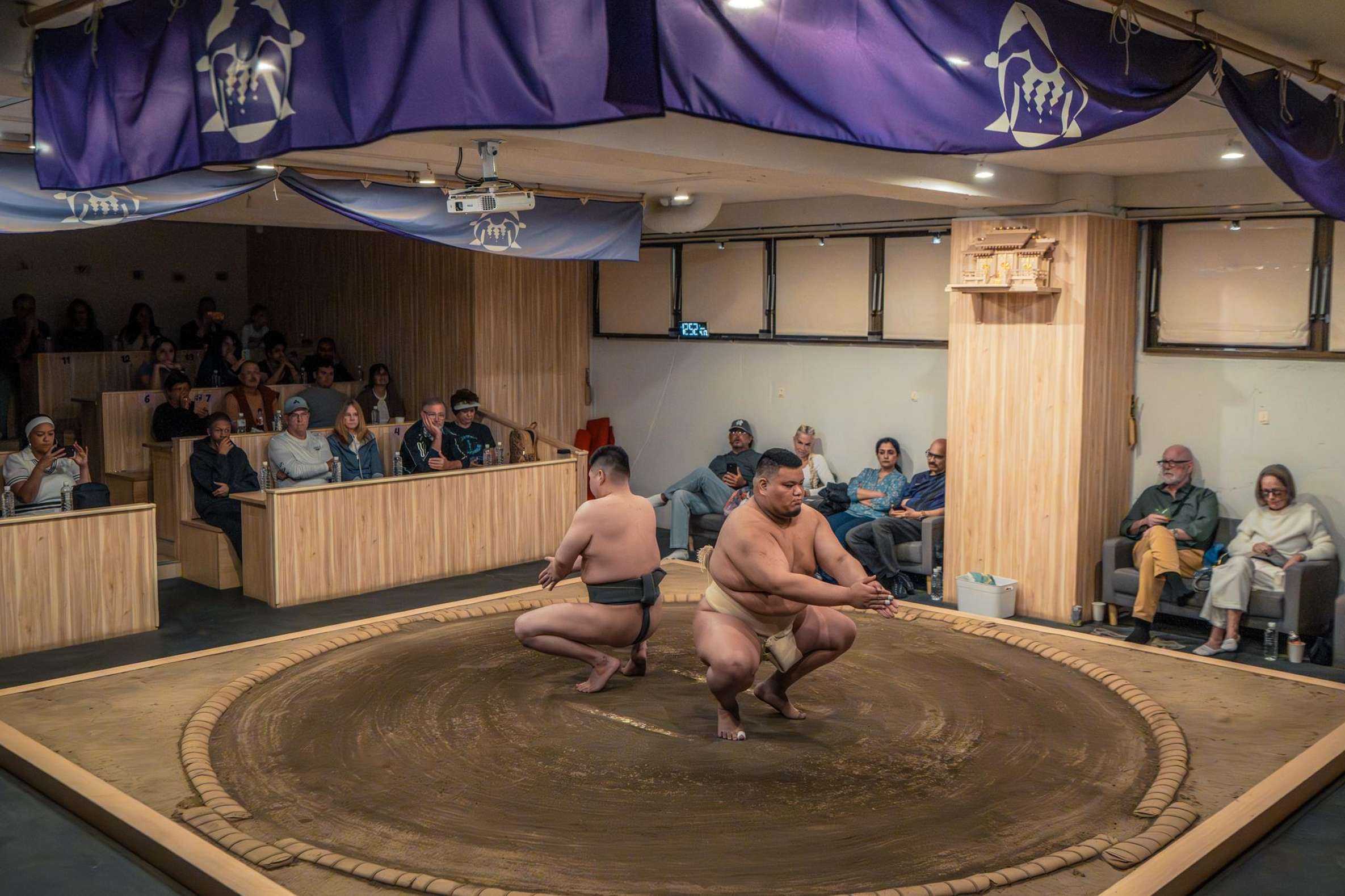
The evening follows a fixed program, and knowing its shape makes it easier to enjoy. Check-in and seating come first, then an English-speaking MC walks the room through sumo's history, rules and rituals before anyone wrestles.
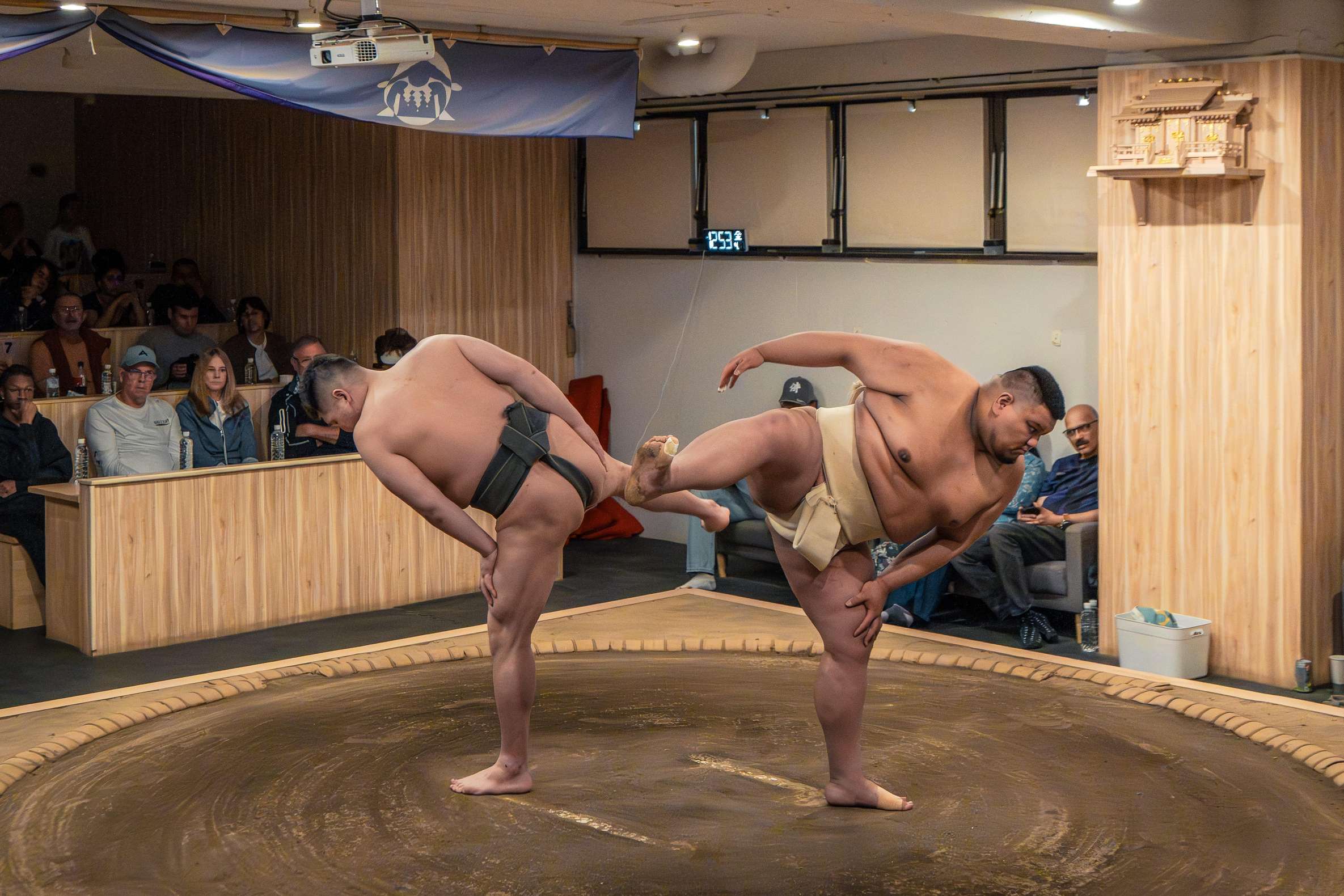
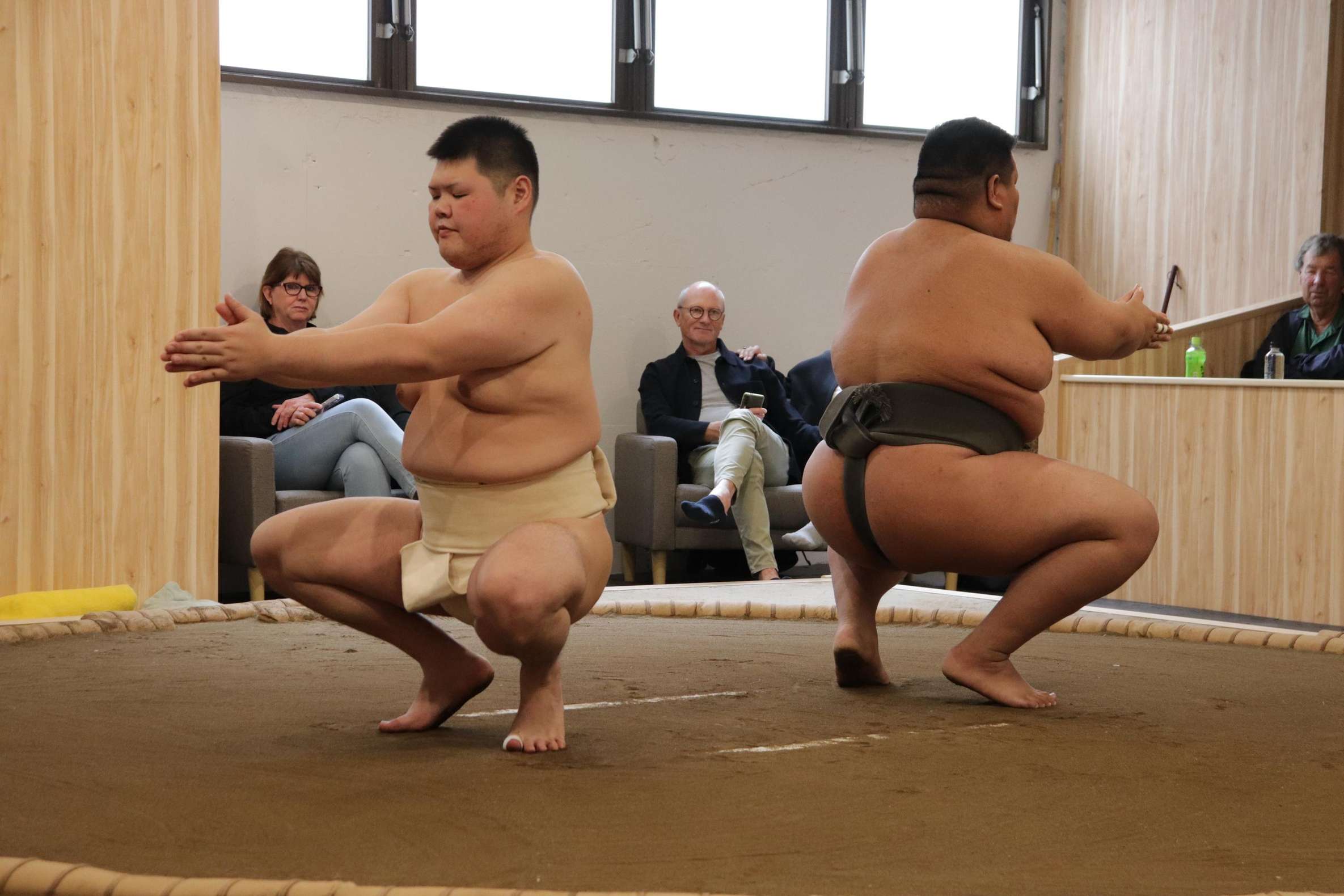
The demonstrations and exhibition bouts follow, played with real skill and real humor, and you can film the whole thing from your seat.
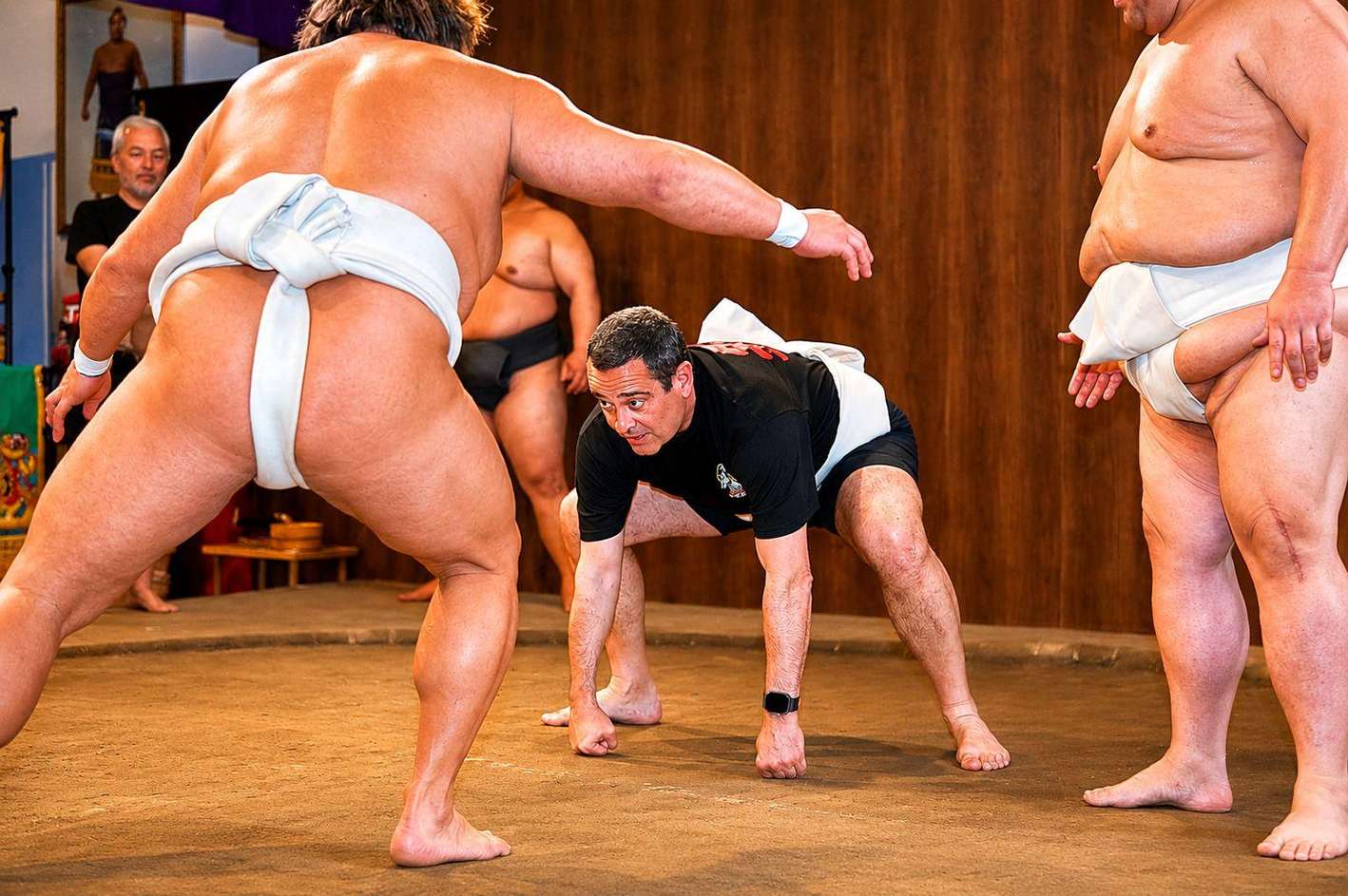
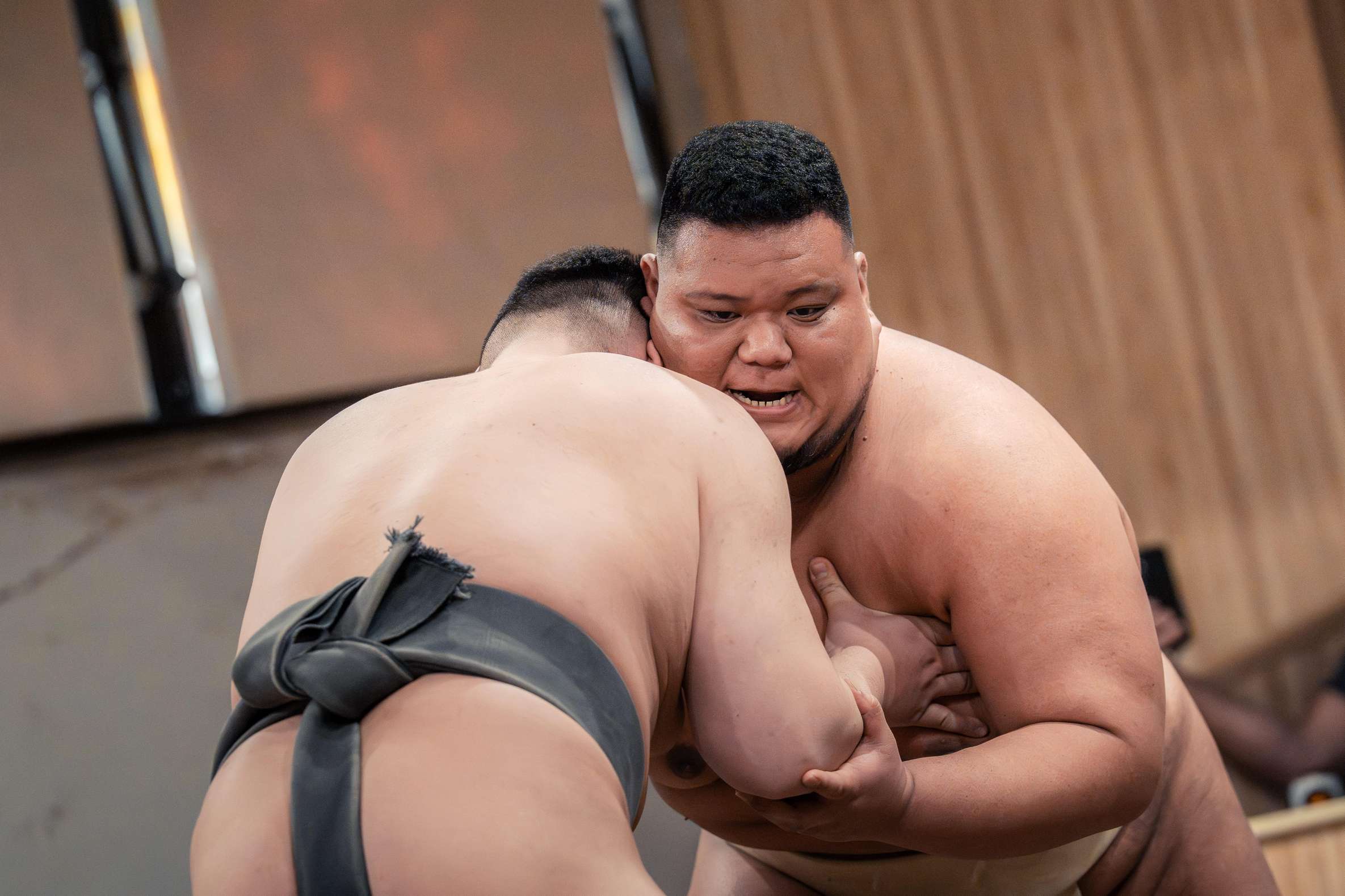
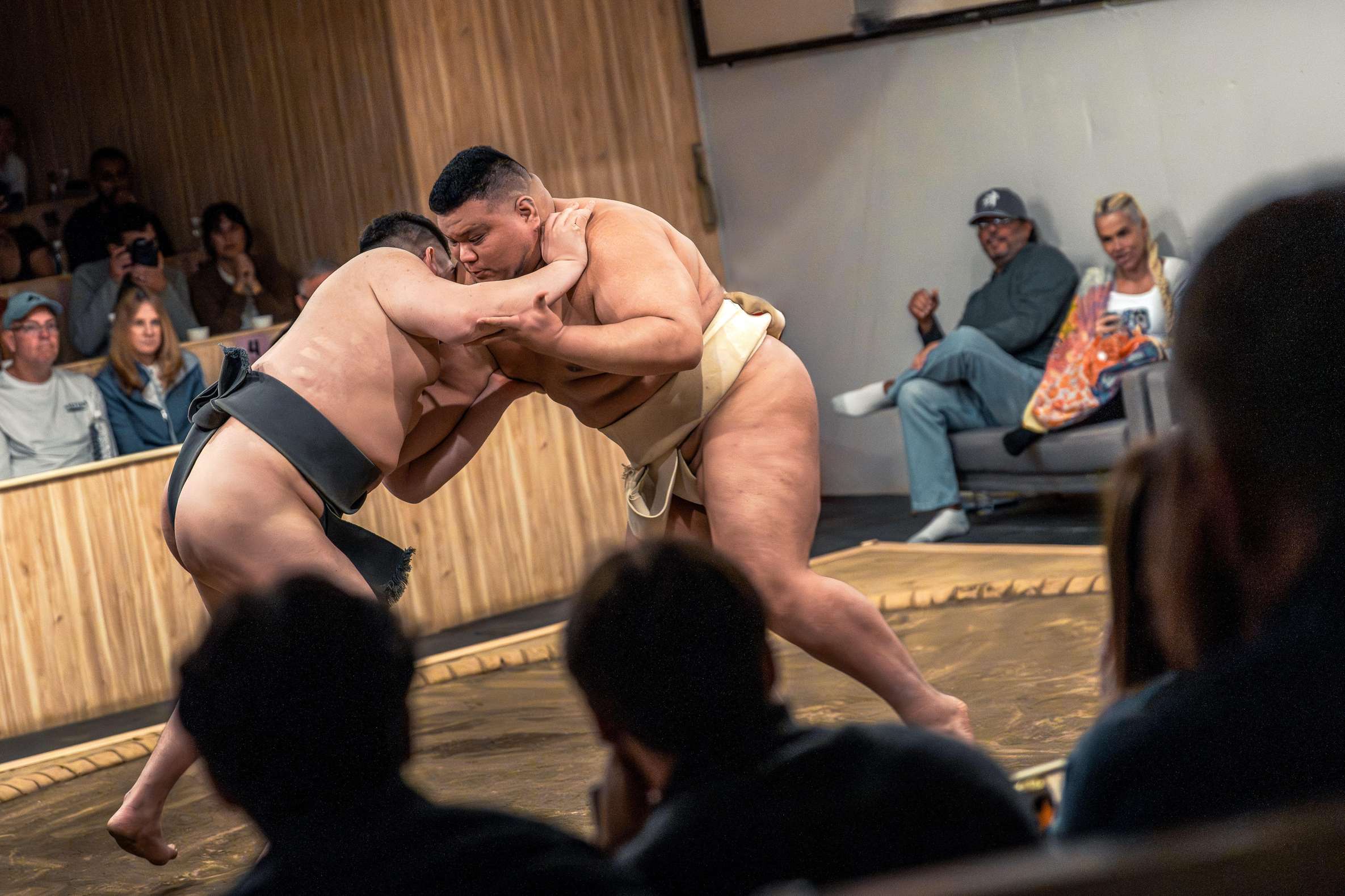
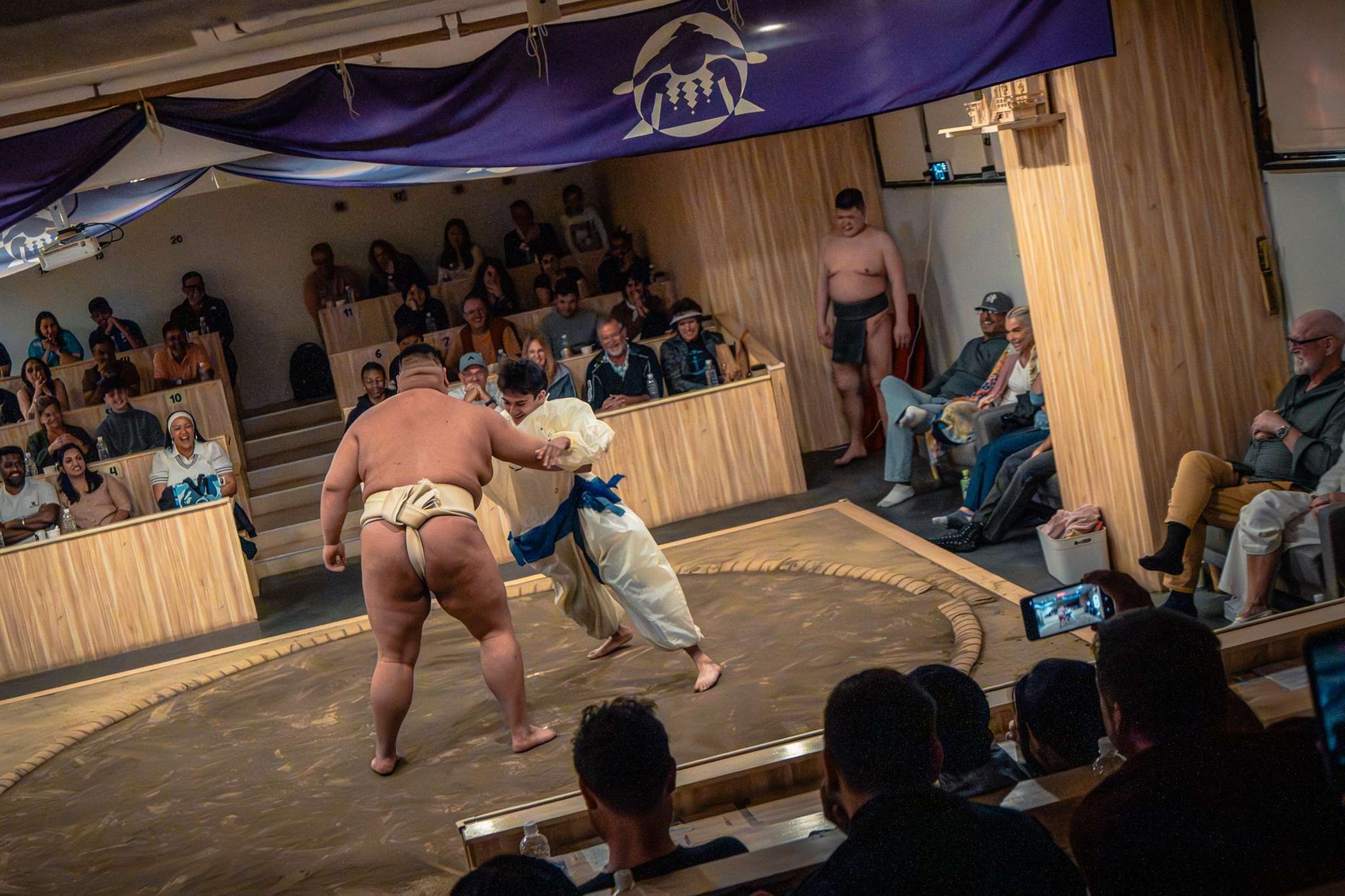
The ring challenge is the part people remember. Six guests per show, drawn by lottery, put on sumo wear and face a wrestler on the clay.
If too many hands go up, the lottery decides, so step in with no guarantee and no disappointment if your number is not called. Throughout, the welcome drink is bottled water, and extra drinks are on sale.
After the bouts, dedicated time is set aside for photos with the wrestlers on or beside the ring, and staff will use your phone to take them. The whole run from entry to final photo call is 75 to 90 minutes.
- 1Check-inSeating and welcome drink
Entry only through the front door next to Daiso
- 2The introductionSumo history, rules and rituals explained in English
The MC covers techniques, fouls and referee calls
- 3Demonstrations and boutsComedic exhibition matches between retired wrestlers
Photography and video allowed from your seat
- 4The ring challengeLottery-selected guests in sumo wear face a wrestler
Six spots per show
- 5Photo callPictures with the wrestlers on or beside the ring
Staff take photos on your own phone
That running order helps with planning: the opening stretch is explanation, the middle belongs to the bouts, and the closing stretch is photo time. Filming is welcome throughout, so the camera can stay out from the first salt throw to the last pose beside the clay.
What to wear to step onto the sumo ring
Nobody needs to buy sumo gear. The venue provides the mawashi belt or padded suit that goes over your own clothes, so what matters is what you wear underneath. Loose, flexible gym clothes let you crouch and move the way the challenge demands; stiff jeans fight every squat.
Shoes come off before the venue and again before the clay, so slip-on footwear saves awkward minutes at the door. On the dohyo itself you go barefoot or in clean socks you do not mind getting dusty, which is why the socks should be ones without holes.
Glasses wearers should switch to contact lenses for the evening, because a pair of frames on the clay during a grapple rarely survives.
Booking the Shinjuku sumo show tour or going on your own
Going on your own means finding the venue, buying entry at the door and hoping the ring-challenge lottery lands your way.
Booking the tour bundles all of it: the Tokyo: Shinjuku Sumo Show & Experience with a Photo covers the 1.5-hour program with the demonstration, the background on sumo, the English-speaking MC, the welcome drink and the photo session, all under one reservation.
Solo travelers fit in without a fuss. The room is a show, not a set of fixed tables, and solo visitors join the ring challenge and get their photos taken by staff on their own phones.
Couples and small groups get the same treatment, and guests at some shows may find themselves seated alongside other travelers anyway, which is half the fun of a room this intimate.
The seat itself matters less than people assume. The venue is small and the ring is visible from nearly everywhere, so there is no need to pay extra for a premium position; the view is the view.
Book the tour when the date and the 90 minutes matter more than the small saving of arranging entry separately.
What to look for in a sumo show tour
Two checks separate a good sumo show from a rushed one. The first is who wrestles: the better shows put retired professional wrestlers in the ring instead of actors in costume, and the difference shows in every throw and every stamp.
The second is what a booking actually locks in, from the guide's language to the cancellation terms.
The Shinjuku tour scores well on both counts. Its performers are former professionals, the MC speaks English throughout, and the cancellation window runs to 24 hours before the start for a full refund.
There is no hotel pickup, which for a venue this central is barely a loss: you meet at the building, a few minutes' walk from the station exits you already know.
How to choose a sumo show tour
| Check | Why it matters | Our pick |
|---|---|---|
| A live guide in your language | Commentary and rituals only land if you follow them | Yes, an English-speaking MC runs the whole show |
| Free cancellation | Plans change on any trip | Yes, full refund up to 24 hours before the start |
| Book now, pay later | Lock the date without paying on the spot | Yes, reserve the place and pay closer to the date |
| Retired professional wrestlers | The mark of a show worth its ticket | Yes, the bouts are wrestled by former pros |
| Hotel pickup | Only useful when a venue sits far out | No, you meet at the building minutes from Shinjuku Station |
Every row except hotel pickup lands on the yes side, and that one hardly counts at a venue this close to the station exits. The first row is the one that should decide any alternative you compare against, because no refund makes up for an evening spent watching actors play at wrestling.
Late arrival and cancellation - what happens if plans change
One rule can end the evening before it starts: the show runs to a strict schedule, and the front desk may refuse late entry outright. Arrive after showtime and you risk forfeiting your place, with no refund on the ticket. That applies to no-shows too.
The practical fix is buffer time. Trains stall, dinner runs long, children melt down; build in a margin and aim to be at the front door, the one next to Daiso, well before the first bout.
If you already know the evening has collapsed, cancel ahead of time, because the tour's own terms give a full refund up to 24 hours before the start.
If plans change
| If this happens | What happens then |
|---|---|
| You arrive after showtime | The front desk may refuse entry, with no refund, because the show follows a fixed schedule. |
| You know a day ahead that you cannot come | Cancel up to 24 hours in advance for a full refund on the tour. |
| A child falls ill on the day | Cancel before the 24-hour cutoff where you can; later, the booking lapses without a refund. |
What to do near the Shinjuku sumo show before and after
Because no meal is attached, the show slots into a Shinjuku evening instead of filling it. Performances run at times like 5:30 pm and 8 pm, so an earlier slot ends around 7 pm, right as the neighborhood's drinking alleys light up.
Kabukicho is a 14-minute walk south from the main Okubo venue, and a second branch of the show sits directly inside Kabukicho if that suits your route better.
Push on another ten minutes to Omoide Yokocho near the station's west exit, where roughly sixty tiny counters grill yakitori and pour ramen from 5 pm to midnight. Golden Gai's two hundred-odd bars mostly open at 7 pm or 8 pm, which lines up neatly with the end of the later show.
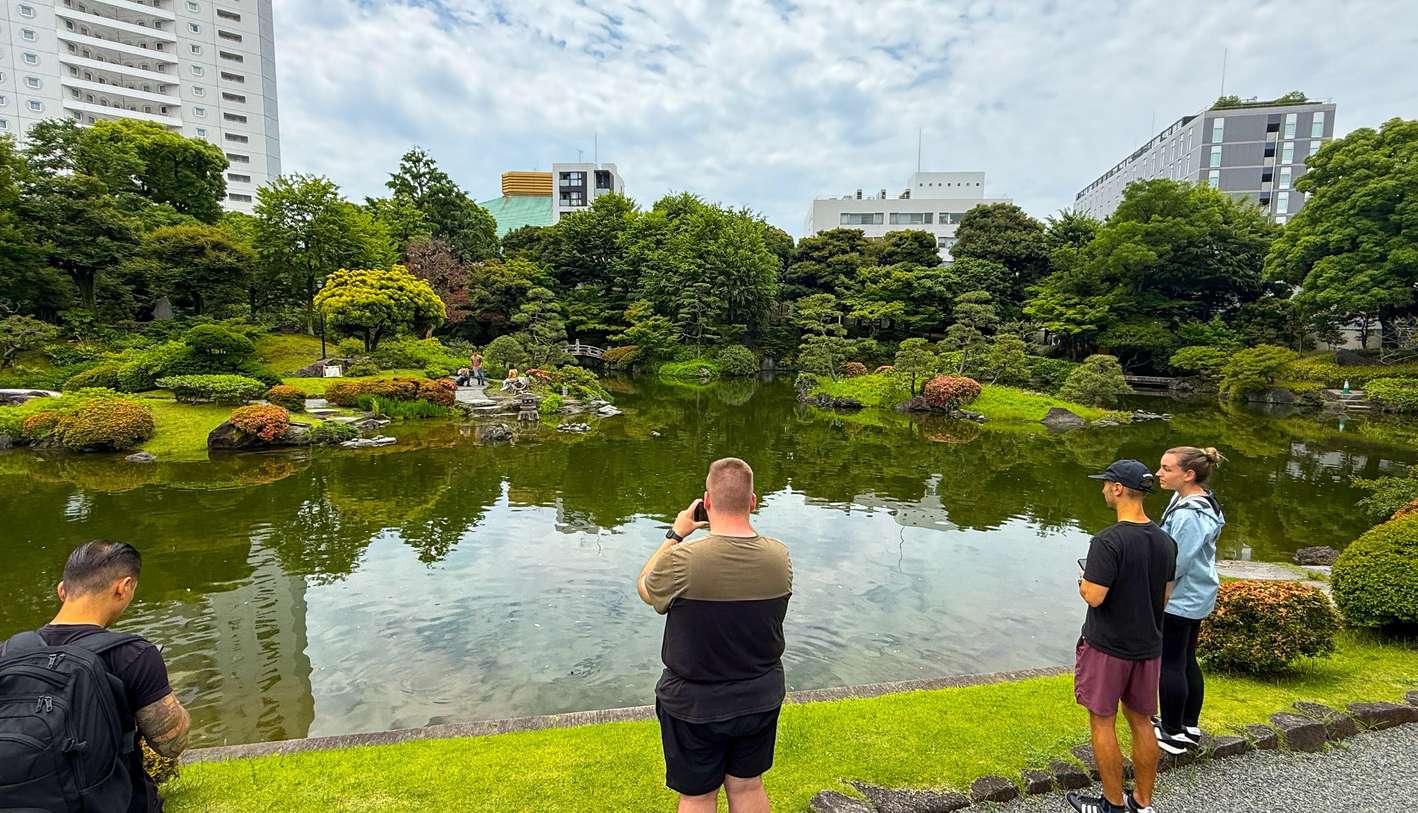
Earlier in the day, Hanazono Shrine sits in Kabukicho, the gardens of Shinjuku Gyo-en spread about a kilometer south, and the free observation deck on the 45th floor of the Tokyo Metropolitan Government Building stays open until 10 pm if you want the skyline after the last bout.
What to know before you book the Shinjuku sumo show
The show takes place on the second floor of the Sekisaku Building in Shinjuku. *Entry is only through the front of the building*, the main door next to Daiso, so head straight there and skip any side entrance.
The show follows a strict time schedule, and the front desk may refuse latecomers. Arrive at least 15 minutes early to check in; late arrivals and no-shows forfeit their ticket with no refund.
The event is completely cashless. Visa, Mastercard, American Express, JCB, Diners Club and Discover are all accepted at the door, so there is no need to carry yen for the ticket itself.
Six guests per show get to suit up and step into the ring to challenge a wrestler. When more people volunteer, the six are drawn by lottery, so a chance to wrestle is a bonus rather than something you can book outright.
Every bout is performed by genuine retired professional sumo wrestlers. The comedy and audience games are the entertainment, while the techniques, salt throwing and foot stomps come from real training.
Plan for 75 to 90 minutes from entry to the final photo call. Evening performances start around 5:30 pm or 8 pm and end by about 7:00 or 9:30 pm, leaving the night free.
Your ticket covers the wrestling demonstration, history and rules explained by an English-speaking MC, a welcome drink of bottled water, and pictures with the wrestlers. No meal is served, so you can dine wherever you like afterwards.
You can cancel up to 24 hours in advance for a full refund. Because evening slots fill quickly in peak season, book your date early and change it if plans shift.
Children of all ages can attend, with infants seated on a guardian's lap. At 75 to 90 minutes with comedy and audience games, the show suits young attention spans far better than a full tournament day.
Challengers remove their shoes before stepping onto the clay ring, and the venue supplies the sumo outfit or padded suit to wear over your clothes. Loose, comfortable clothing works best for the crouching and pushing.
Worth it, for a first taste of sumo
This tour suits travelers based in or near Shinjuku who want sumo without an early start or a cross-town trip, families with young children who cannot yet sit through a three-hour tournament, and anyone who would rather cheer, drink and take photos than observe in silence.
Devoted sumo fans who time their trip to a tournament should put their money into Kokugikan tickets instead, and anyone wanting an authentic stable practice should book a morning tour, because the show trades seriousness for participation.
Tokyo Shinjuku sumo show FAQ
Is there a sumo show in Shinjuku?+
Yes. A sumo show and experience runs on the second floor of the Sekisaku Building in Shinjuku, with live matches, an English-speaking MC and a photo session with the wrestlers.
Where is the Tokyo Shinjuku sumo show located?+
The main venue sits in Okubo, on the second floor of the Sekisaku Building. Enter through the front of the building, the door next to Daiso. A second branch operates directly inside Kabukicho.
How long does the Shinjuku sumo show run?+
From entry to the final photo call, expect 75 to 90 minutes. The program covers the history and rituals, live demonstration bouts, a guest ring challenge and the photos.
Who are the wrestlers in the show?+
They are retired professional sumo wrestlers. They demonstrate techniques, explain the rules and spar playfully with volunteers in the ring.
Can I step into the ring and challenge a wrestler?+
A small number of guests per show can enter the ring in a sumo outfit. When too many apply, the tour picks participants by lottery, so stepping in is not guaranteed. All guests get photos with the wrestlers afterwards.
Is everything explained in English?+
Yes. The MC commentary, the explanations of rules and rituals, and the comedic demonstrations all run clearly in English, so you can follow every call and foul.
Are drinks and food included?+
A welcome drink of bottled water is included, and the venue is cashless, taking Visa, Mastercard, American Express, JCB, Diners Club and Discover. No meal is served, which leaves you free to dine elsewhere in Shinjuku afterwards.
What happens if I arrive late to the Shinjuku sumo show?+
The show follows a strict time schedule, and late entry may not be accepted at the front desk. Guests who miss showtime can lose their right to enter with no refund, so plan to arrive early.
Is the show suitable for young children?+
Yes. Infants can sit on a lap, and for children under six a 75 to 90 minute show is generally an easier visit than a full tournament day. The comedy keeps it light for the whole family.
Is this a real sumo tournament?+
It is an entertainment show with demonstration bouts, comedy and audience participation. If you want serious competition, an official Grand Sumo tournament or morning stable practice is the better pick.
How does the Shinjuku show compare to visiting a sumo stable in Ryogoku?+
Stable morning practice means sitting silent and still on the floor for one to two hours with no talking, eating or flash photos. In Shinjuku you get a relaxed venue, English commentary and a chance to wrestle a wrestler yourself.
Does the show run year-round?+
Yes. Grand Sumo tournaments come to Tokyo only in January, May and September, but the Shinjuku show runs every month, which makes it easy to fit into any travel dates.