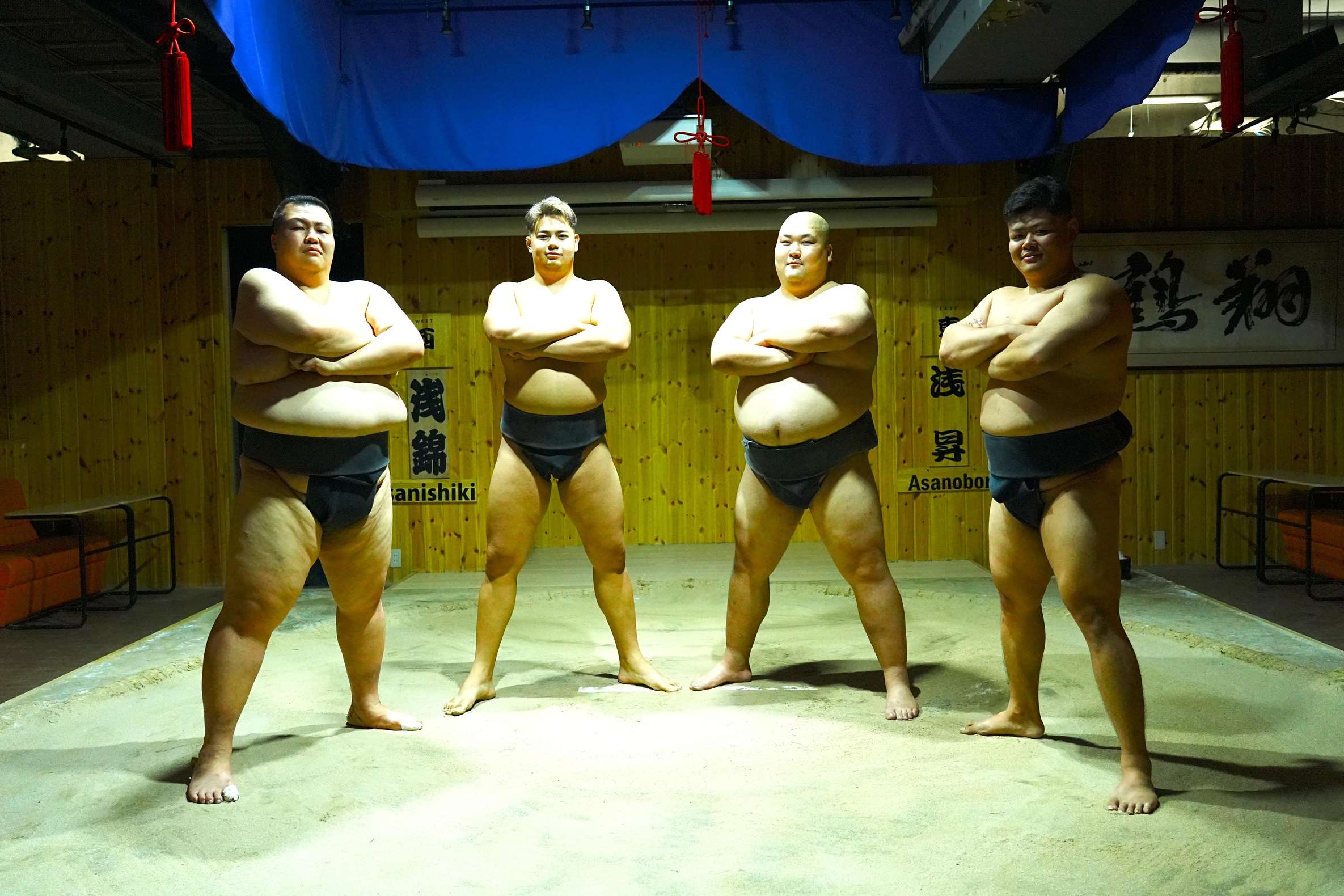
Asakusa Sumo Club in Tokyo Chankonabe Dinner and Matches
Book your seat at the Asakusa Sumo Club, where 8,700 guests have stepped into the ring for all-you-can-eat chicken chankonabe. Retired pro wrestlers, a geisha dance, and a printed photo with the wrestlers, all in one evening minutes from Sensō-ji. Reserve your spot tonight.
4.8★average rating9,744traveler reviews100%free cancellation28countries travelers came from
Choosing your Asakusa Club sumo evening
Asakusa has two ways to spend a sumo evening, and the food decides between them. One ticket covers the classic show with all-you-can-eat chicken chankonabe. The other trades the hot pot for wagyu sukiyaki, tempura, and free-flow drinks in sofa seating. Both run two hours and put you close to the ring.
Show typeBoth evenings are lively, family-friendly entertainment built around comedy, demonstrations, and audience games, so they suit travelers who want a fun night out rather than a silent study session.
Ring challengeOnly a few guests per show get to step onto the ring, and when many people apply, the venue draws names by lottery.
DietsVegetarian and vegan meals need two days' notice when you book; gluten-free and halal meals are not provided, though you may bring your own food.
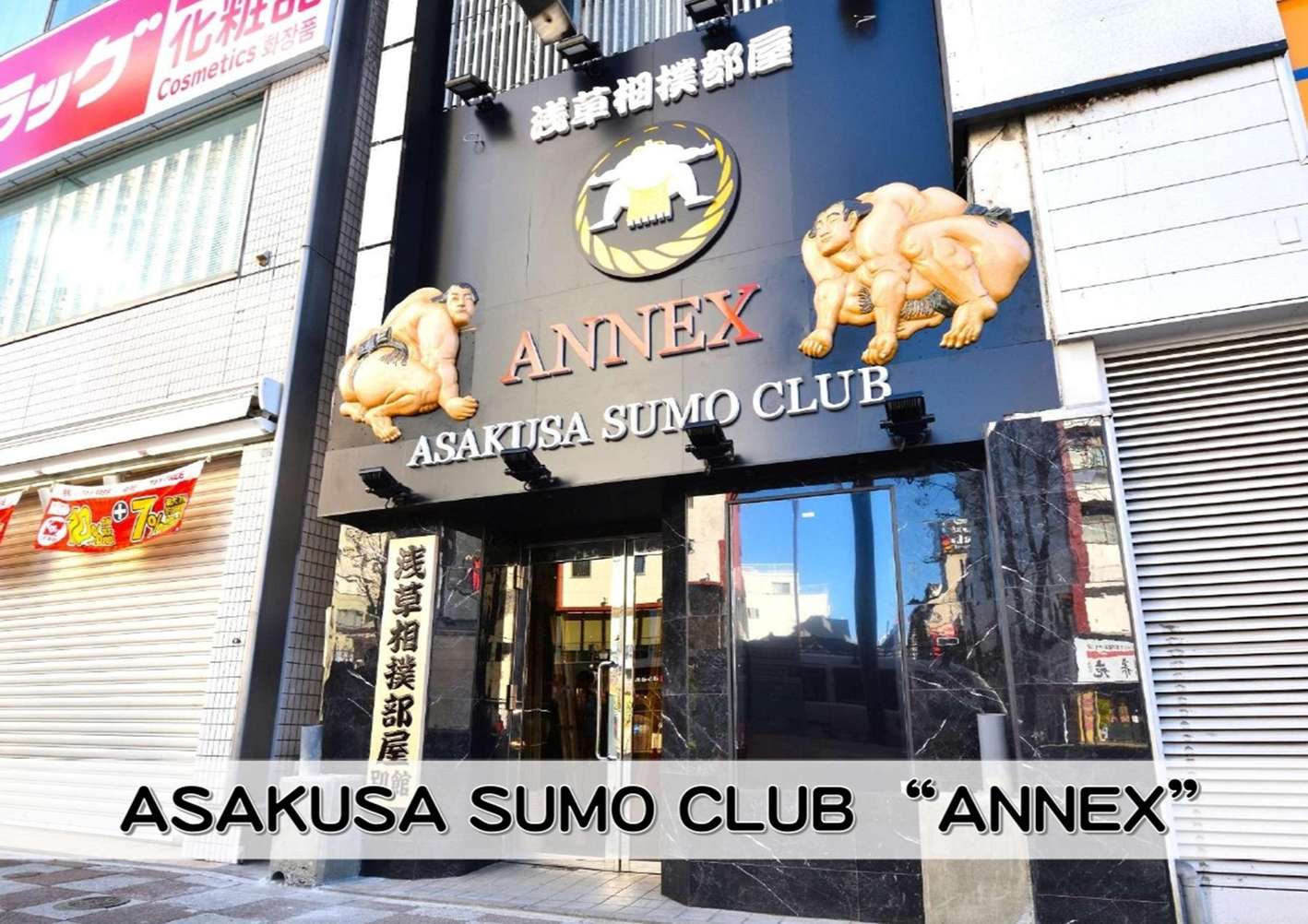
AccessStandard seating sits in two rooms, the main store and the Annex behind it, and both serve the same show; the Annex restaurant has stairs, so mention wheelchair needs when booking.
SeatingTables are shared, so you may sit alongside other guests; solo travelers are drawn into the demonstrations rather than left watching.
ArrivalStaff check your reservation at the entrance and walk you to your seat; shows run to a strict schedule and late arrivals may be turned away without a refund.
LocationThe venue is a 2-minute walk from Asakusa Station on the Tsukuba Express and an 8-minute walk from the Ginza Line exit, close to Senso-ji and Tokyo Skytree.
TimingThe 6 pm seating pairs well with a temple visit, since the Nakamise-dori stalls and Senso-ji's halls wind down around 5 pm.
DrinksEvery ticket includes one complimentary drink, and extra drinks are ordered separately.
importantAt the Asakusa Sumo Club in Tokyo, pregnant guests and anyone with mobility concerns or injuries are asked not to enter the ring for the challenge, and children may be declined based on age or size.
Enjoy the show from your seat instead: every guest still gets the chankonabe dinner, the geisha performance, and a printed photo with the wrestlers, so book any seat you like and skip the ring portion if it does not suit you.
Choose your Asakusa Sumo Club evening
The classic hot pot night
2 hours
4.8(8,711)
Tokyo: Sumo Entertainment Show with Chicken Hot Pot & Geisha
The most popular choice, with nearly 9,000 reviews, all-you-can-eat chanko nabe and a geisha opening in two hours
Free cancellationEntertaining sumo show performancesTraditional Japanese dance performance by geisha
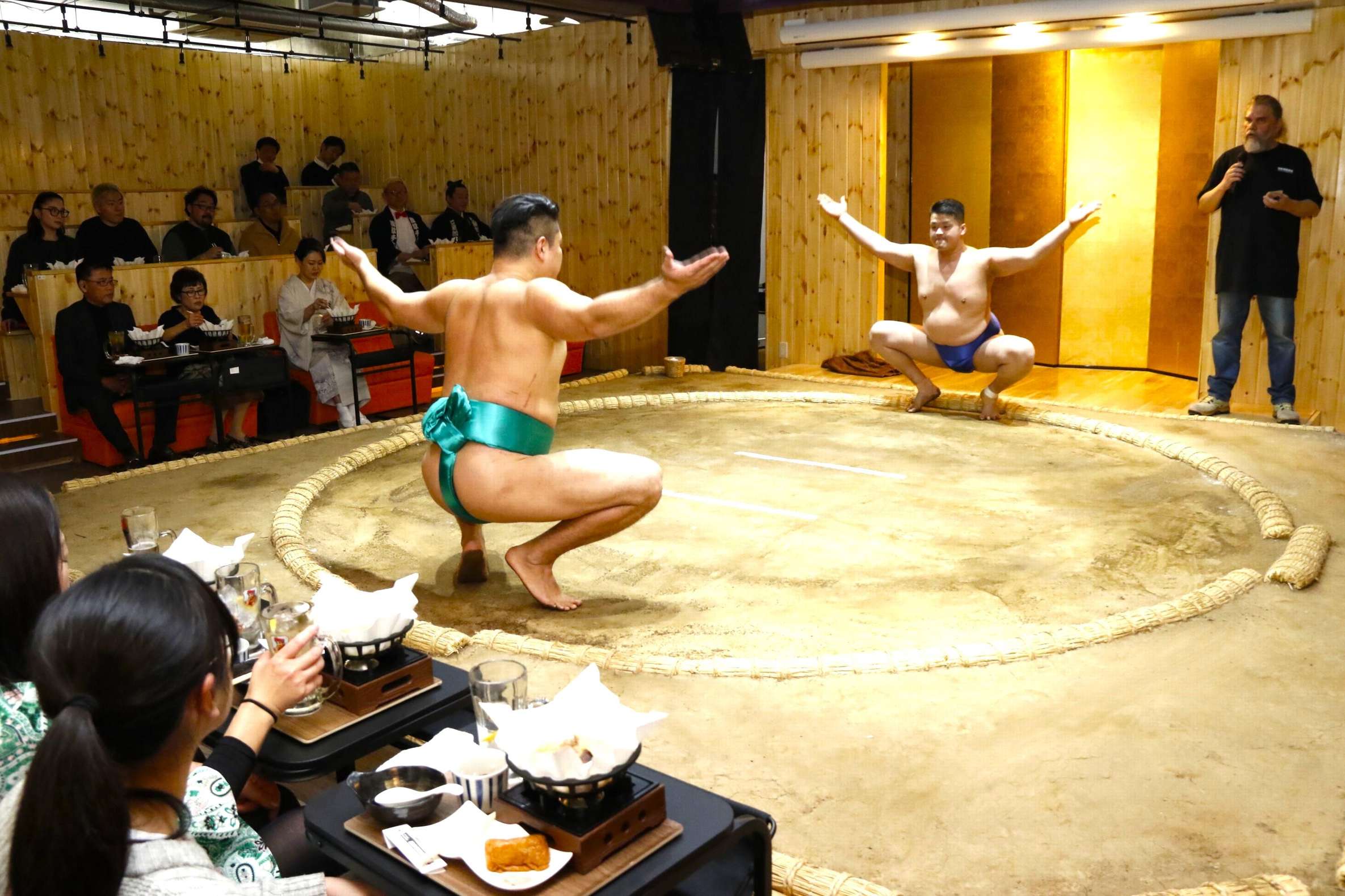
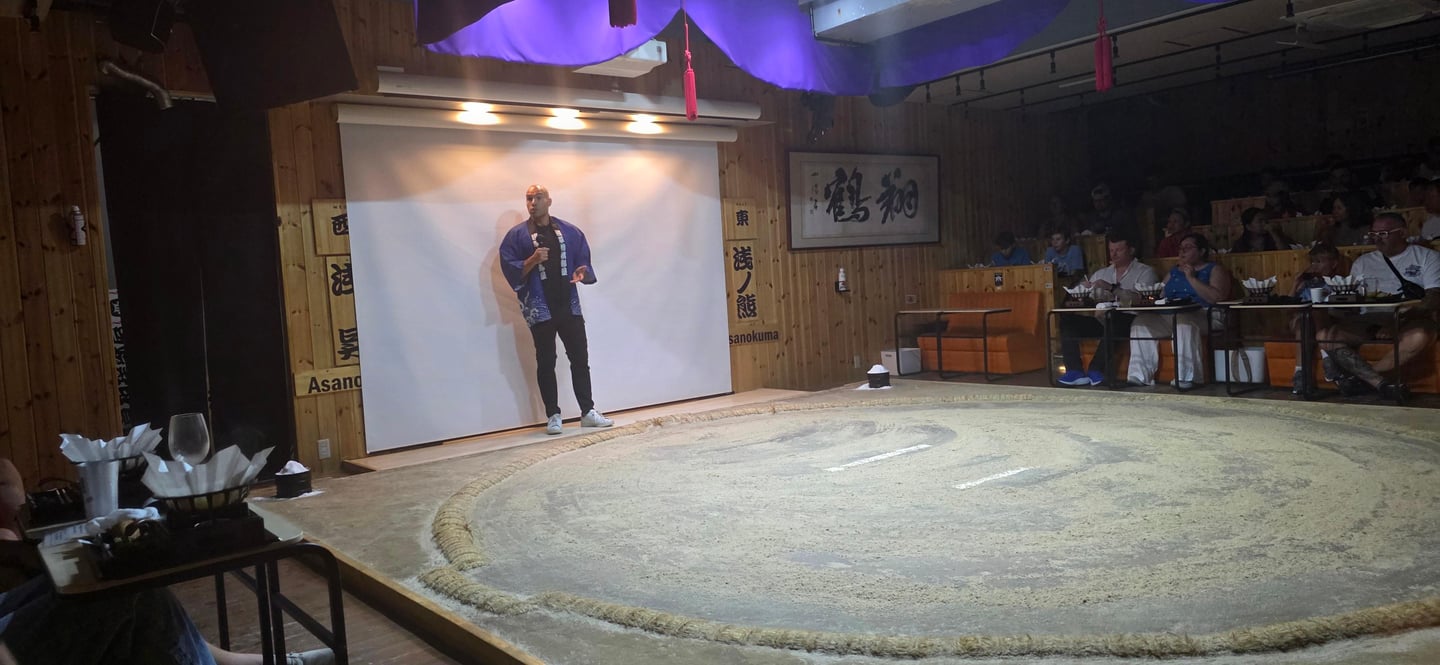
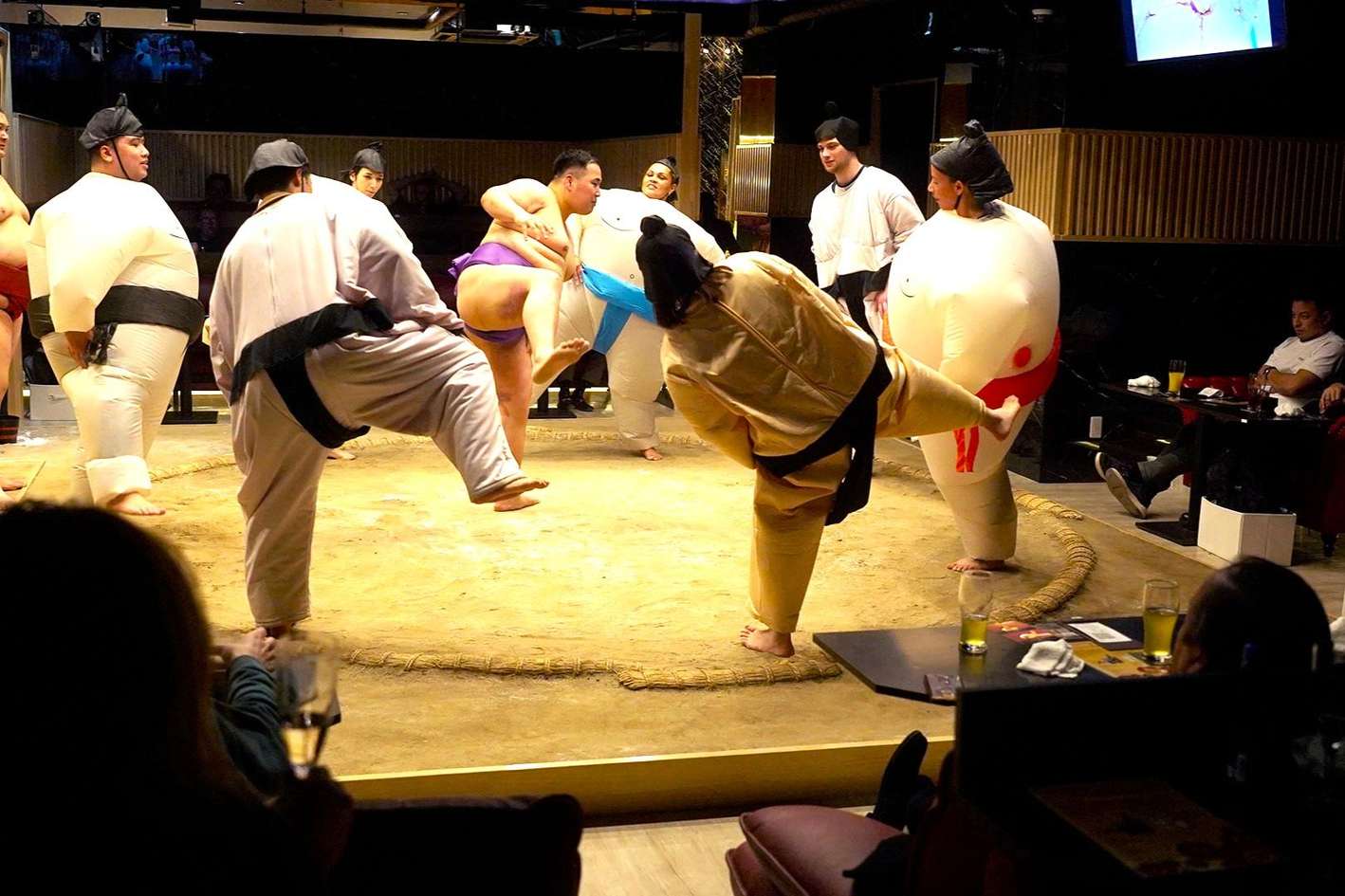
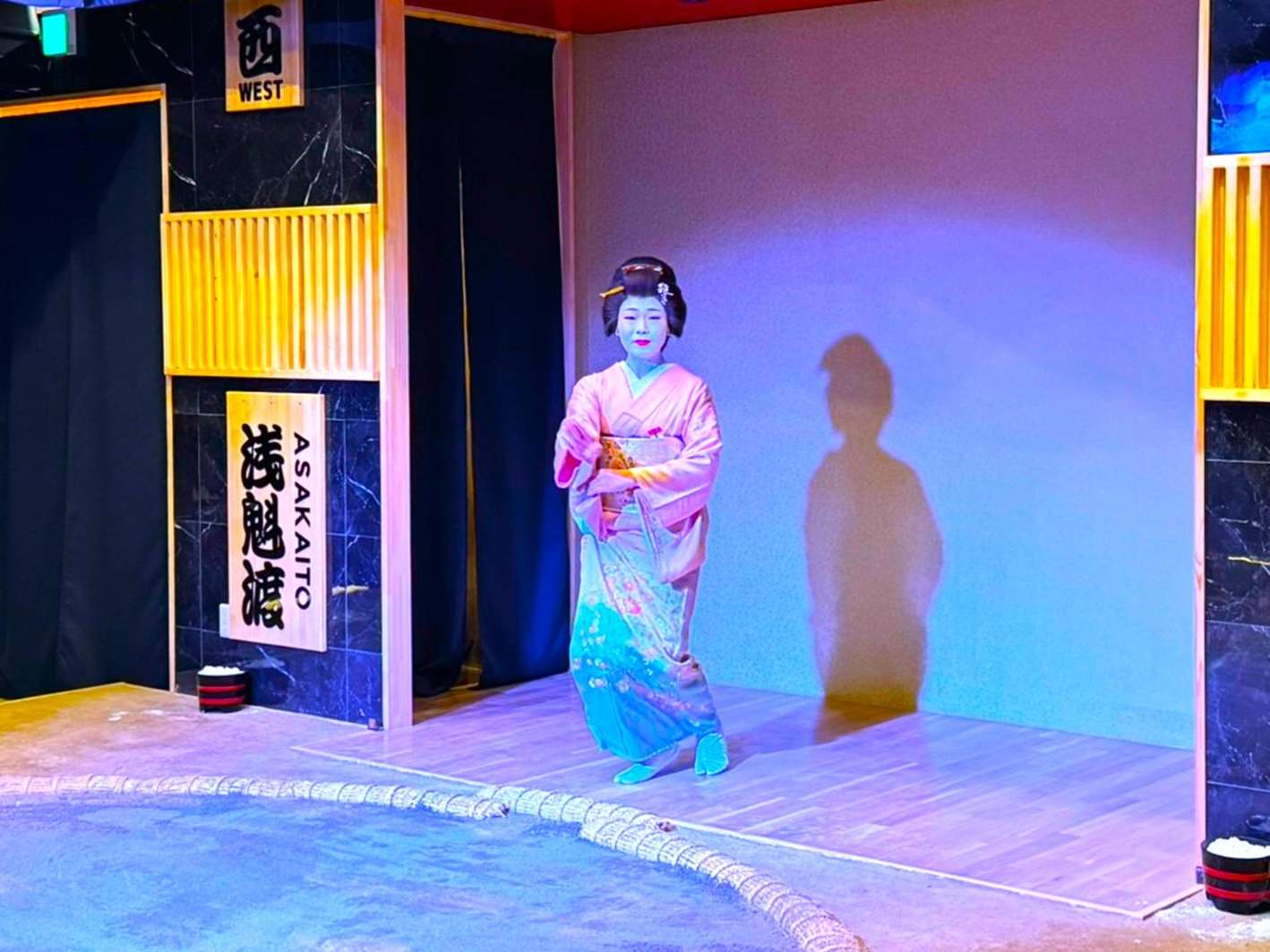
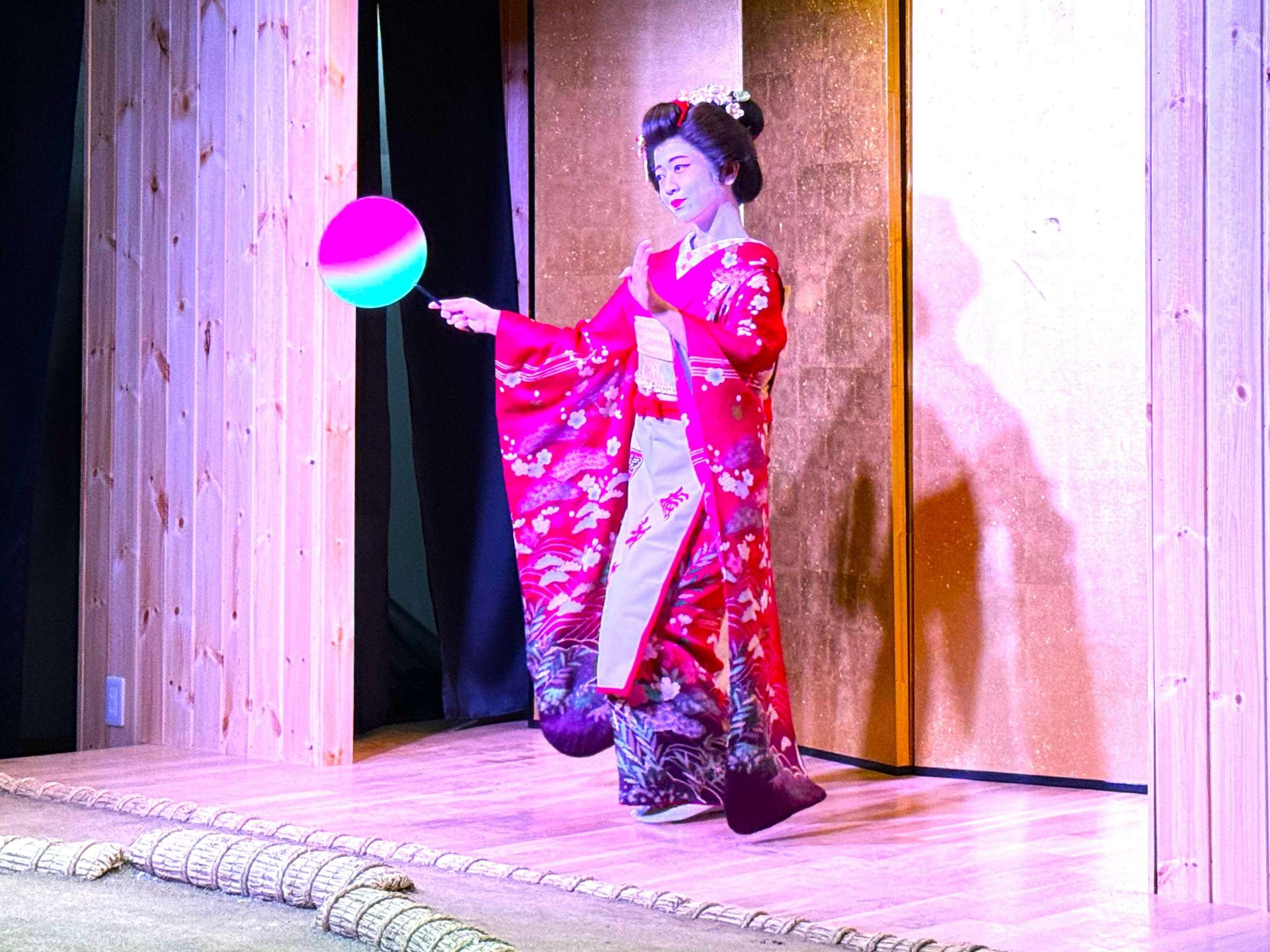
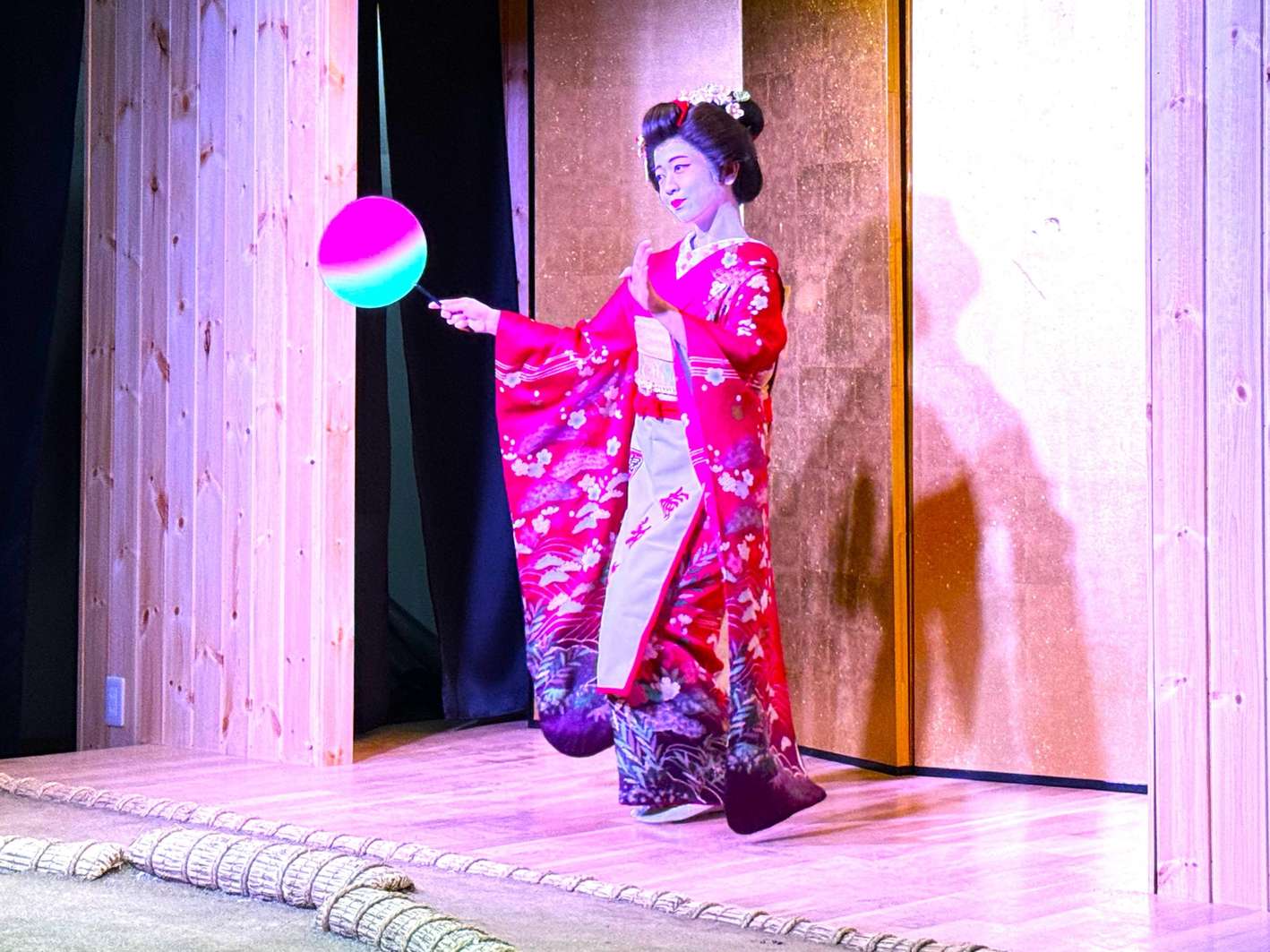
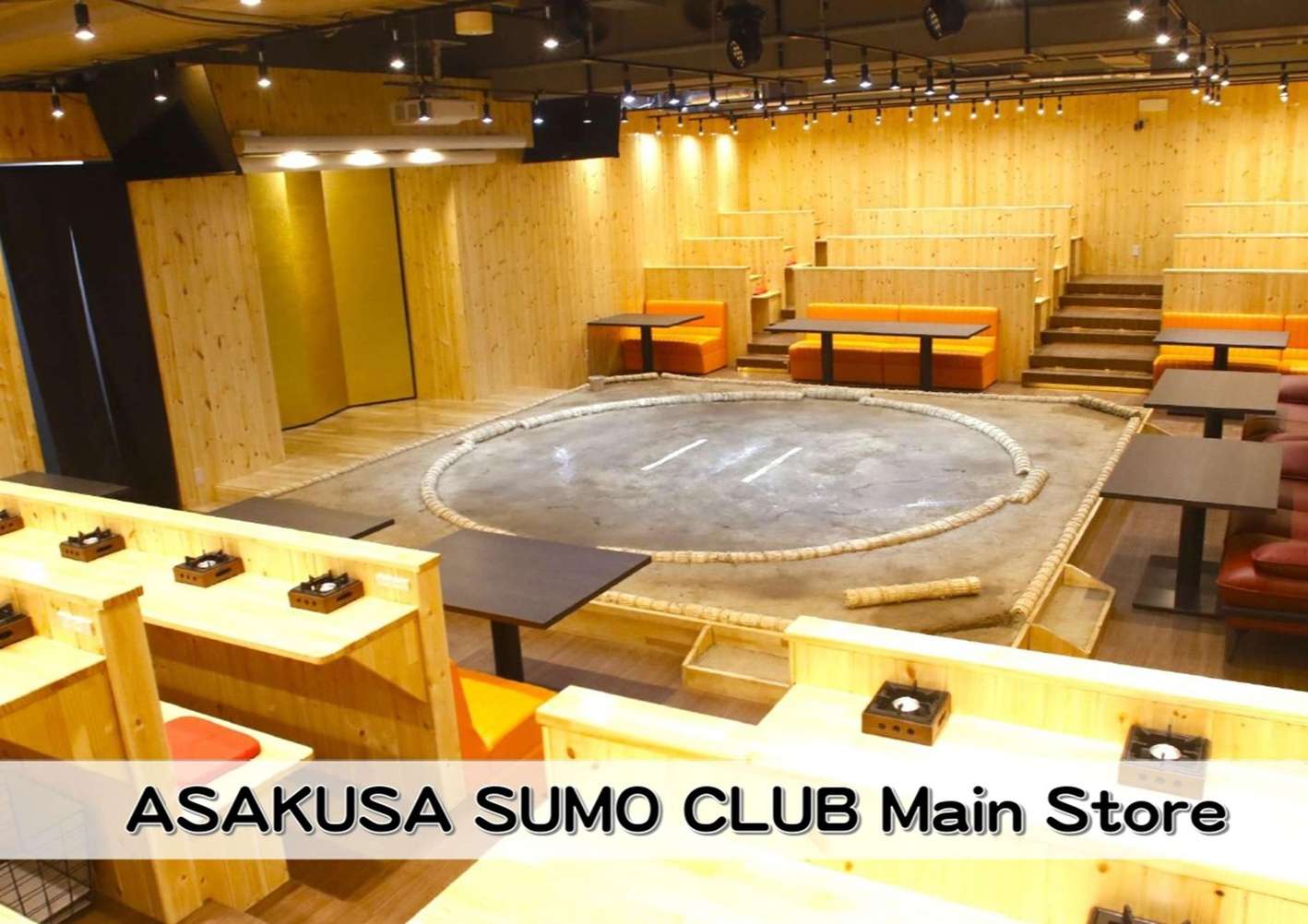
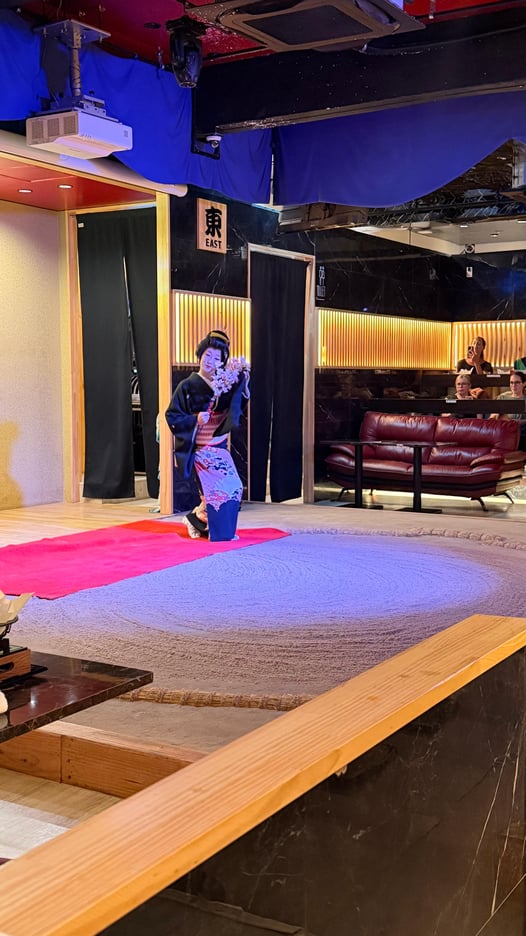
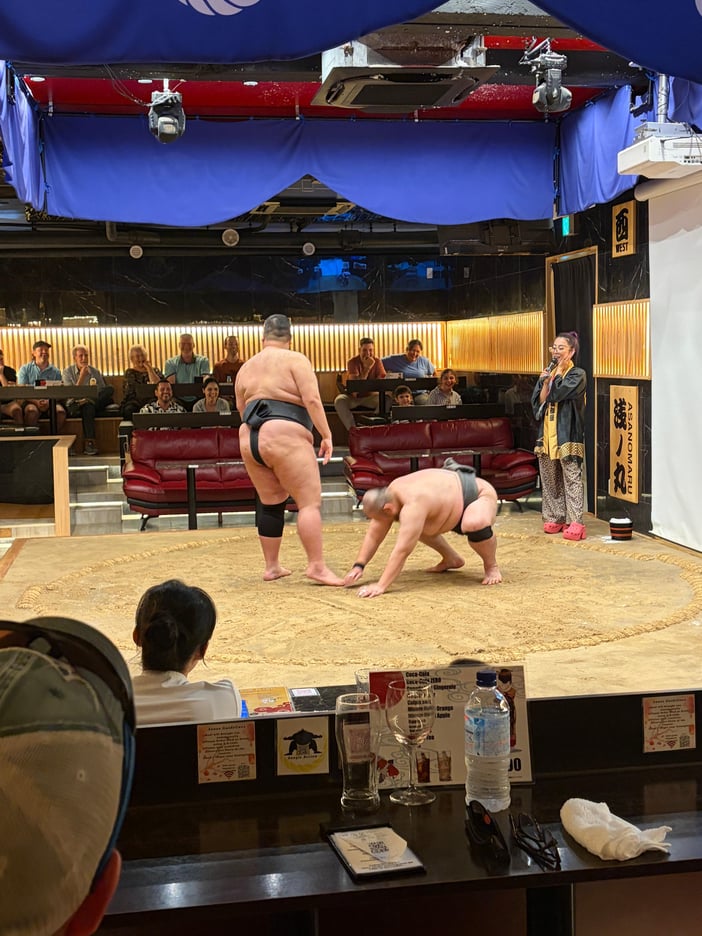
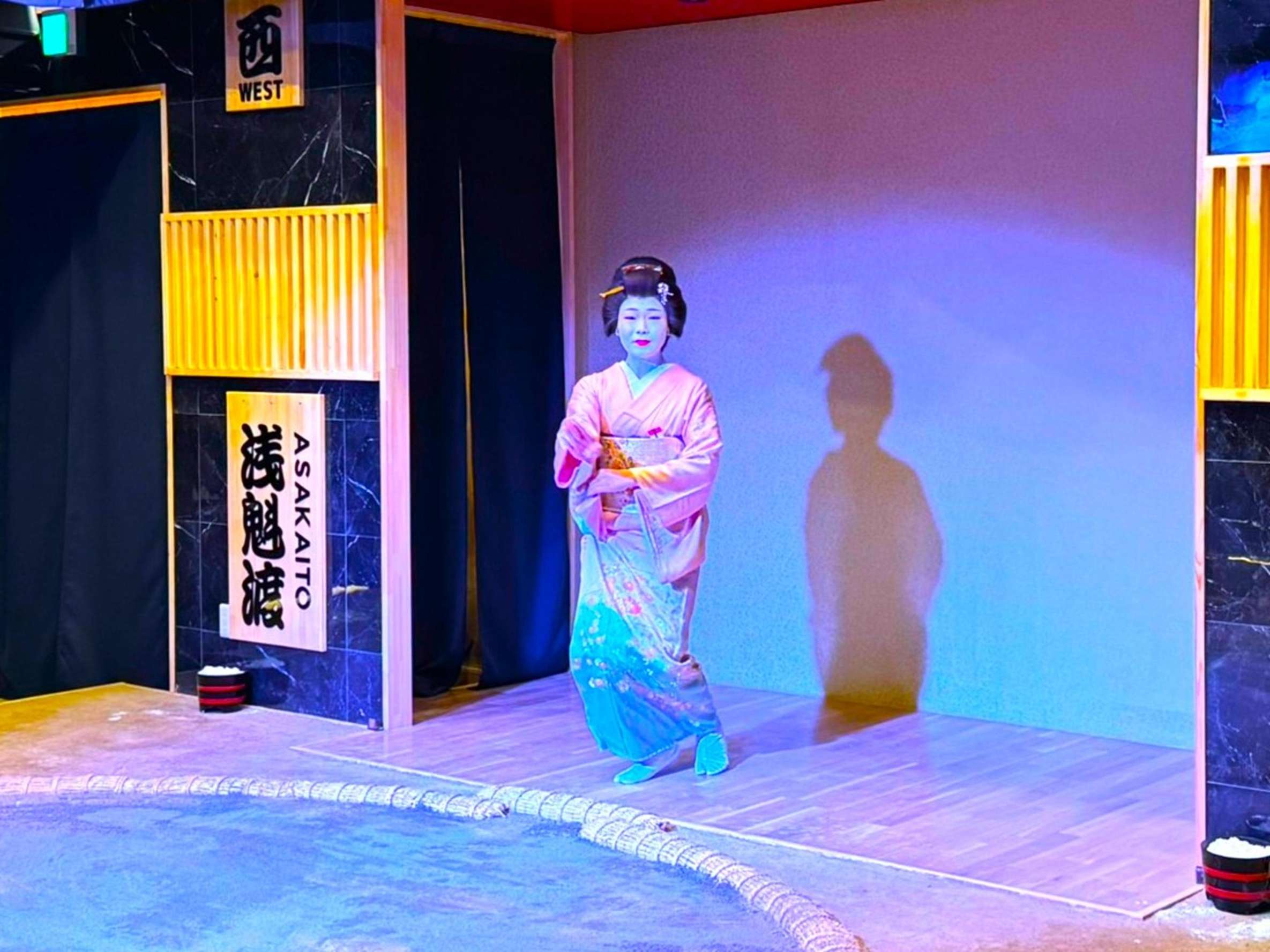
The evening opens with a geisha dance in kimono, performed on a stage built around a real sumo ring set in the middle of the restaurant. From your seat a few steps away, you eat chicken chankonabe hot pot while a bilingual host walks you through sumo history, rituals, and rules.
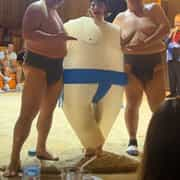
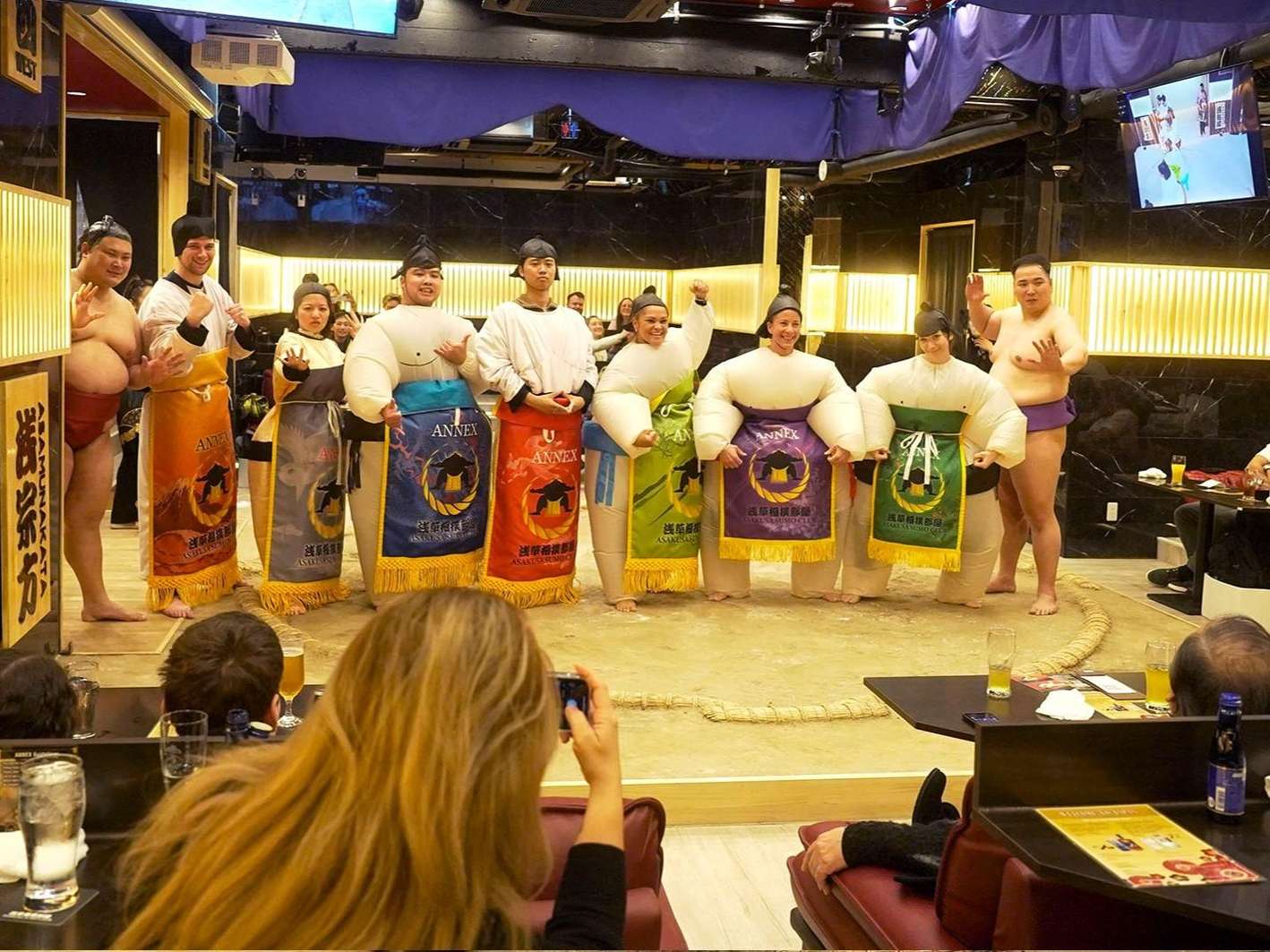
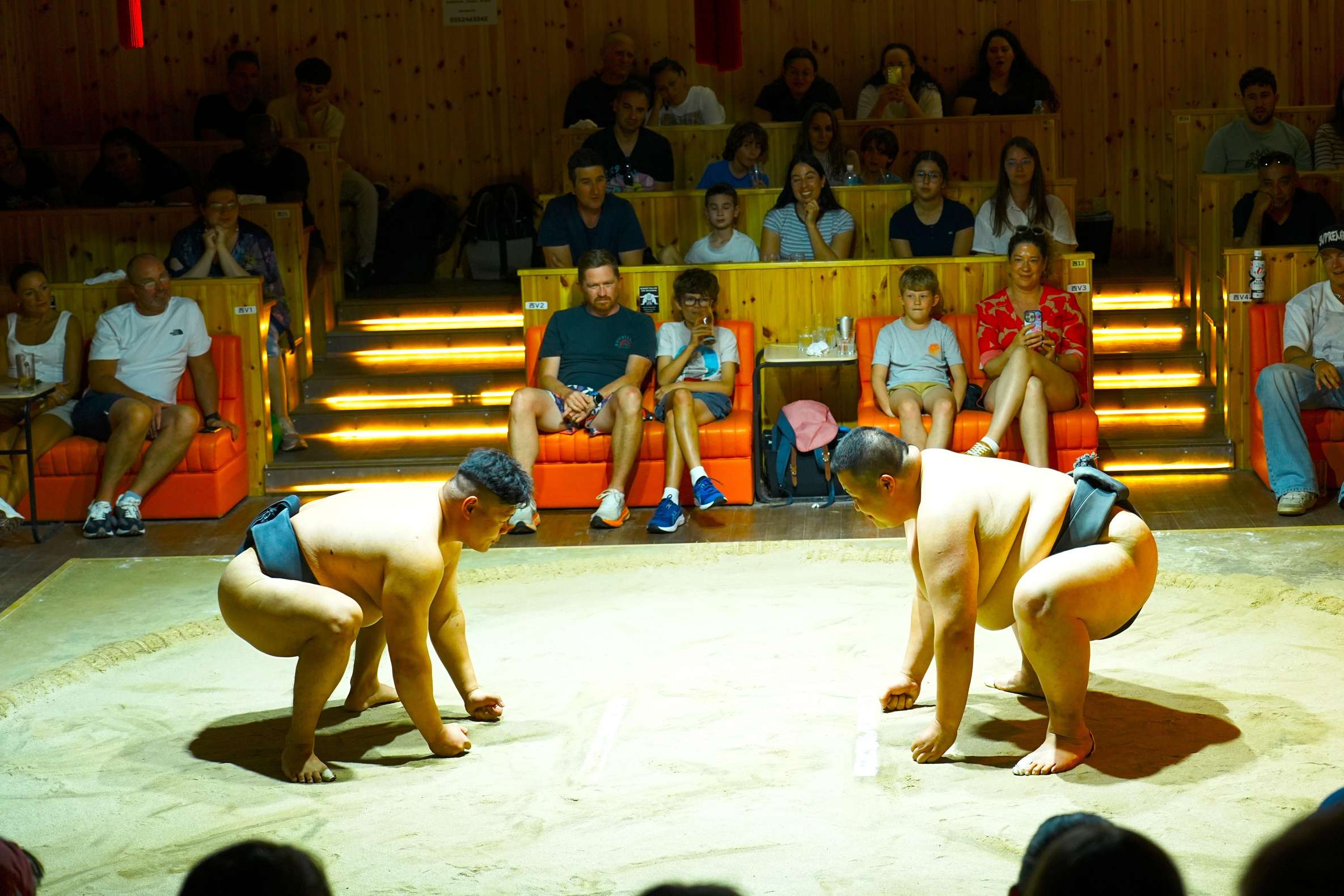
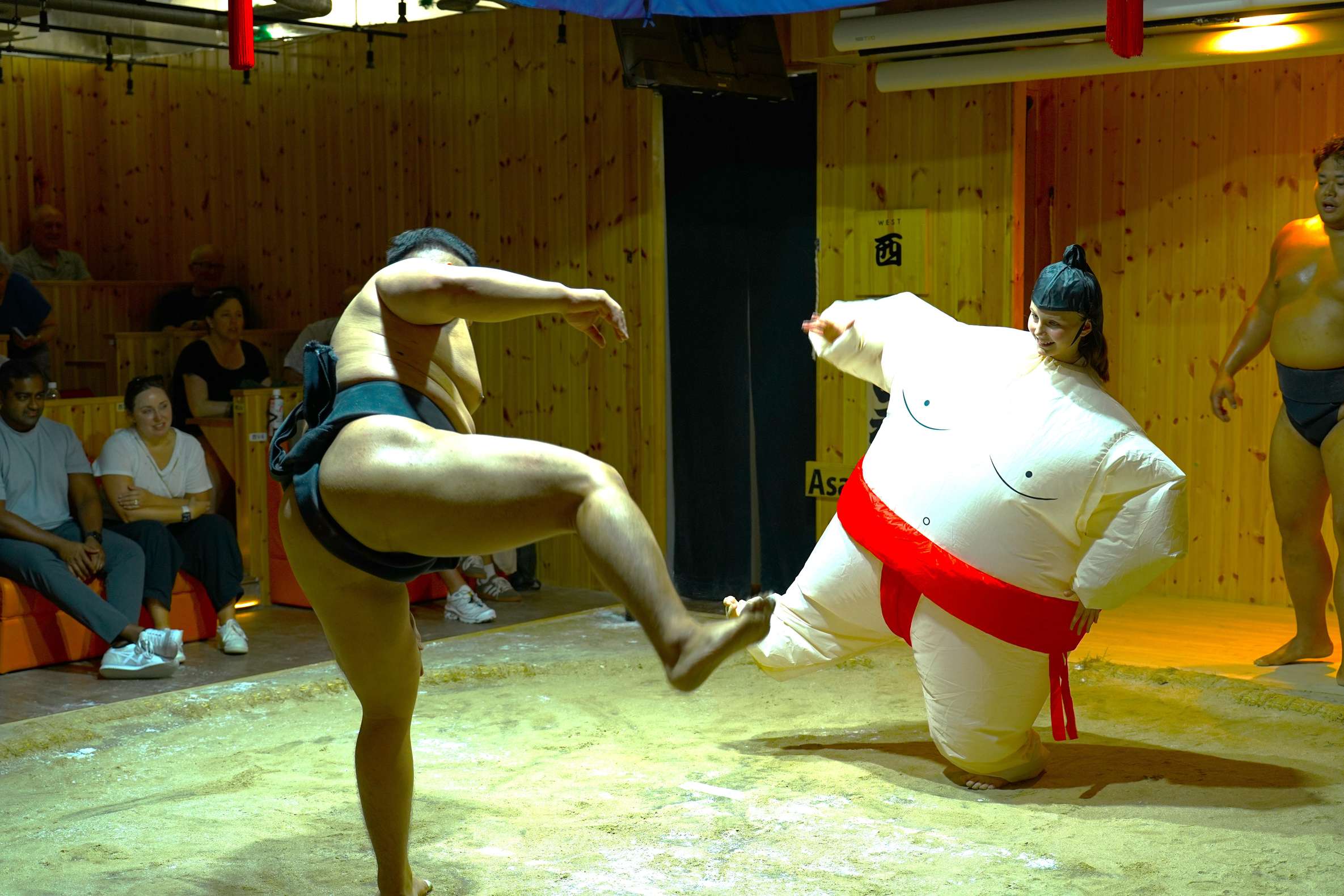
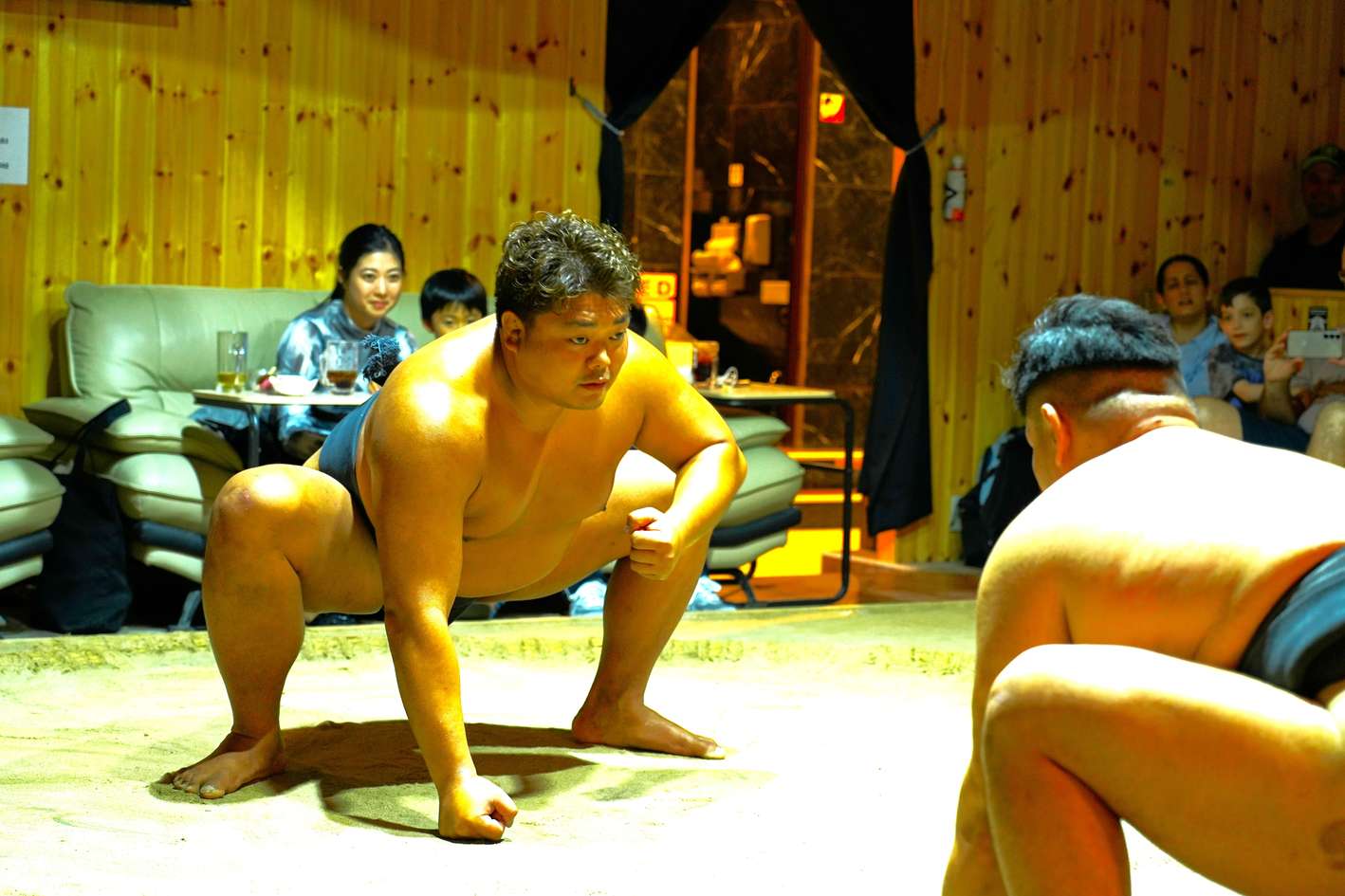
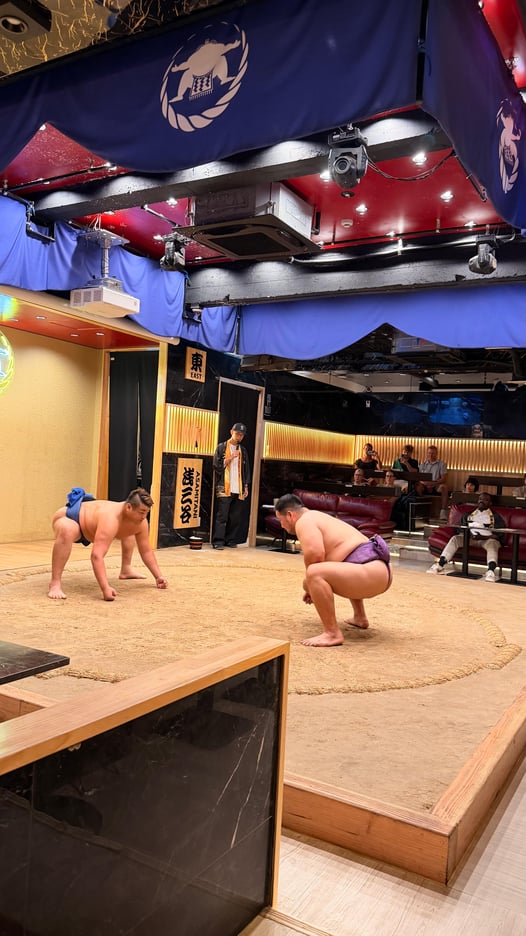
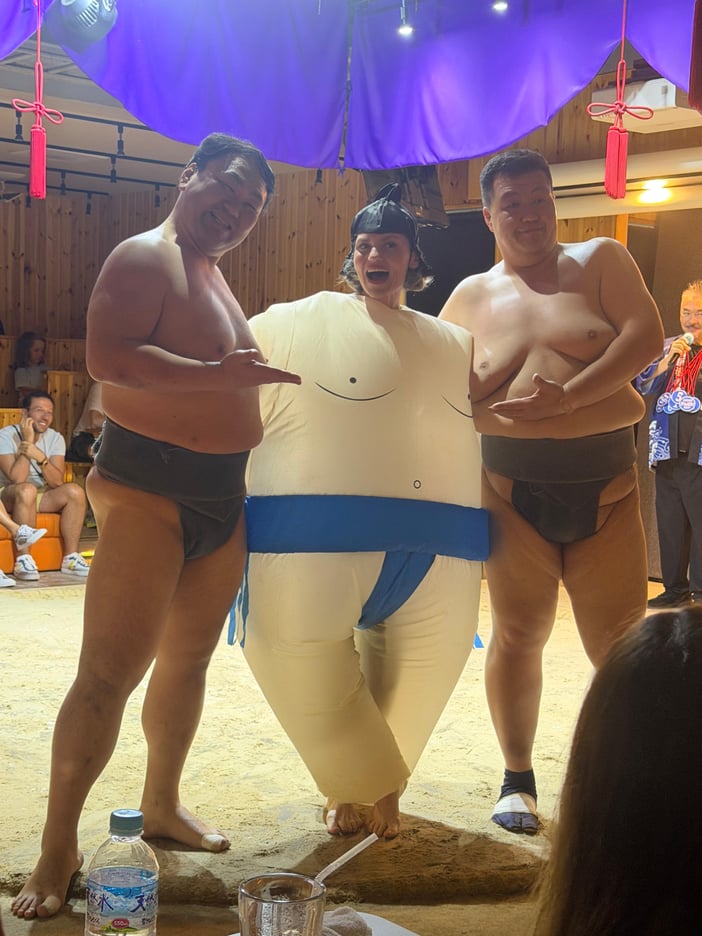
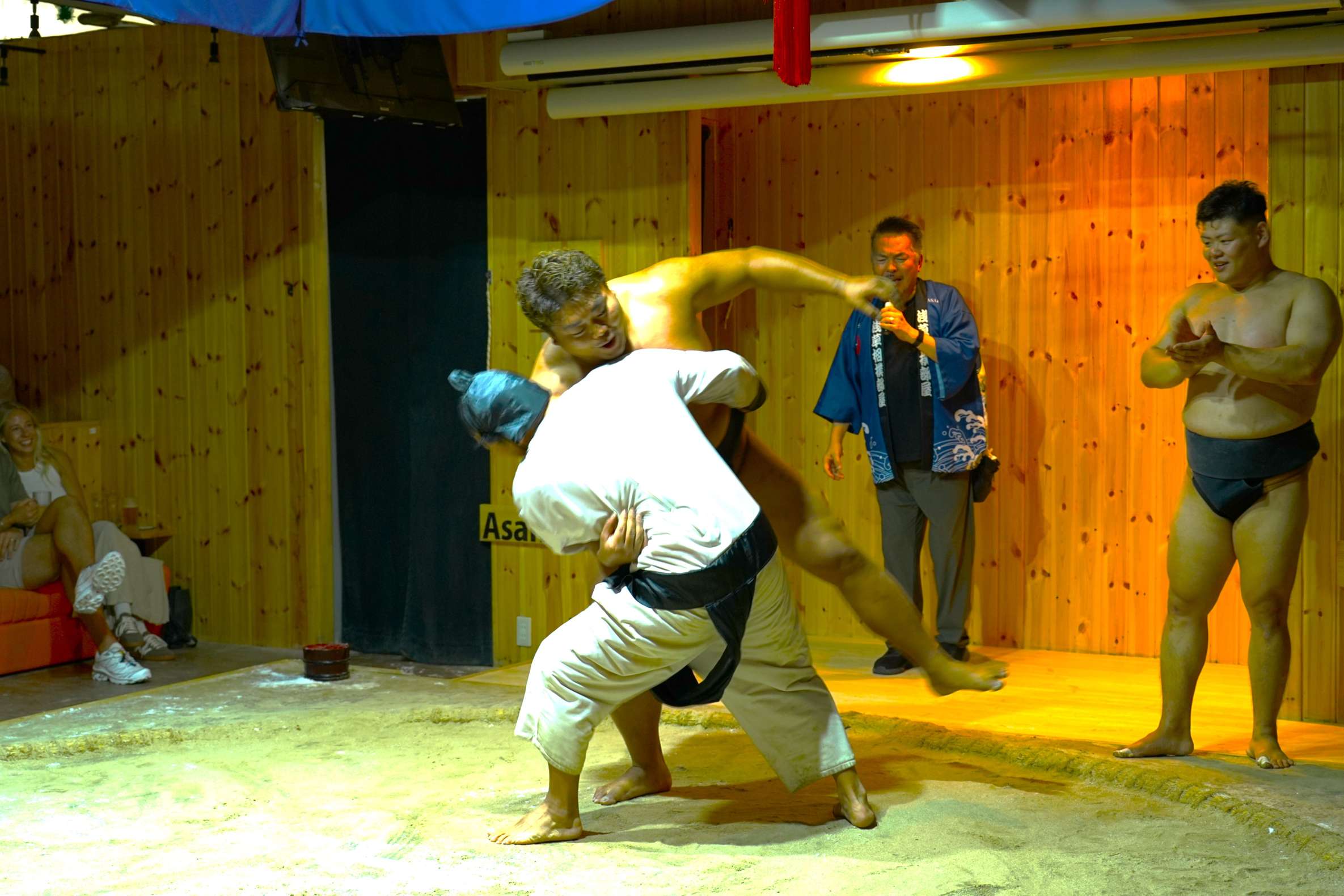
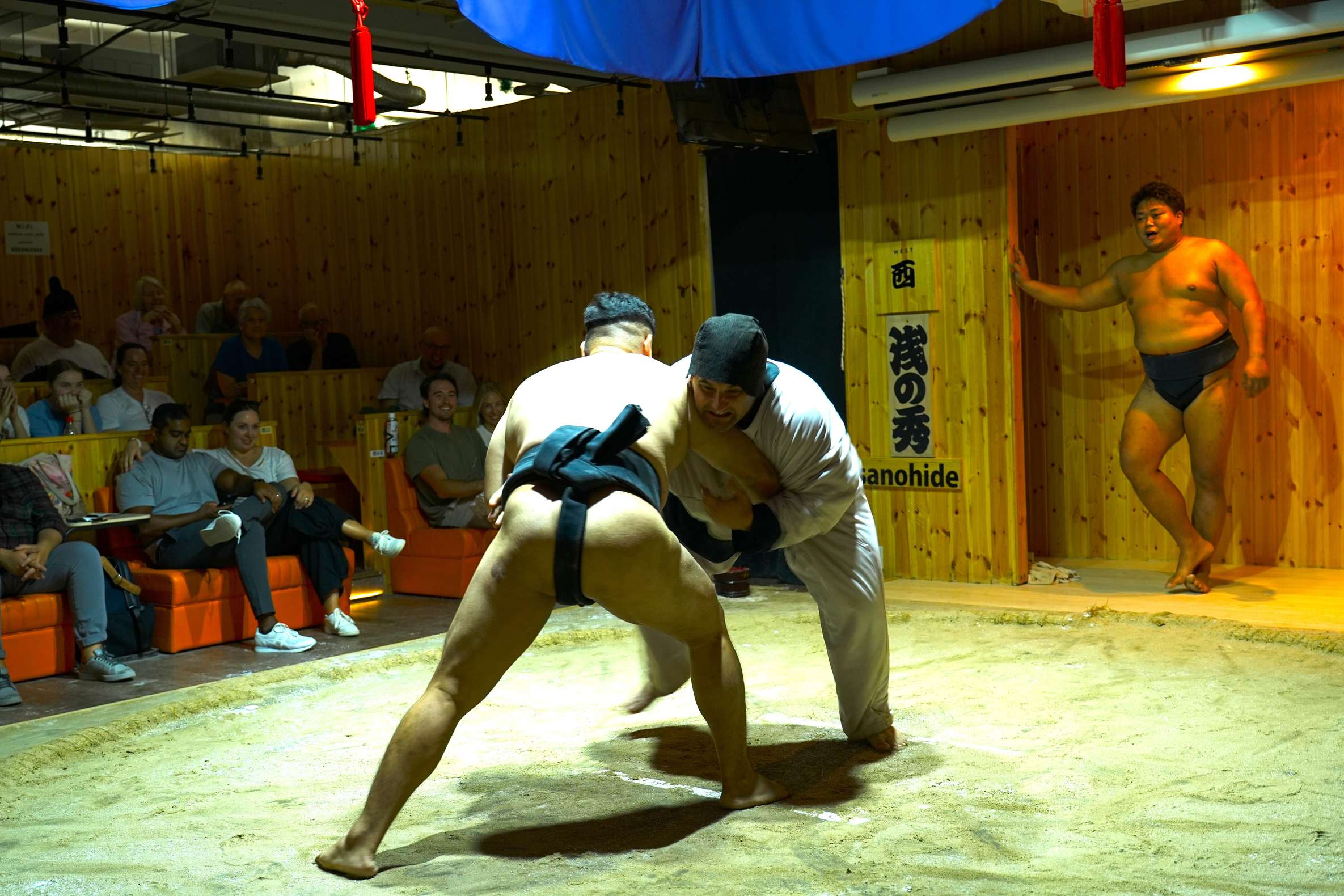
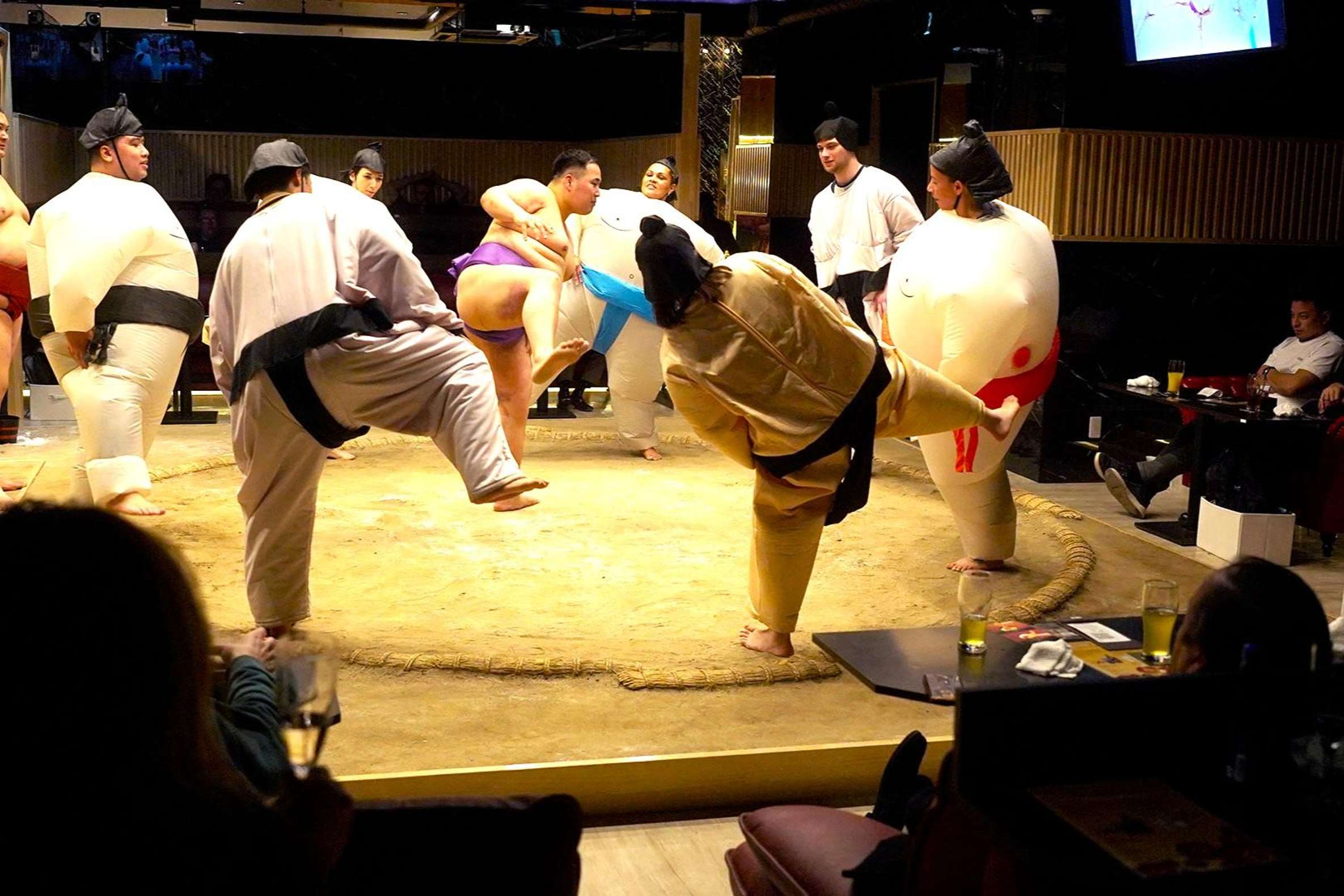
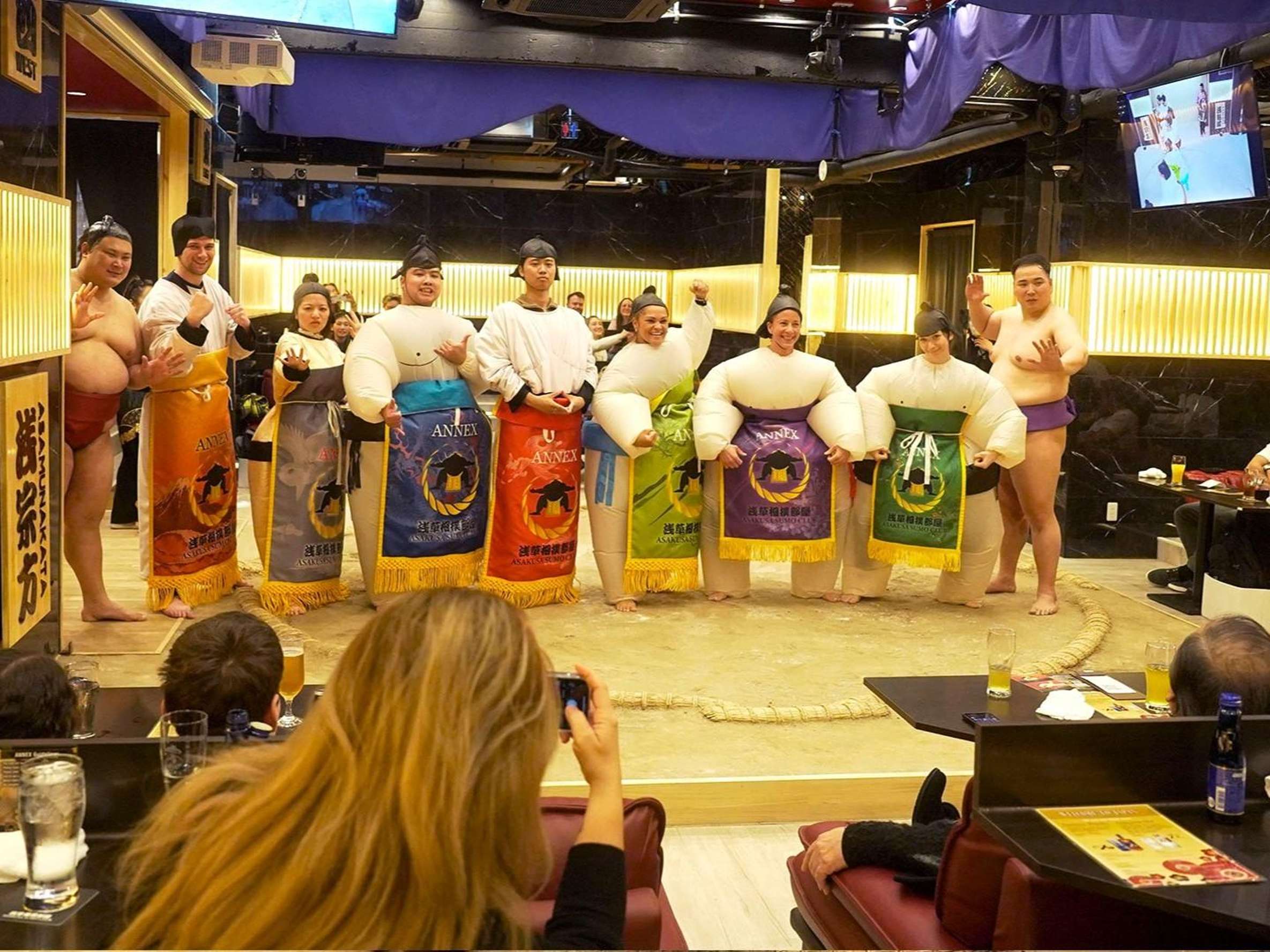
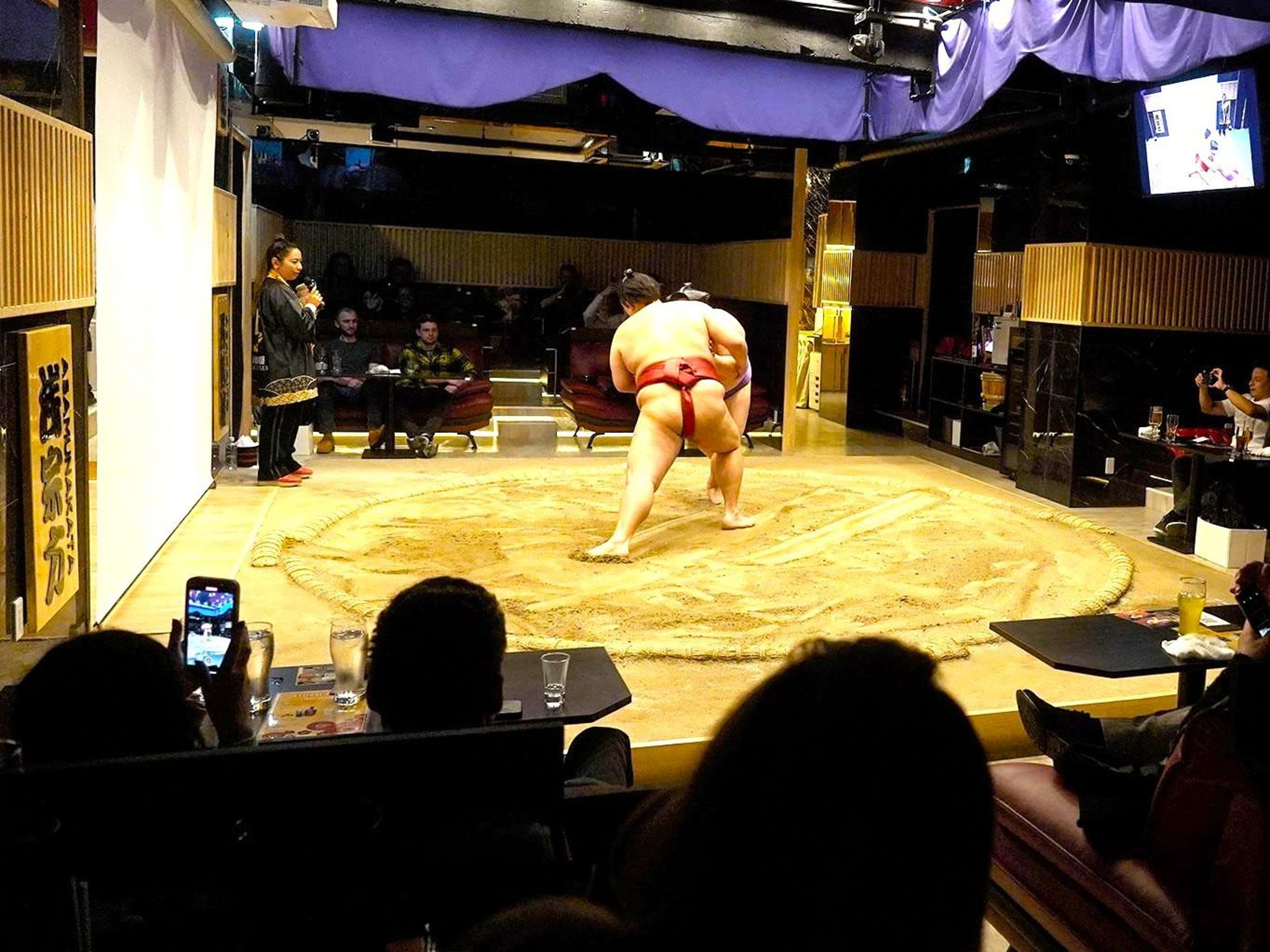
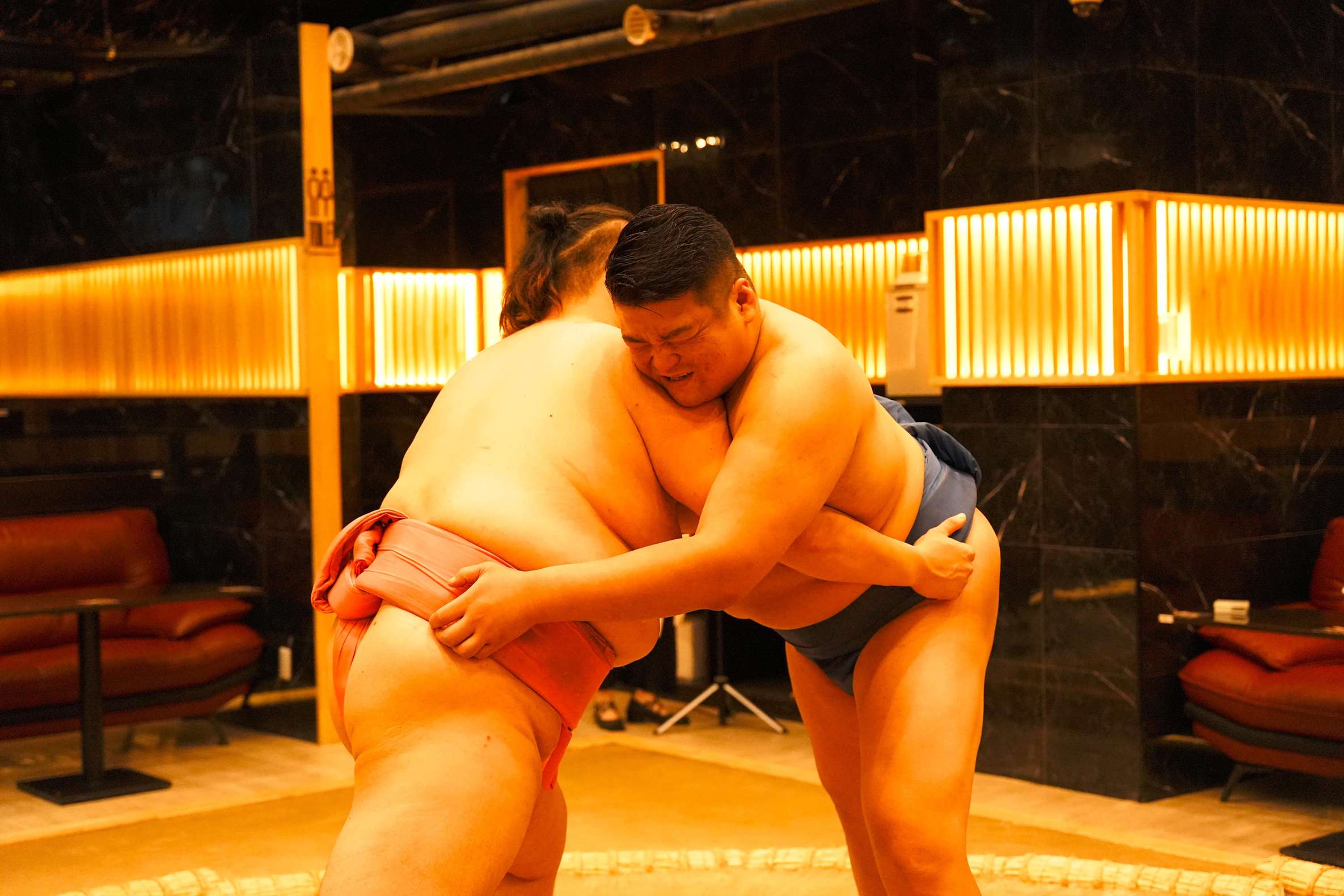
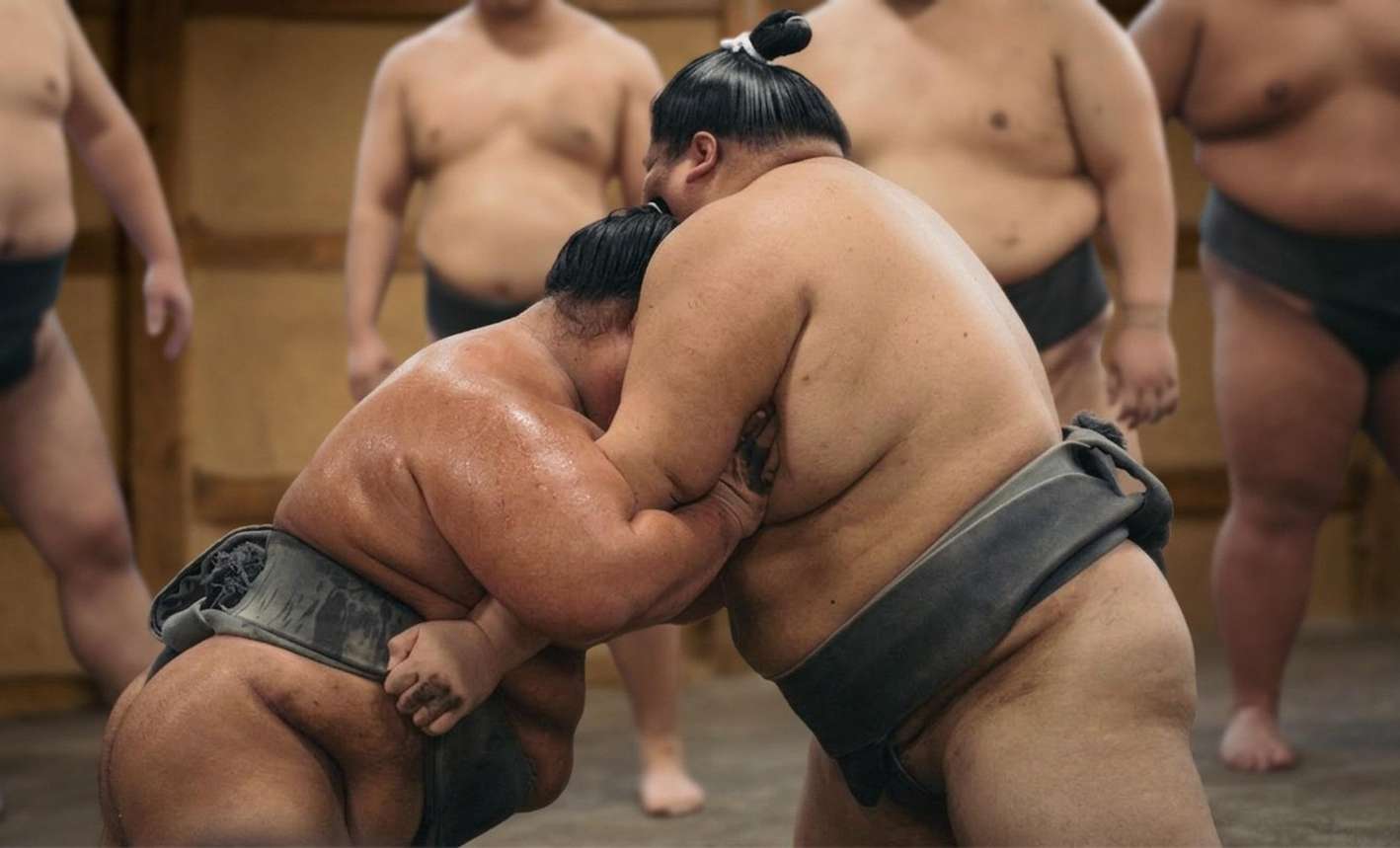
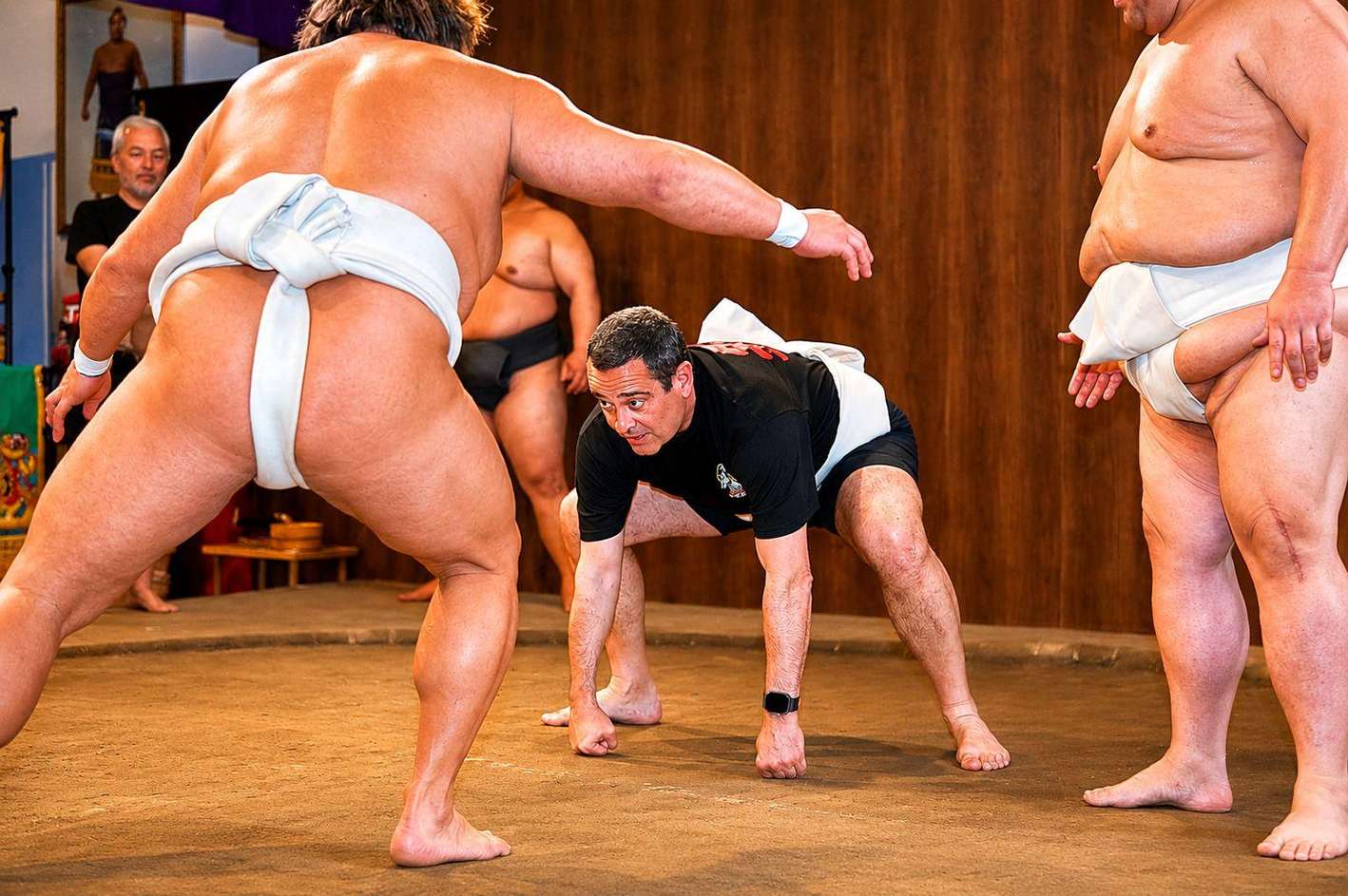
Retired professional wrestlers then take over: morning training exercises, technique demonstrations, and a best-of-three exhibition match. If your name comes up in the lottery, you put on a mawashi and step into the ring for a friendly bout.
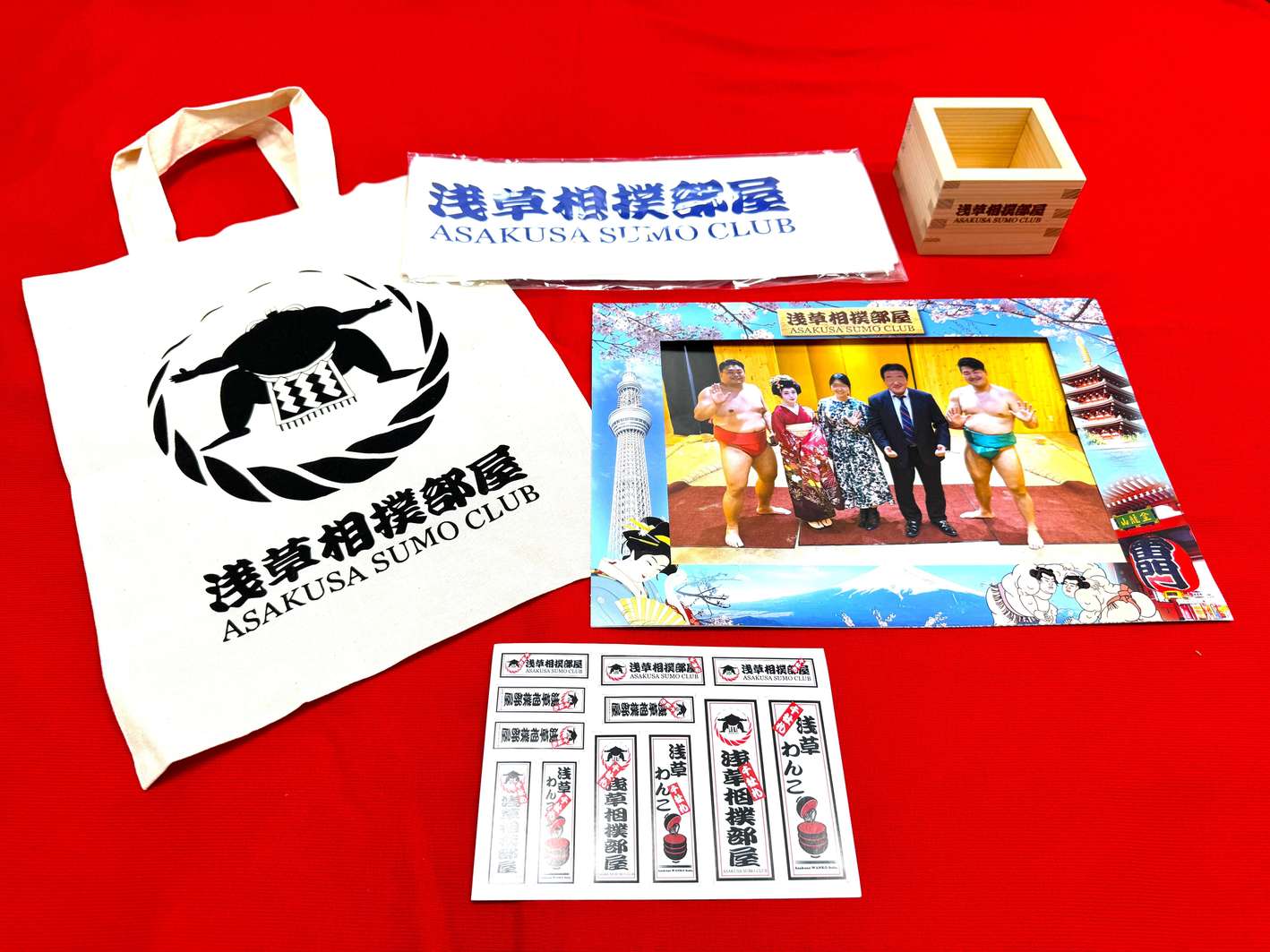
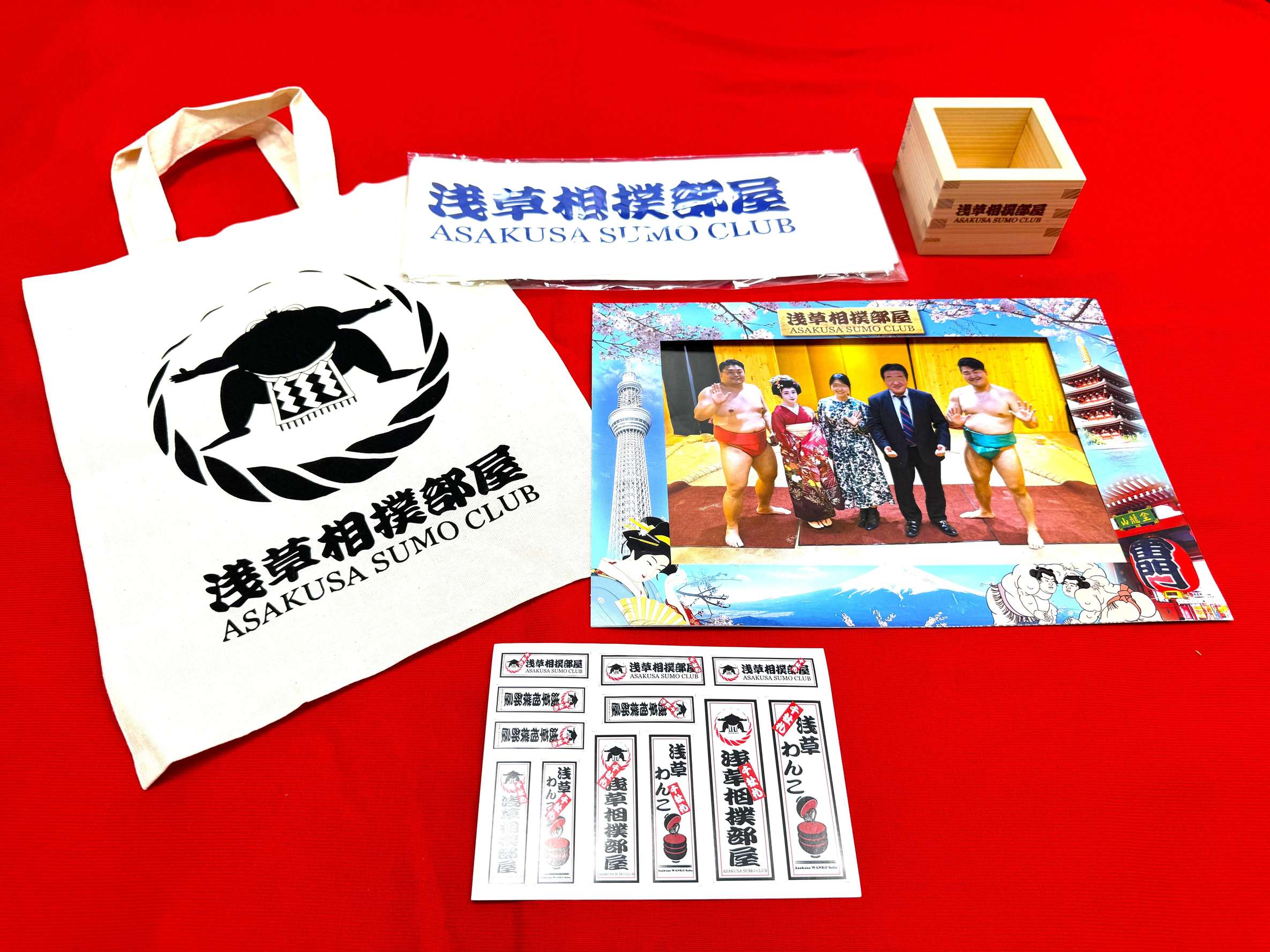
Everyone gets a printed group photo with the wrestlers, plus a souvenir set. The whole thing runs two hours, start to finish.
Sumo has deep roots here: matches were staged on the Senso-ji temple grounds back in the Edo period, so the district knows how to put on a show.
1Geisha dance opening· about 10 minA geisha in elegant kimono performs a traditional Japanese dance to open the show, setting the tone before the wrestlers appear.2Chankonabe dinner· about 40 minAll-you-can-eat chicken hot pot and Japanese dishes arrive at your seat, with one complimentary drink included and more available for purchase.3Techniques and rules· about 25 minAn English and Japanese speaking host explains sumo history, etiquette, and classic moves while retired wrestlers demonstrate training exercises.4Best-of-three matches· about 20 minFormer professional wrestlers face off in a best-of-three exhibition bout on the real dohyo at the center of the room.5Ring challenge· about 10 minA few guests step into the ring to spar with a wrestler. Spots are limited and drawn by lottery when demand is high.6Photos and souvenirs· about 15 minEach group takes a commemorative photo with the wrestlers, printed as a souvenir, and you leave with a small gift set too.
Included
Live bilingual commentary (English and Japanese) by a moderatorEntertaining sumo show performancesChance to step into the ring and challenge a sumo wrestler (limited to a few guests per show; participants selected by lottery if demand is high)Traditional Japanese dance performance by geishaAll-you-can-eat chicken hot pot and Japanese dishes1 complimentary drink; additional drinks available for purchase
Not included
Meals, seating, and souvenirs for infants
What travelers said about the Asakusa Sumo Club show
They laughed through most of the evening, with comedy and the bilingual host carrying the show.
Best surprise
Many families were surprised when their printed photo with the wrestlers and a souvenir gift bag came free.
Most common wish
Several reviewers wished the actual wrestling lasted longer than the few minutes the bouts took.
How to book the Asakusa Sumo Club show
01
Pick your date and start time
Choose the evening seating at 6 pm if you want Sensō-ji and Nakamise-dori first. Their stalls wind down around 5 pm, so a late afternoon temple walk slots neatly before the show.
RecommendedSpend the hour before the show near the temple, then walk over as the lanterns come on
Pro tipThe whole evening runs two hours, so you can plan a late drink nearby afterwards without rushing
02
Choose your seating option
Standard seats sit at the main store or the ANNEX behind it, both with a clear view of the ring. VIP seats are front-row, right up against the action.
Pro tipThe room is intimate and almost every seat faces the ring closely, so the front row is a nice upgrade rather than a need
Common mistakeFirst-timers book the cheapest option twice by accident, once for the main store and once for the ANNEX. They run the same show, pick one
03
Enter your meal and seating needs
Vegan and vegetarian chankonabe exist, but you must flag them when booking and at least two days ahead. The venue cannot do gluten-free or halal meals, though you may bring your own food.
ImportantDietary requests made on show day get a regular meal, so write them into the booking the moment you reserve
Common mistakePeople assume the hot pot is allergy-safe. The broth mixes chicken, bonito, kelp and shiitake dashi, so flag any allergy when you reserve
04
Pay and keep your confirmation
Cancel up to 24 hours before the show for a full refund, so booking early carries little risk. Your confirmation arrives with the details staff will check at the door.
Pro tipIf plans shift, cancel a full day ahead of the show and the refund follows
ImportantBabies under one year have no meal, seating or souvenir included, and wheelchair-accessible seating is limited, so mention it when you book
05
Arrive and check in
On the day, give your reservation details to the staff at the entrance and they walk you to your seat. Show up on time, since a show on a fixed schedule may turn latecomers away at the desk.
Common mistakeWandering Asakusa too long and arriving late. Late entry can be refused and no refund follows
RecommendedFrom Asakusa Station on the Tsukuba Express it is a two-minute walk, so build in ten minutes for finding the door
What to know before you book the Asakusa club sumo show
Can stop the dayGood to knowGood news
01
ChoosingWhat it is, who it suits, when to go
5
The show
The evening is built around entertainment: retired wrestlers run comedic exhibition bouts, rule demonstrations and training moves. If your dates line up with the January, May or September tournaments at Ryogoku Kokugikan, that is where the real competitive matches happen.
Food
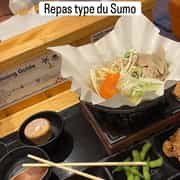
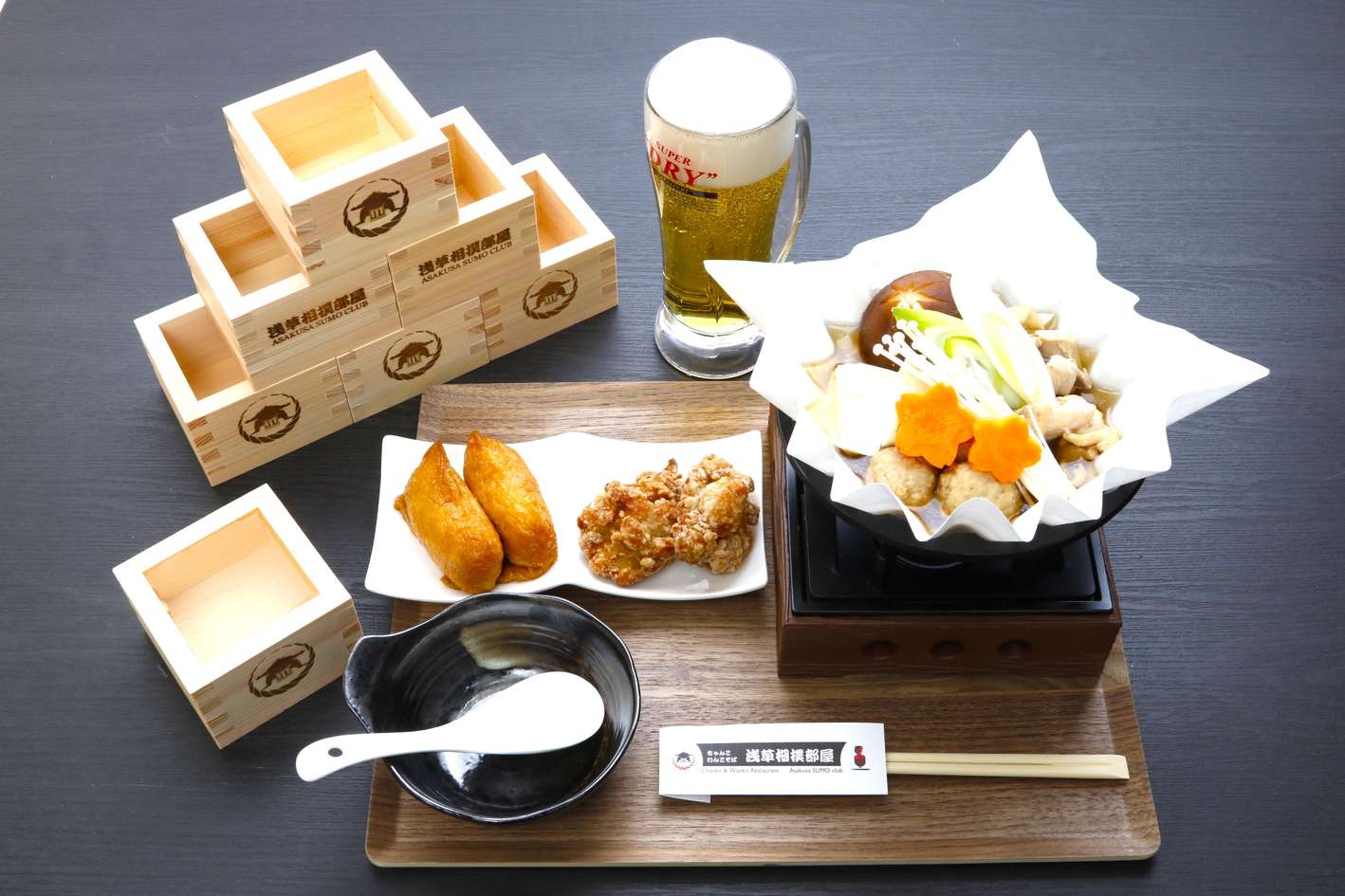
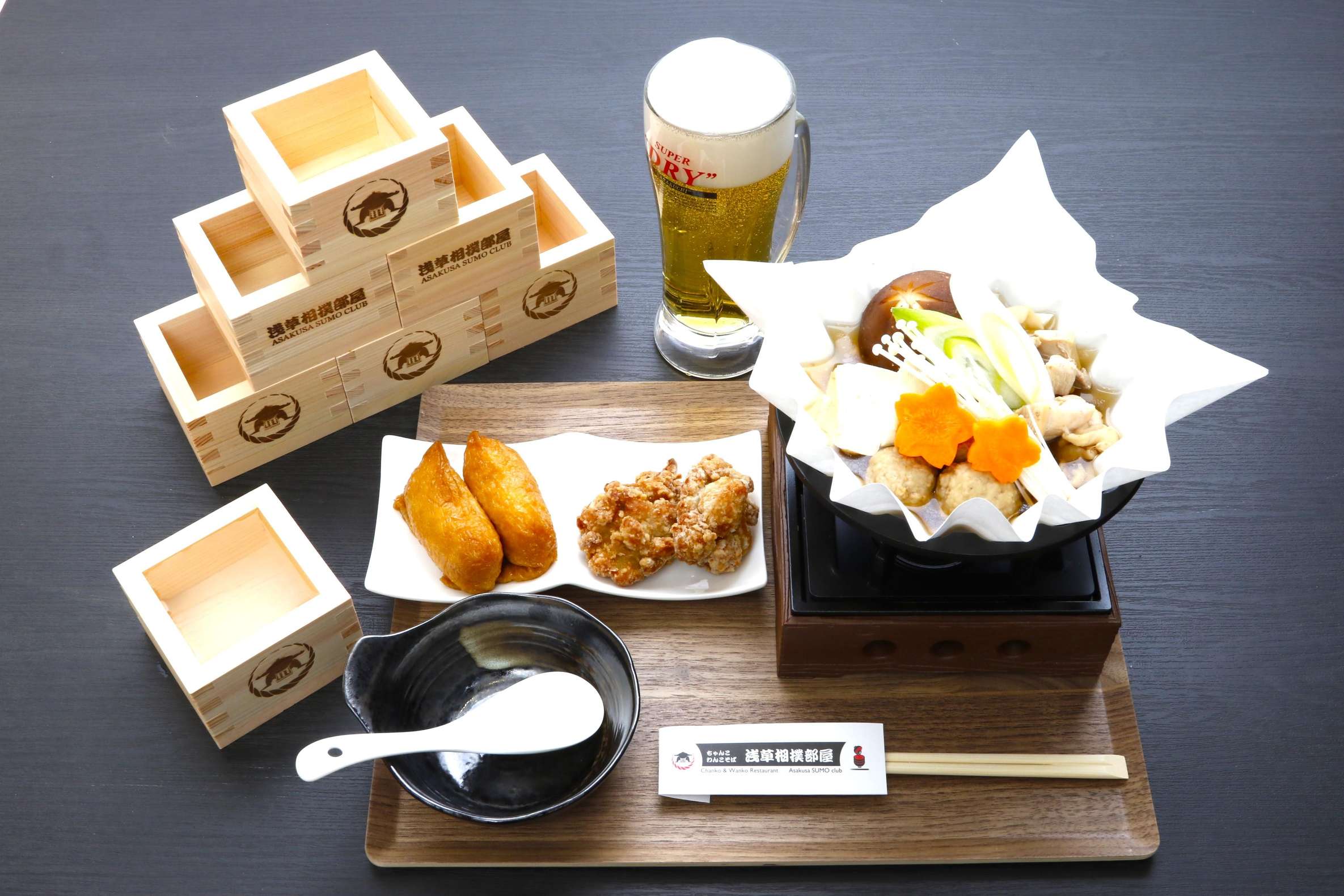
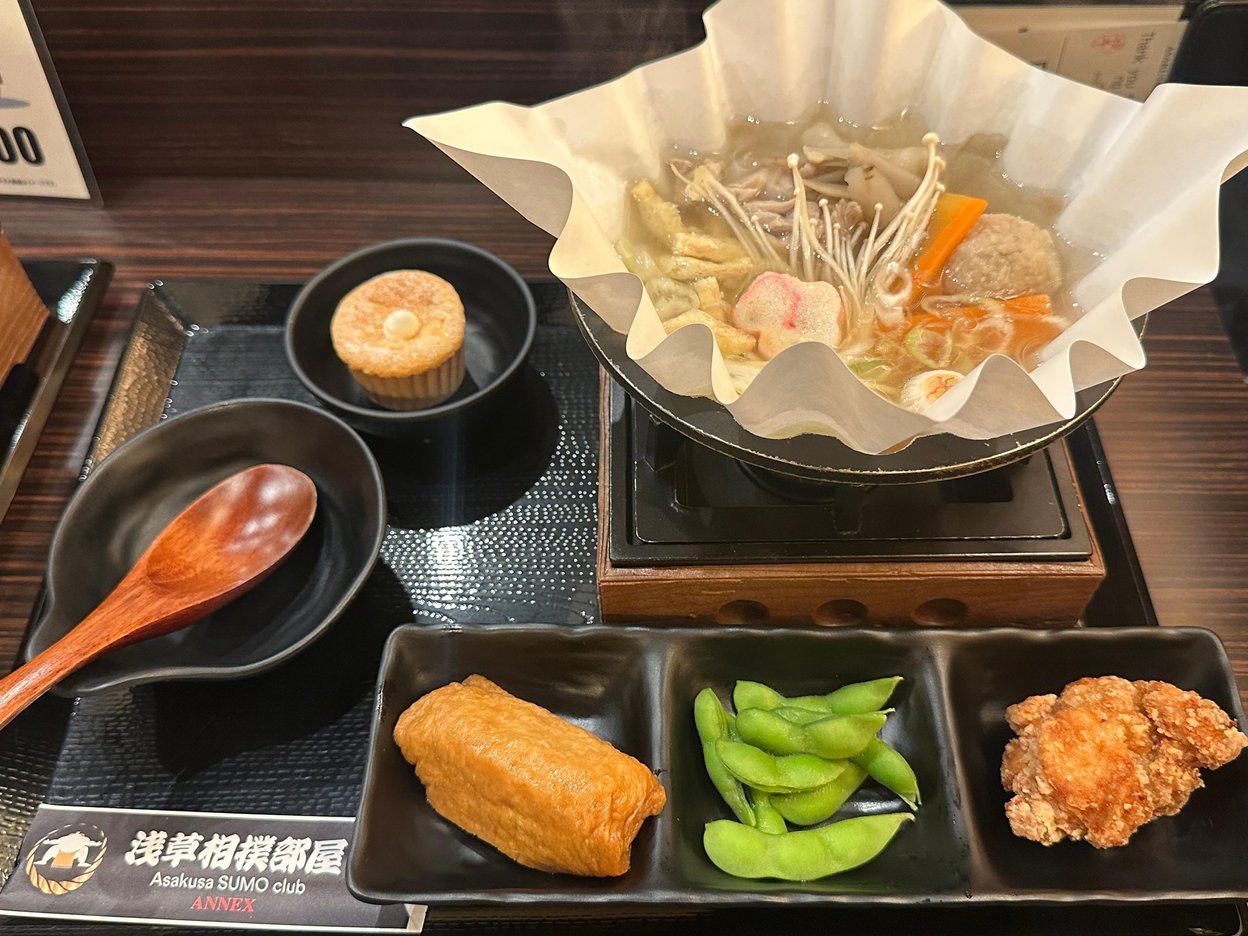
The standard package is all-you-can-eat chicken chankonabe with inari sushi, fried chicken, edamame and dessert. The hot pot broth blends four dashi bases: chicken, bonito, kelp and shiitake. Upgraded packages add wagyu sukiyaki and tempura.
Drinks
One drink per person is included, and extras are paid for separately. Higher-tier sofa-seat packages add a welcome glass of champagne and all-you-can-drink Japanese whiskey, wine, draft beer and soft drinks.
Seating
Standard seats give a clear view of the ring; the VIP option puts you in the front row. The room is small enough that views stay good almost anywhere, and you may be seated at a table with other guests. Solo visitors are drawn into the action rather than left out.
Noise
The room gets loud: thigh slaps, the host's microphone and a cheering crowd. Travelers who want a quiet, low-key evening do better with a morning stable visit than with this show.
02
BookingHow far ahead, and what happens if plans change
1
Cancellation
Both the standard and the luxury package allow you to cancel up to 24 hours in advance for a full refund. The whole experience runs about two hours.
03
Before you goPapers, health, what to bring
4
Dietary needsCan stop the day
Vegetarian and vegan chankonabe exists (soy milk or miso broth with tofu), but the venue cannot manage gluten-free or halal meals. You may bring your own food instead. Any special meal needs notice at booking, at least two days ahead.
Ring time
Only a few guests per show get to step onto the dohyo, and when demand is high the challengers are drawn by lottery. Children can volunteer, though staff may decline a child by age or size. Pregnant guests and anyone with mobility concerns or injuries sit this part out.
Children
The show welcomes kids of all ages as spectators, though babies under 1 are not admitted and meals, seating and souvenirs for infants are not covered by the ticket. It is a family-friendly, comedy-driven evening rather than a hushed viewing.
What to wear
No special outfit is needed. You leave your shoes before entering, and the venue provides the sumo wear or mawashi belt. Loose gym-style clothes work best if you hope to be called into the ring.
04
On the dayWhere to be, when, and how you get there
1
ArrivalCan stop the day
Give your reservation details to the staff at the entrance and they walk you to your seat. Shows run on a fixed schedule and the front desk may refuse late entry, with late arrivals and no-shows not eligible for refunds. Aim to arrive well before start time.
05
During the tourWhat is expected of you
1
Photos
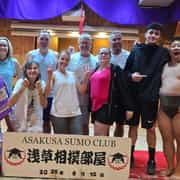
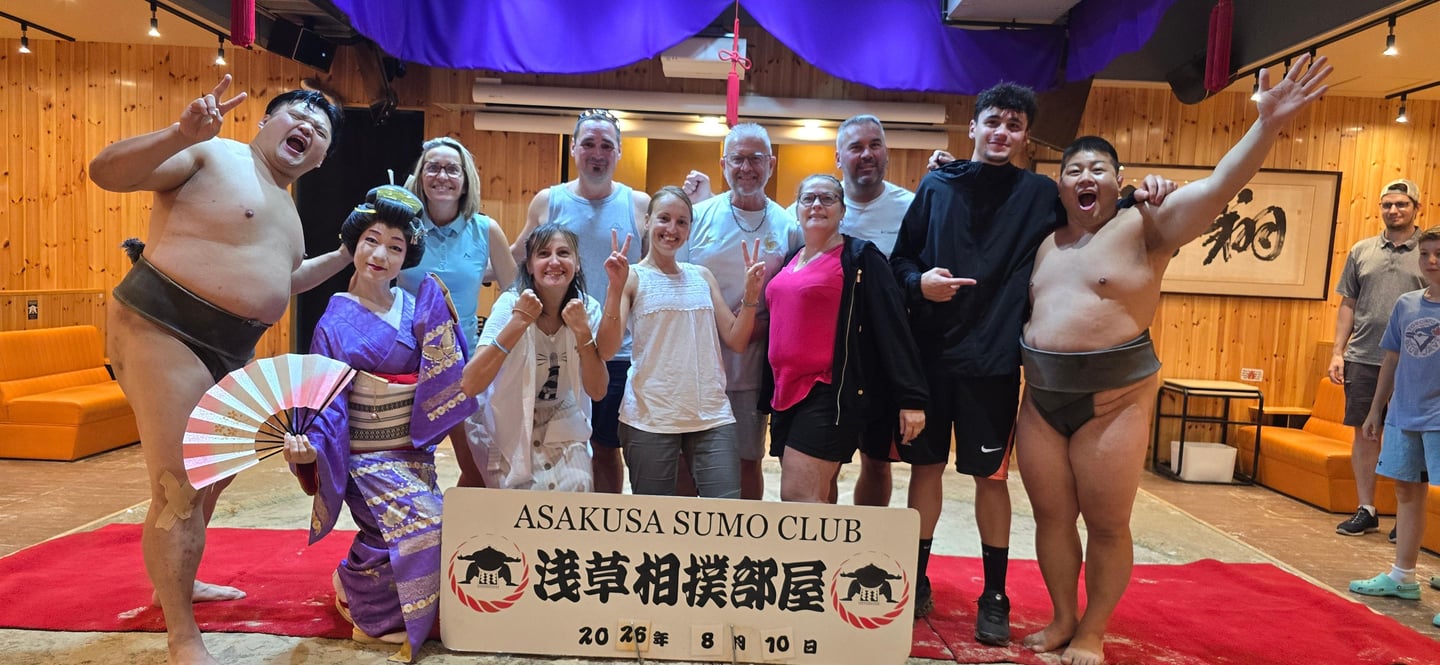
After the matches, each group is called to the ring one at a time for a photo with the wrestlers and the geisha, and staff print a copy for you. Once every group has had a turn, you can take more photos with the performers outside using your own phone.
Asakusa Club Tokyo - an evening of sumo, hot pot and geisha
Two hours, one clay ring in the middle of the room, and all-you-can-eat chicken hot pot. The Asakusa Club settles the questions that decide your evening: what the show includes, which seat to book, and what to wear if you want a turn in the ring.
Tokyo
If you only remember three things
1
Book at least two days ahead if you want the vegan or vegetarian hot pot, and remember gluten-free and halal meals are not available.
2
Plan backwards from the 6 pm seating: latecomers can be refused at the desk with no refund.
3
Wear slip-on shoes and stretchy clothes if you want a shot at the ring challenge.
Is the Asakusa Club dinner show worth it without tournament tickets
Grand Sumo tournaments run in Tokyo only in January, May and September, and entire 15-day tournaments sell out online within minutes. Same-day box office sales have been discontinued.
If your trip falls outside those three months, or the tickets vanished before you saw the page, an entertainment show is the way most visitors see sumo at all.
The Asakusa Club makes no claims to tournament stakes. Retired professional wrestlers run comedic demonstrations and rule explanations in English, and you sit close enough to hear thighs slap the ring. No ranking is on the line, and that is the design: the evening is built for first-timers who want explanations with their dinner.
Sumo in Asakusa is also old business. Matches were staged on the Sensō-ji temple grounds for centuries, part of the street entertainments of Edo Tokyo, and a ring went up beside the main hall for the Shogun in 1843. An evening like this continues a very long local habit.
One detail people are glad to learn before booking: the wrestlers are genuine former professionals who once competed for real. The bouts are lighthearted demonstrations, so serious fans should keep chasing tournament tickets, while everyone else gets to understand sumo while eating its signature hot pot.
What people wrongly assume
MythA dinner show is a competitive tournament
Reality
The bouts are exhibition matches and rule demonstrations with no ranked outcome; real competition happens only at official tournaments.
MythThe wrestlers are actors in costume
Reality
The performers are retired professional sumo wrestlers who once competed for real.
MythYou can walk in on the night
Reality
Reservations are needed in advance, and walking in is especially unreliable for larger parties.
Tour for this
Tokyo: Sumo Entertainment Show with Chicken Hot Pot & Geisha4.8★ (8,711) · 2 hours · Free cancellation
What happens during an evening at the Asakusa Club
The whole thing runs two hours, and it moves quickly enough that you never wonder what comes next. A geisha opens the evening with a traditional dance in kimono, a graceful start before the comedy kicks in.
At the Asakusa Club the ring sits in the middle of the restaurant, so no seat is far from the action.
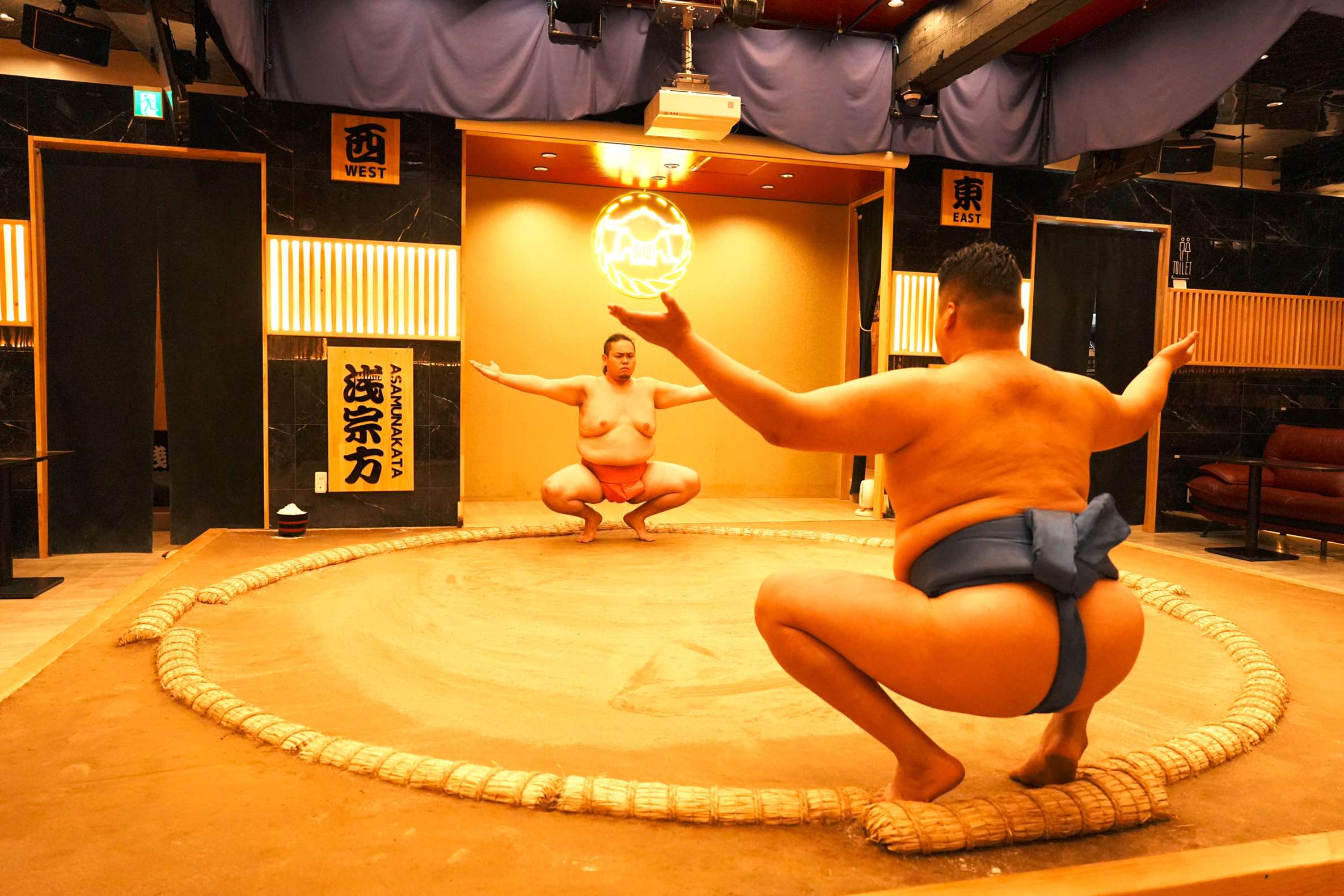
After the dance, the retired wrestlers walk you through sumo history, the basic techniques and the forbidden moves, with a bilingual MC handling the English and Japanese. Then come the bouts: a best-of-three match between the two wrestlers on a real clay ring, played for laughs as much as for throws.
How the two hours unfold
1
Doors and check-in
Staff take your reservation details at the entrance and walk you to your seat
Seating may be shared with other guests
2
Opening geisha dance
A traditional Japanese dance sets the tone before the wrestling begins
A photo with the geisha follows the performance
3
Meal service
All-you-can-eat chicken chankonabe and Japanese dishes come round during the show
Vegetarian and vegan pots on request
4
Demonstrations and bouts
Training moves, comedic rule demos and a best-of-three match between retired pros
Filming from your seat is fine
5
Ring challenge and photos
Selected guests step into the ring, then each group is called down for a commemorative photo
You get a printed copy to take home
The photo is the closing ritual. Each group is called to the ring one at a time, and once everyone has had a turn you can keep shooting with your own phone outside the venue. People mention the printed photo as the souvenir they actually keep.
Tour for this
Tokyo: Luxury Sumo Show Experience & Japanese Cuisine & Drinks4.7★ (1,033) · 2 hours · Free cancellation
Which Asakusa Club ticket - chanko hot pot or the luxury upgrade
Two ways to buy the same show. The standard package gets you the original chicken chanko hot pot with inari sushi, karaage, edamame and dessert, all you can eat, plus one drink with extras paid separately. It is the ticket most people book, and nobody leaves hungry.
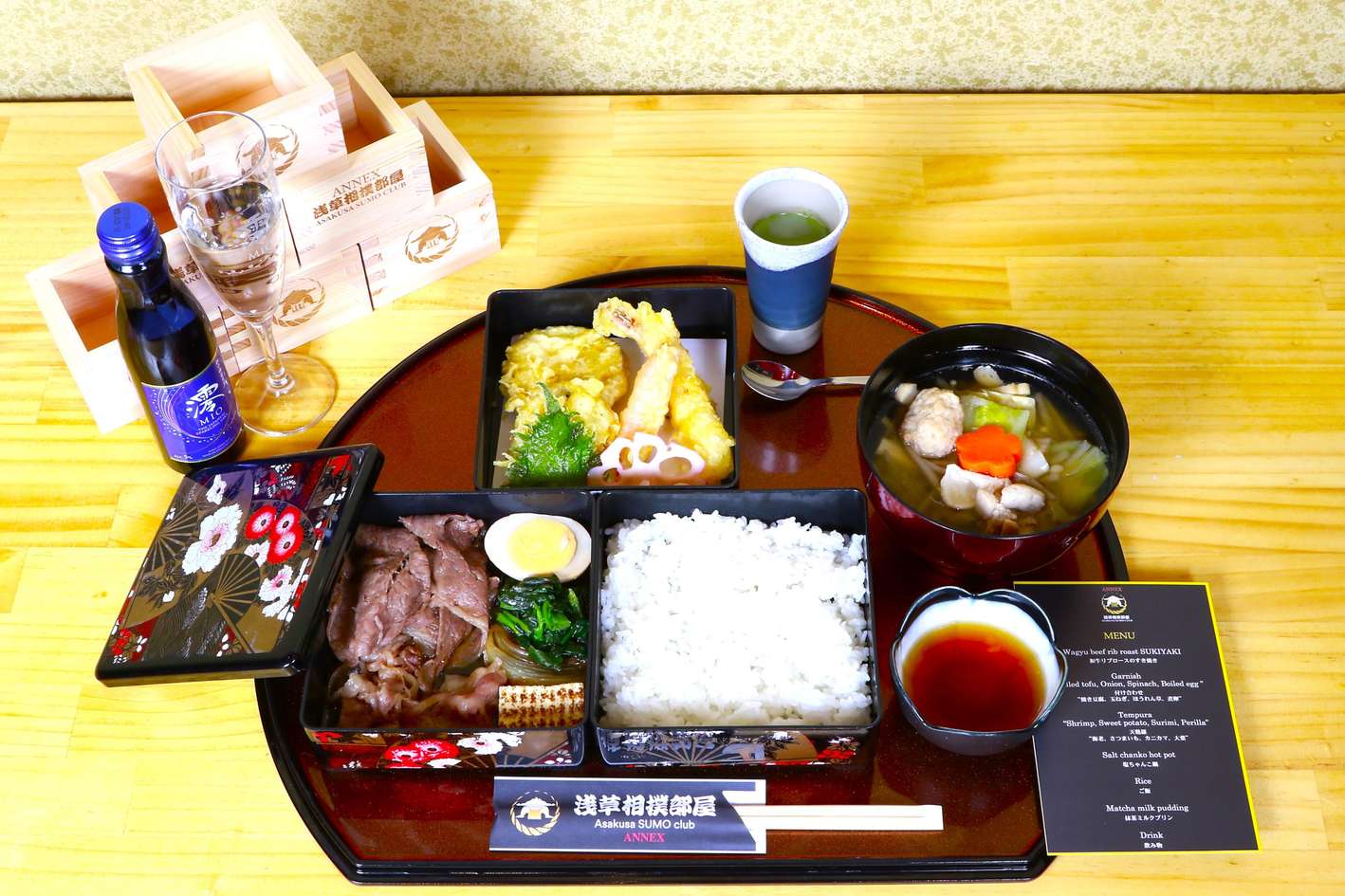
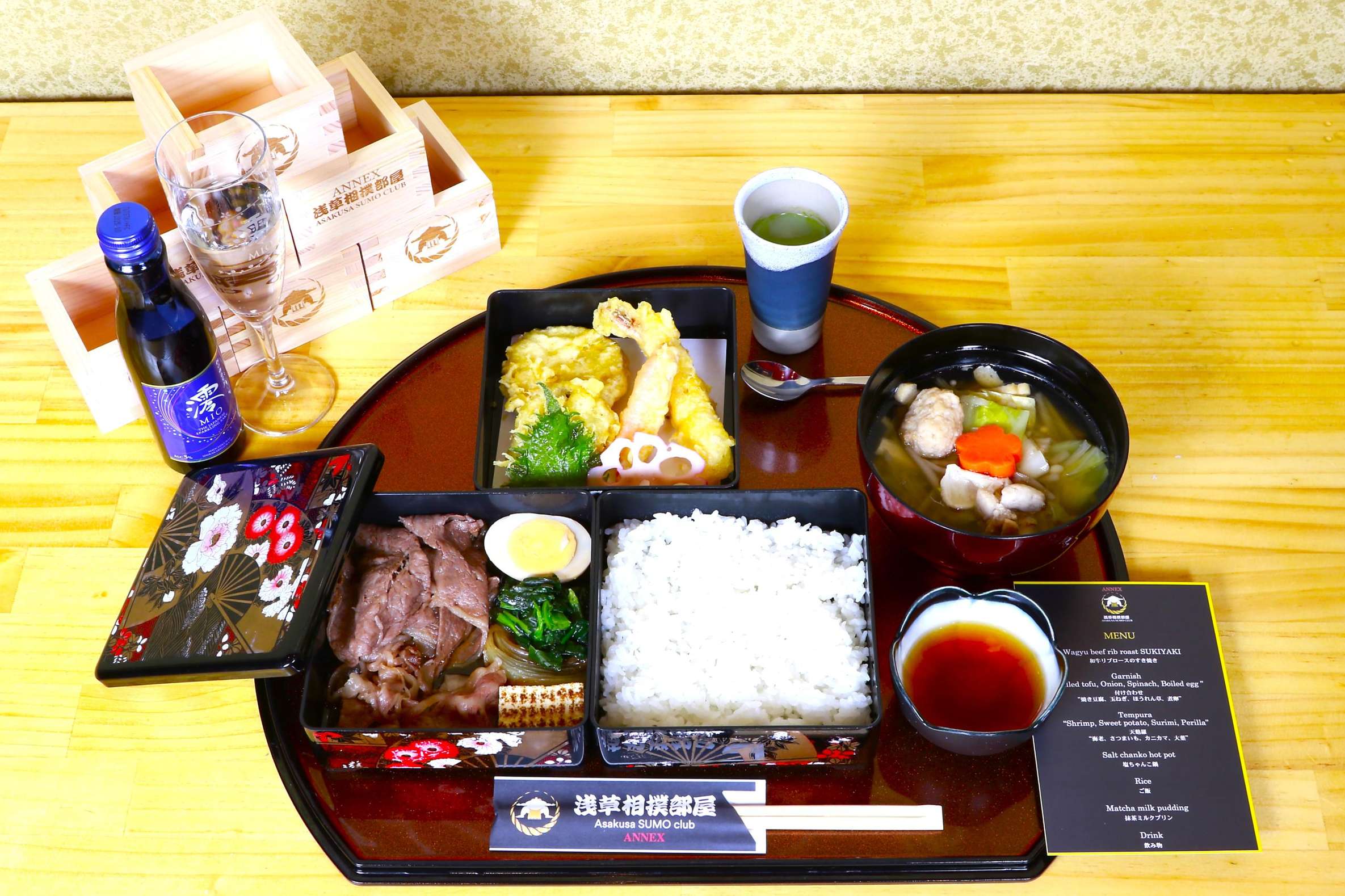
The First and Business Class packages change the evening's texture. Wagyu sukiyaki joins the chanko pot, tempura appears on the table, a welcome glass of champagne arrives, and the drinks run free: Japanese whisky, red and white wine, draft beer and soft drinks. You sit on sofas instead of standard chairs.
Standard chanko package versus luxury package
Standard
Business and First Class
Meal
Original chanko hot pot, inari sushi, karaage, edamame, dessert, all you can eat
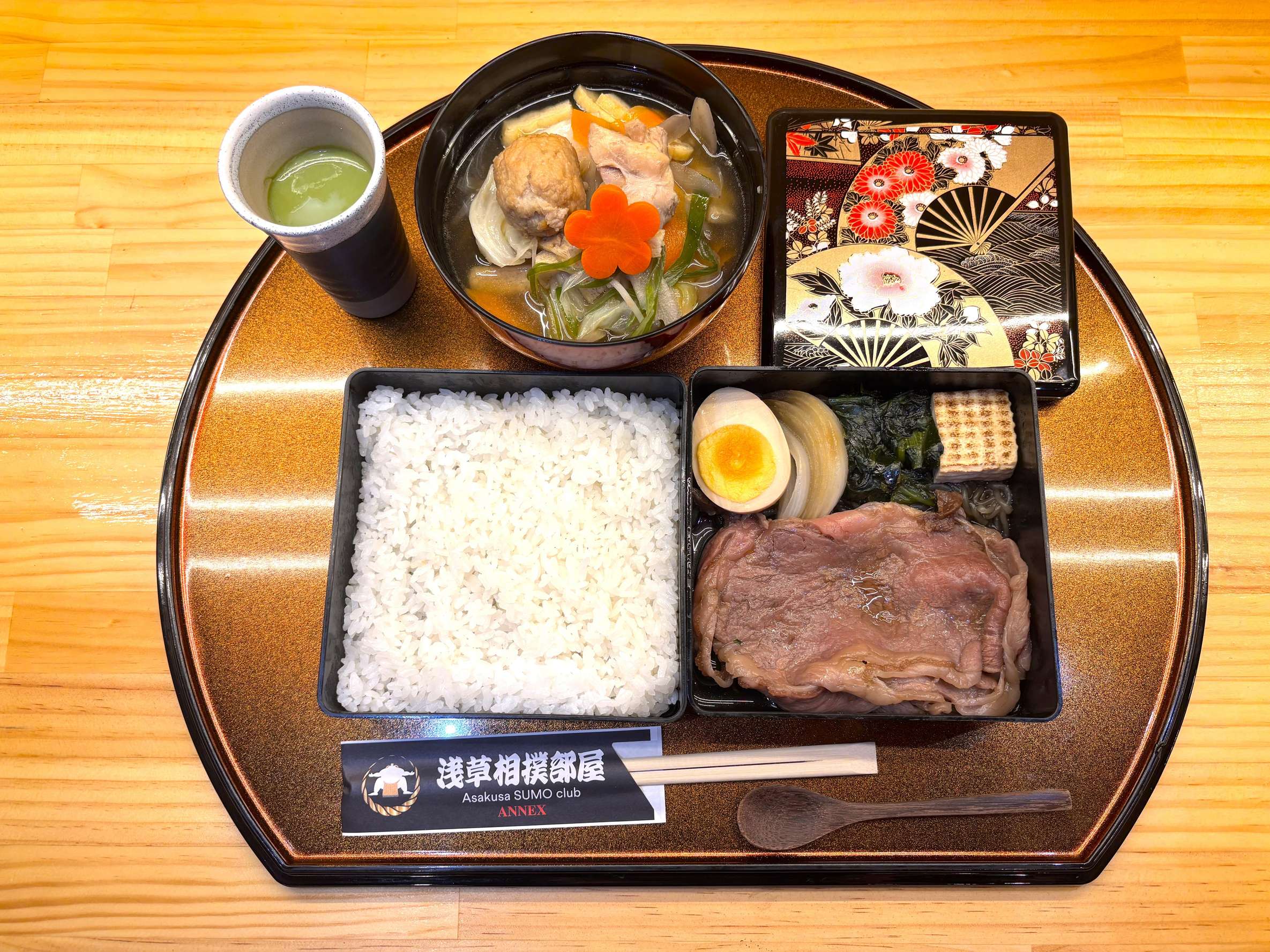
Chanko hot pot plus wagyu sukiyaki bento, tempura and matcha dessert
Drinks
One complimentary drink, extras paid separately
Welcome champagne and all-you-can-drink whisky, wine, beer and soft drinks
Seating
Comfortable seats with a clear view of the ring
Relaxed sofa seating
Suits
First-timers who want the classic dinner show
Anyone turning the evening into a proper night out
Standard
Meal
Original chanko hot pot, inari sushi, karaage, edamame, dessert, all you can eat
Drinks
One complimentary drink, extras paid separately
Seating
Comfortable seats with a clear view of the ring
Suits
First-timers who want the classic dinner show
Business and First Class
Meal
Chanko hot pot plus wagyu sukiyaki bento, tempura and matcha dessert
Drinks
Welcome champagne and all-you-can-drink whisky, wine, beer and soft drinks
Seating
Relaxed sofa seating
Suits
Anyone turning the evening into a proper night out
One check before you commit: at some sumo shows the ring challenge is tied to a higher-tier ticket, so look at what your chosen option includes if stepping into the ring is the whole reason you came. On the luxury package, the ring challenge comes with every seat, which settles it.
Tour for this
Tokyo: Luxury Sumo Show Experience & Japanese Cuisine & Drinks4.7★ (1,033) · 2 hours · Free cancellation
Where you sit at the Asakusa Club, and whether ringside matters
Here is the detail that saves you money: the room is small, and the view works from almost anywhere. Standard seats face the ring directly, and regulars say the front-row upgrade is a pleasure without being a necessity. Spend the difference on the meal instead.
The front-row seats do buy you something: wrestlers thrown from the ring land close, and the crowd noise around each bout hits harder. If the evening is a birthday or a once-in-a-trip splurge, take them. If not, standard seating serves the show just as well.
Solo travelers do well here. At the Asakusa Club Annex, single guests get pulled into the demonstrations and made part of the act, and seating is often shared with other parties, which turns into conversation more often than not.
What nobody tells you
Roughly eight volunteers enter the ring each show
The two retired wrestlers pick challengers by lottery when demand is high, so a spot is never guaranteed.
Solo guests are part of the act
Staff pull single travelers into demonstrations instead of seating them on the sidelines.
Shared tables are normal
Seating is not arranged for private dining, so expect neighbors and expect to talk to them.
The challenge itself is a friendly spar, padded up, with a wrestler who knows exactly how to make a first-timer look good and lose gracefully.
Tour for this
Tokyo: Sumo Entertainment Show with Chicken Hot Pot & Geisha4.8★ (8,711) · 2 hours · Free cancellation
How loud is the Asakusa Club, and will you follow the show
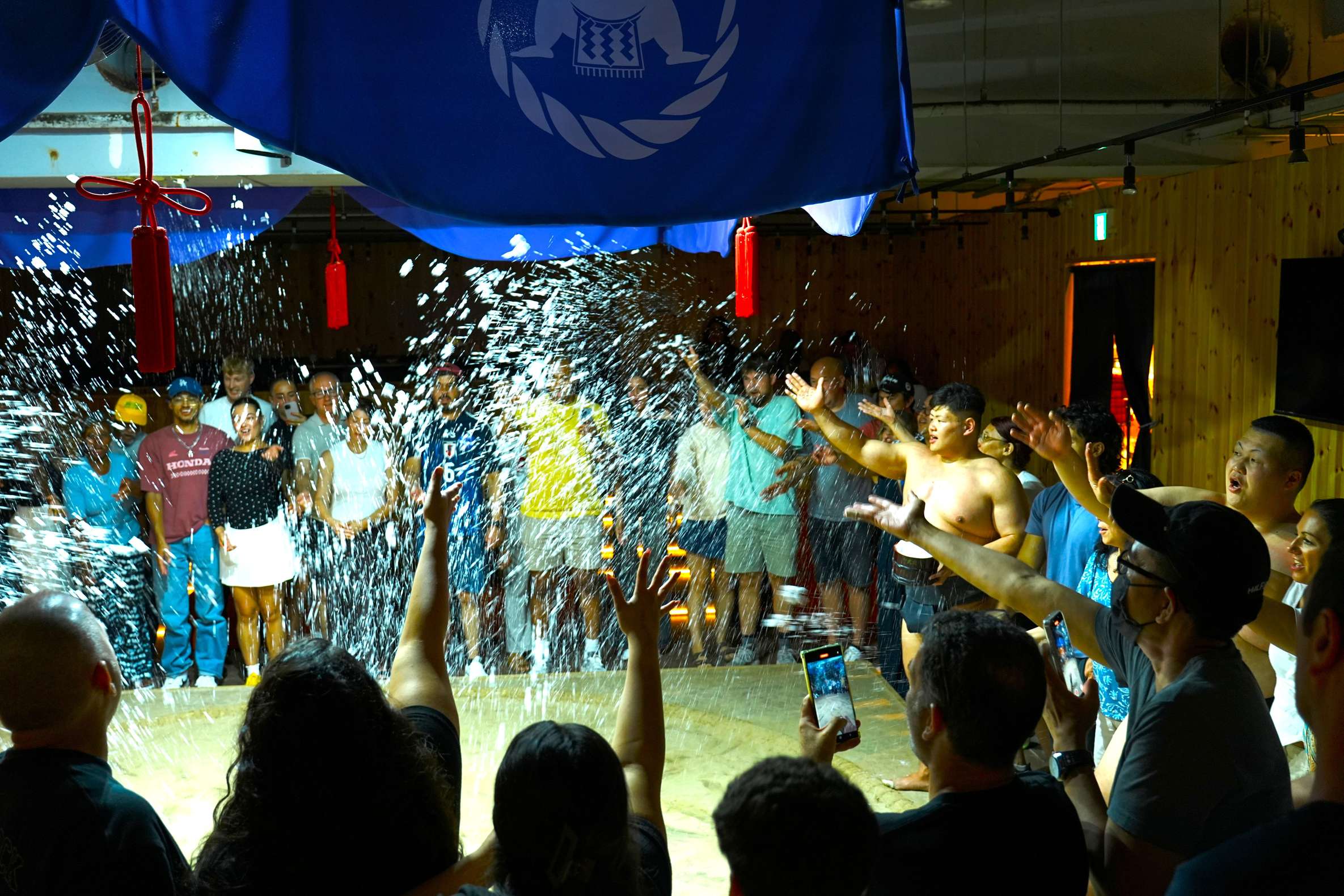
The honest answer on volume: it gets loud. Thigh slaps echo off the walls, the MC works a microphone, and the crowd reacts to every throw.
The atmosphere is energetic and a bit chaotic, and visitors with sensitive ears sometimes pick a quieter activity instead. If your group includes a baby, note the show is not suitable for infants under one.
Language is the easier question. A bilingual MC runs the whole show in English and Japanese, explaining the rules, the techniques and the fouls as they happen. First-time viewers consistently say the explanations are what make the sport click: what counts as a win, which moves are forbidden, why the referee points his fan.
That matters more than you might think. At a tournament you watch in near silence with no commentary at all; here every call gets translated into plain English while you eat. Casual viewers need no background knowledge of sumo to enjoy the night, and plenty of people leave understanding the sport better than they arrived.
If you are weighing this against a quiet cultural experience, decide by mood: treat it as a dinner party where wrestling keeps breaking out, and leave the contemplative evenings for a museum.
What to wear to enter the ring at the Asakusa Club
If the ring challenge is your reason for coming, dress for it. Shoes come off before you step onto the clay, so slip-ons beat lace-up boots on the night. Participants go barefoot or in clean socks they do not mind getting dusty.
The venue provides the sumo wear, whether a padded suit or a traditional mawashi belt, worn over your own clothes. What you wear underneath decides how the next half hour feels: loose, stretchy gym clothes that let you crouch deep and push. Stiff jeans fight every move.
What to wear for the sumo ring challenge
Pants or stretchy shortsAvoid skirts, as you put the sumo suit or belt on directly over your clothes and need to move and crouch freely.
Casual T-shirt or flexible topThe inflatable or padded sumo suit is worn over your regular top, so wear lightweight, breathable layers.
Slip-on shoesFootwear must be removed before stepping onto the dohyo, making easy on-and-off shoes the most practical choice.
Clean socksShoes come off around Japanese ring and tatami areas, making clean socks comfortable and polite to wear.
Loose, non-restrictive clothingSkip stiff denim or tight trousers that restrict deep bending, stomping, and pushing against a wrestler.
A note on who gets in: children can volunteer but may be declined based on age or size, and pregnant guests along with anyone with mobility concerns or injuries stay off the ring.
The rules exist because a dohyo set up for a show still carries its traditional build of clay, straw bales and a bow, and the surface does not forgive a bad landing.
One last encouragement from people who have done it: when the MC calls for volunteers, raise your hand. The spots are few, the match is friendly, and it is the part guests retell for years.
Asakusa Club meals - allergies, vegan and vegetarian chanko
The pot itself is worth understanding. The broth blends four dashi: chicken, bonito, kelp and shiitake, simmered with chicken, chicken meatballs, vegetables, wheat gluten and fried tofu. That is a lot of common allergens in one bowl, so check the fine print when you book, well before you sit down at the table.
If your meal needs matter
Gluten-free and halal meals cannot be provided Bring your own food instead; guests are welcome to do so at the venue.
Vegan and vegetarian eaters are covered, with two days' notice. The kitchen makes a vegan chankonabe in a soy milk broth and a vegetarian version with tofu in miso, and both must be requested at the time of reservation. A late request leaves the kitchen preparing the regular meal.
There is history in the chicken, too. Wrestlers traditionally avoided beef and pork because touching hands to the ground means losing a match, while chickens stand on two legs, a symbol of stability and victory.
The round chicken meatballs in your pot represent the white circle of a sumo win. Order the classic version and you are eating the meal exactly as the sport meant it.
Getting to the Asakusa Club from Shinjuku, Shibuya and Tokyo Station
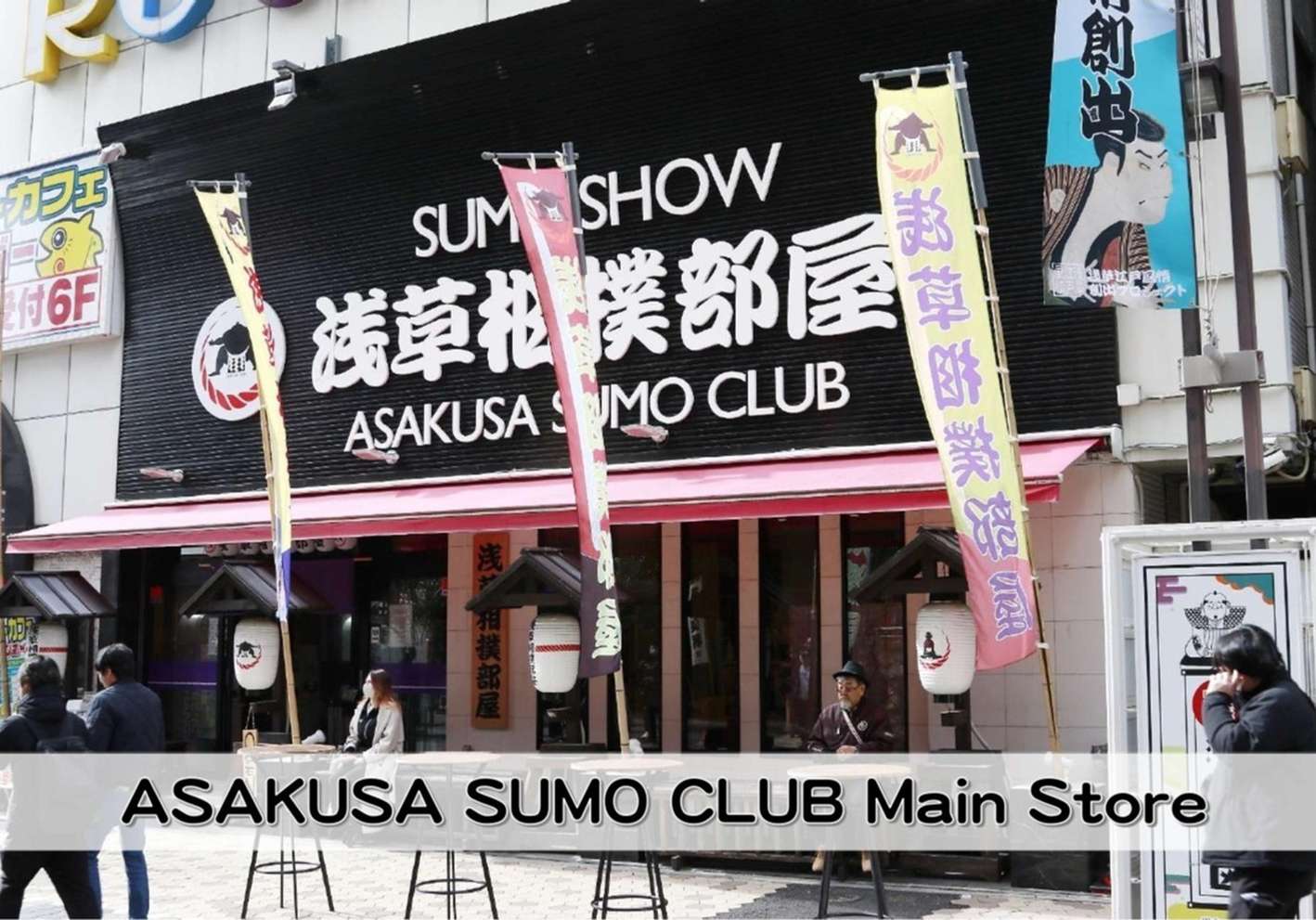
The venue sits at 2-10-12 Asakusa, and the Tsukuba Express exit is two minutes away: leave Asakusa Station by Exit A1 and you are nearly there. From the Tokyo Metro Ginza Line, exits 3 and 6 put you on an eight-minute walk.
From Shibuya, the direct Ginza Line takes about 34 minutes with no changes, which makes it the simplest ride of the three hubs.
From Tokyo Station, ride the Yamanote Line two stops to Kanda and change to the Ginza Line, about 15 minutes of train time plus the walk. From Shinjuku, the fastest combination is the JR Chuo Line with a change at Kanda.
JR Yamanote Line transfer to Ginza LineDirections →
23 minChange at Kanda
Cars work without traffic but trains beat them on every route here, and Asakusa's narrow streets around the temple make the walk from the station the pleasant part of the trip.
Whatever line you choose, build in a buffer: the show runs on a strict clock, and arriving late carries real consequences, which the next section covers.
Asakusa Club bookings - late arrival and changed plans
This venue keeps a strict schedule, and late entry can be refused at the front desk. Late arrivals and no-shows get no refund. That is the single booking rule that changes plans, so work your evening backwards from the 6 pm seating rather than forwards from dinner.
The 6 pm slot fits Asakusa's rhythm neatly. Sensō-ji's main hall and the Nakamise-dori stalls wind down around 5 pm, so you can wander the temple and the market in the afternoon light and walk straight to the show as the lanterns come on.
What happens if the day changes
If this happens
What happens then
You arrive after the show has started
The front desk may refuse entry, with no refund for late arrivals.
You miss check-in entirely
The booking counts as a no-show and is not eligible for a refund.
You cancel ahead of time
Bookings can be cancelled up to 24 hours in advance for a full refund.
Check-in itself is painless: give your reservation details to the staff at the entrance and they walk you to your seat. Book in advance regardless of party size; walking in without a reservation is exactly the mistake larger groups cannot afford.
The show's location does half your sightseeing for you. Kaminarimon gate sits a minute's walk away, and Sensō-ji itself four, so the temple complex and the sumo evening fold into one neighborhood without any extra travel.
The market hours work like this: the temple's main hall and much of Nakamise-dori wind down around 5 pm, though many of the snack and souvenir stalls keep trading until roughly 6 pm.
Either way, afternoon is the window, and the observation deck of the Asakusa Culture Tourist Information Center, two minutes off, is free and rarely crowded.
Sights within walking distance of Asakusa Sumo Club
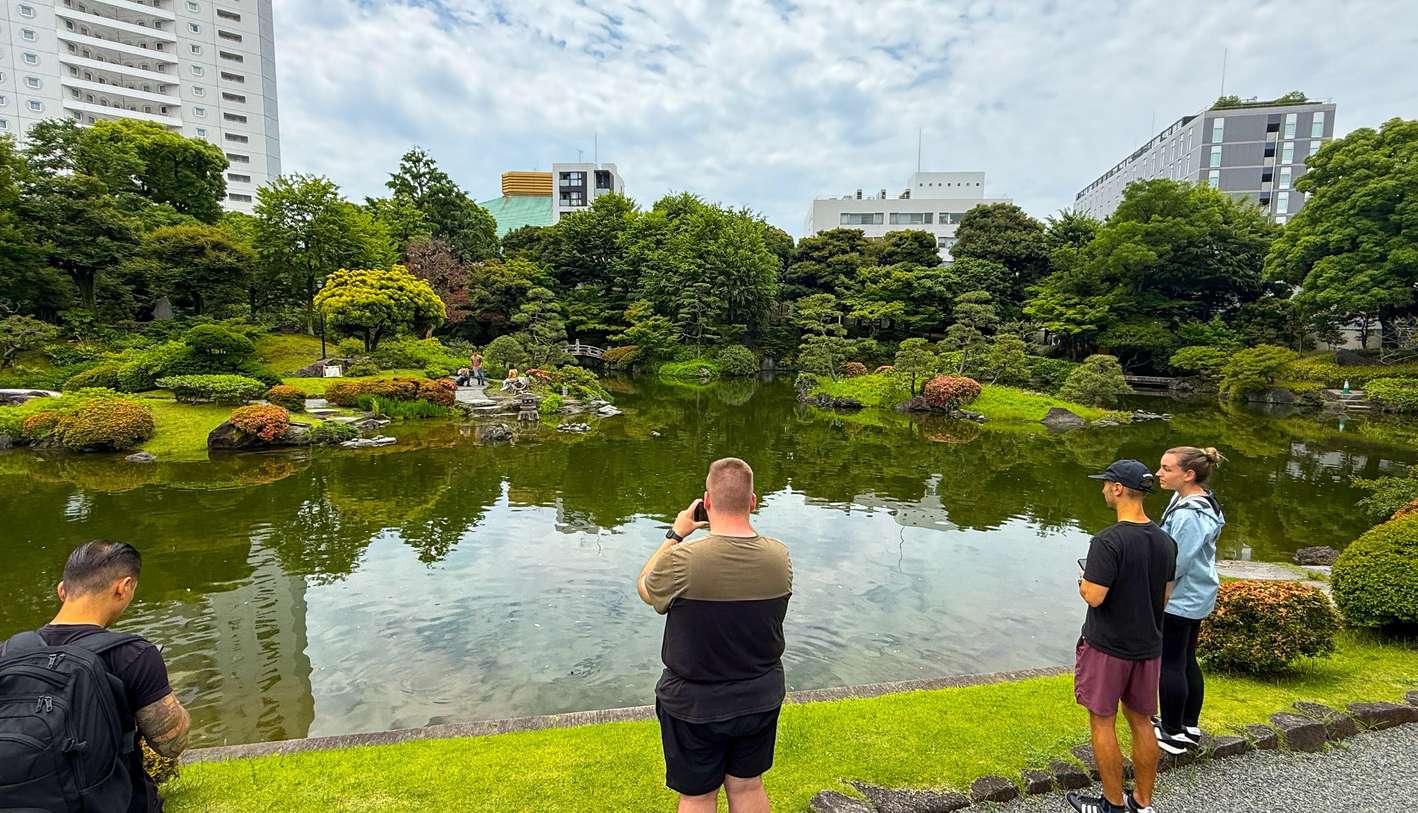
After dark, the schedule flips in your favor. Sensō-ji's main hall, pagoda and gates stay lit until 11 pm, so an evening stroll past the temple after the show is quiet and beautifully lit. The Sumida River waterfront nearby rounds out the walk.
Families with children or teenagers find this combination particularly easy: temple in daylight, wrestling and hot pot in the evening, and no long transfers between the two.
When to visit the Asakusa Club, and how seasons change sumo
Tokyo's Grand Sumo tournaments run in January, May and September, each 15 days from a Sunday to a Sunday, and the official schedule is published up to two years ahead. Check your dates against it before deciding what kind of sumo evening you want.
The calendar matters for another reason. Stables cancel all morning practice in March, July and November, when the wrestlers relocate to the tournaments in Osaka, Nagoya and Fukuoka, and practice pauses for about a week after each of the six annual tournaments. In November nothing can be watched in Tokyo at all until December.
How busy it gets, month by month
March: 4 out of 5 for how busy it gets.
HighestMar to Apr, Nov
In betweenMay to Oct
LowestDec to Feb
Darker: a higher how busy it gets score, out of 5
Tap a month to read it.
The Asakusa Club show, meanwhile, runs year-round, led by retired wrestlers who keep their own schedule regardless of the tournament calendar. That makes it the reliable choice in the months when stables go quiet and tournament tickets are months away.
If your trip lands in February, one-off retirement ceremonies and charity exhibitions at the Kokugikan are worth a look too; any other month, pick a date, book the dinner show, and stop worrying about the calendar.
Why sumo and Asakusa, home of the Asakusa Club, belong together
Sumo began as ritual, and the rituals explain half of what you will see. Straw bales marked the wrestling circle for ceremonies praying for a good harvest and entertaining Shinto deities, and four of the bales sit offset around the ring, a leftover from the days when outdoor matches needed rainwater to drain.
Salt carries the same weight. It is buried at the ring's center during the blessing ceremony, and wrestlers throw it before bouts to purify the ring and guard against injury. The sand on the clay marks purity, and the fine layer around the bales lets judges read footprints at the boundary.
A traveler's note
Totally worth the money. Incredibly fun and entertaining show. Loved learning some traditional sumo aspects before the performance. Would definitely recommend to others visiting Japan :)
Asakusa's own claim runs deeper still. Sumo matches were among the street entertainments performed on the Sensō-ji grounds for centuries, permitted on shrine precincts after a 1684 edict, and in 1843 a ring went up beside the main hall for a tournament held for the Shogun.
When the wrestlers stomp and throw salt a few streets away, the neighborhood is returning to one of its oldest habits. Watch for the rituals, not only the throws, and the show becomes a history lesson you can taste.
A genuine, funny, well-explained evening of sumo with a hot pot that keeps refilling itself, in a neighborhood where the sport has deep roots. Book standard seats, dress for the ring, and arrive early.
Go ifYou travel outside the January, May and September tournament months, or tournament tickets sold outYou want English commentary, close-up wrestling and dinner in one sittingYou travel with children old enough to enjoy a loud, comedy-driven show
Skip ifYou want serious competitive bouts with rankings at stake; go to a real tournament or morning practice insteadYou need a gluten-free or halal meal and would rather not bring your own foodLoud, energetic rooms are not for you, or your group includes a baby under one
Our pick to book
Tokyo: Sumo Entertainment Show with Chicken Hot Pot & Geisha4.8★ (8,711) · 2 hours · Free cancellation
Quick answers about the show, the hot pot, photos, and getting a seat at the Asakusa Sumo Club in Tokyo.
Tokyo2026
Two hours of hot pot, geisha, and retired wrestlers tossing each other across a real clay ring. Book the 6 pm seating and walk Senso-ji first, before the stalls close at 5.
Are the matches at Asakusa Sumo Club real sumo bouts?
The wrestlers are genuine retired professional sumo wrestlers, and their techniques are real. The bouts themselves are lighthearted exhibition matches with comedy and rule demonstrations, so the evening plays out as entertainment with a tournament-style finale, not a ranked competition.
How long does the Asakusa Sumo Club show in Tokyo run?
Plan on two hours, door to final photo. That covers the opening geisha dance, the all-you-can-eat chankonabe, wrestler demonstrations, ring challenge bouts, and the group photos that close the night.
What is in the chankonabe chicken hot pot?
The broth blends four dashi: chicken, bonito, kelp, and shiitake mushroom. The pot holds chicken, chicken meatballs, vegetables, wheat gluten, and fried tofu, and refills keep coming while you watch the matches.
Can the Asakusa Sumo Club handle vegetarian or vegan diets?
Yes. There is a vegetarian chankonabe made with tofu and miso broth, and a vegan version in a soy milk broth. Request either when you book, at least two days ahead.
What about gluten-free or halal meals?
Gluten-free and halal meals are not available here. You may bring your own food to cover those needs, and staff will seat you with it as normal.
How does the photo with the wrestlers work?
At the end of the show, each group is called to the ring one at a time for a photo with the wrestlers and the geisha. Staff print the shot as a souvenir, and once every group has had a turn you can take more photos with the performers outside on your own phone.
Is the show in English?
The bilingual master of ceremonies runs the whole show in both English and Japanese, so you can follow the rules, the referee calls, and the jokes without any preparation.
Can I step into the ring and challenge a wrestler?
A few guests per show get a turn, and if more people volunteer than there are spots, participants are chosen by lottery. Children may join but can be declined based on age or size, and pregnant guests and anyone with mobility concerns or injuries stay in their seats.
Is Asakusa Sumo Club good for solo travelers?
Solo visitors are welcomed into the action and the interactive demonstrations, so you will not sit the evening out. Seating can be shared with other guests, since tables are not strictly private.
What is the difference between Standard and VIP seating?
Standard seats give you a comfortable, clear view of the ring, and the venue is intimate enough that almost every seat feels close. VIP front-row seats put you right at the edge of the action for the ring challenge and photos.