Sumo Class in Tokyo Learn Sumo Wrestling Lessons at a Gym
Step onto a real clay ring and learn to wrestle, no matter your size or strength. Train shiko stomps and suriashi footwork with a former top-division rikishi, then test yourself in a friendly, fully coached bout. Book your spot and learn sumo wrestling in Tokyo the way wrestlers do.
4.9★average rating3,682traveler reviews100%free cancellation48countries travelers came from
Sumo class Tokyo - which one to pick
A sumo class in Tokyo comes in two shapes. Some sessions are training first: you learn shiko stomps and suriashi footwork from former pros and step onto the dohyo yourself. Others are shows where the ring time is one part of a longer performance. The rows below sort them by what you actually get to do.
AgeHands-on training is not suitable for children under 5, and children must be with a guardian.
ClothingWear loose shorts and a t-shirt; the mawashi belt goes over your clothes, never on bare skin, and you train in bare feet.
PunctualityArrive before the start time, because late arrivals and no-shows get no refund at the strictest venues.
CancellationHands-on lessons let you cancel up to 24 hours ahead for a full refund.
WomenWomen are welcome on the dohyo at these classes, unlike professional sumo.
PaymentSome venues are cashless, so bring a credit card for any food or extras on site.
EffortBeginners can do the shiko stomps gently, five to ten low repetitions, and coaches adjust the pace to you.
LocationMost training dohyos cluster around Ryogoku, about 25 minutes from Shinjuku by the JR Chuo-Sobu line.
SeasonClasses run year-round on their regular schedules, even during the January, May and September tournaments.
importantHands-on sumo classes in Tokyo are not suitable for children under 5, and guests who are pregnant or have serious health conditions should not join the active training options.
Choose a spectator seat and film the drills instead of joining, and let children under 5 enjoy the show from your lap. If a health condition concerns you, confirm with the tour operator before you book.
Sumo class options in Tokyo compared
Cheapest ring time
1 hour·English, Japanese
5.0(64)
Tokyo: Interactive Sumo Show & Hands-On Experience
An hour of hands-on training on the dohyo with a former top-division wrestler, and everyone who wants to join gets ring time.
Free cancellation70-minute hands-on sumo training workshopInstruction by a former professional rikishi
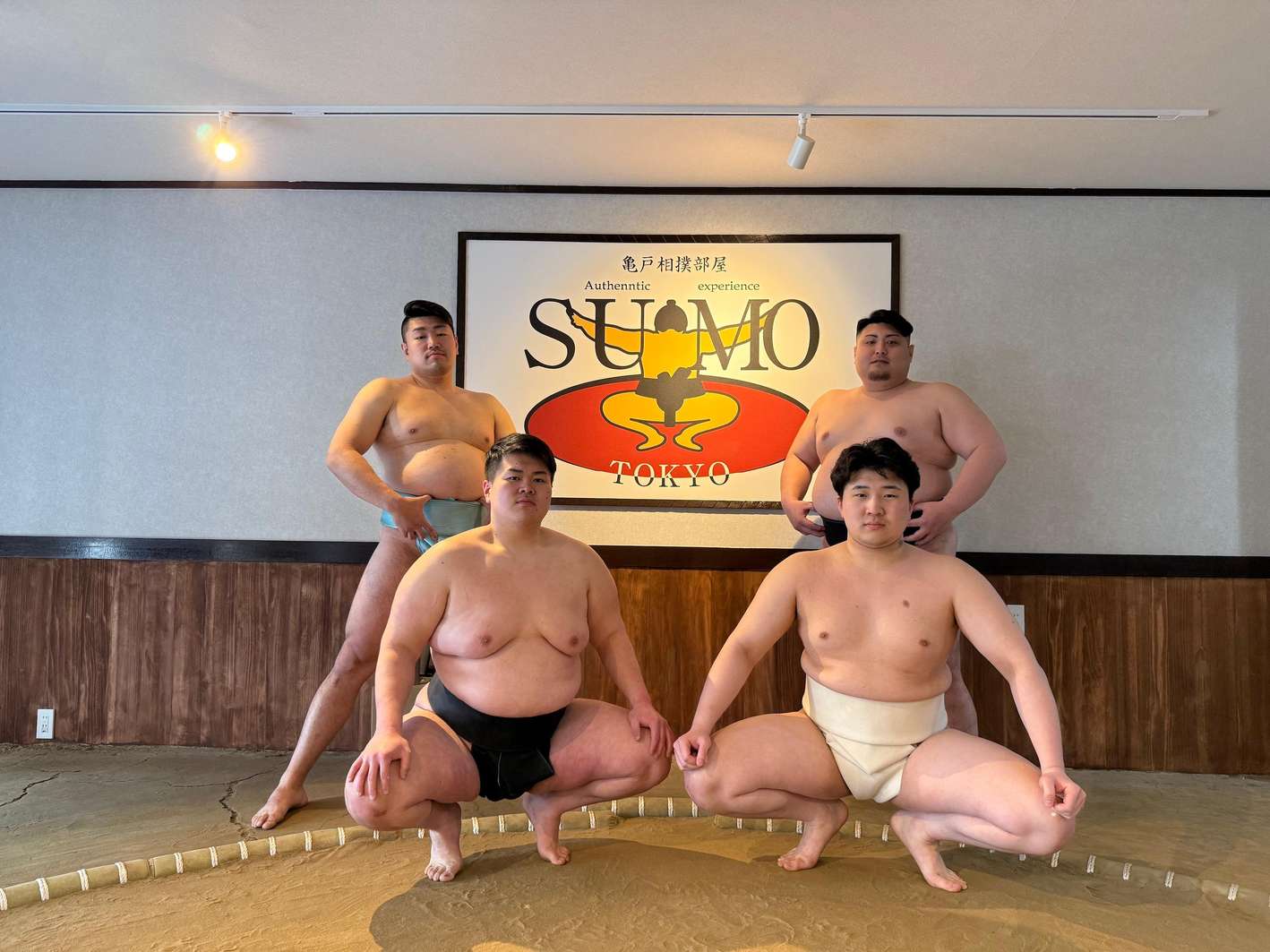
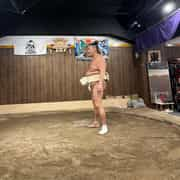
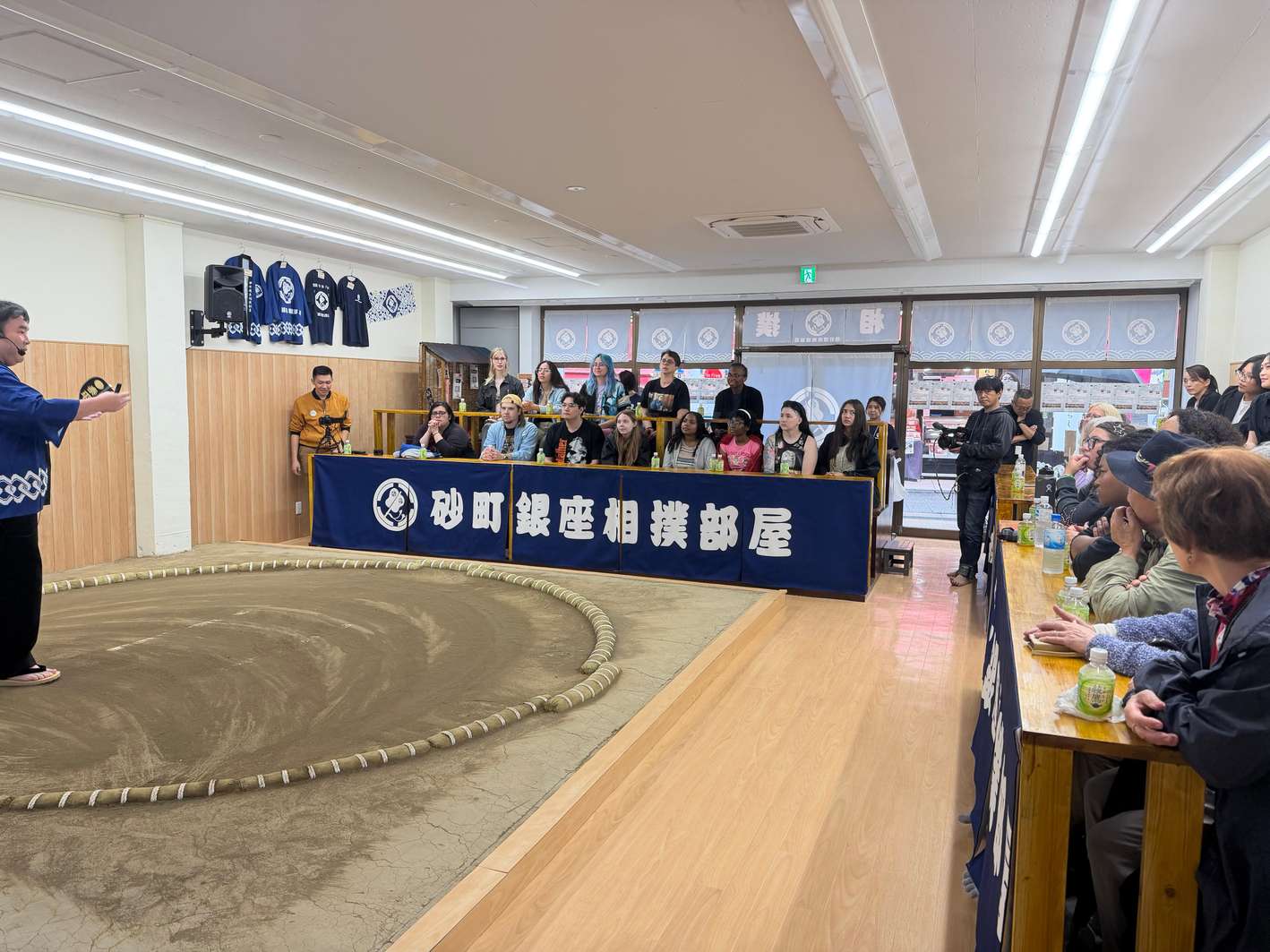
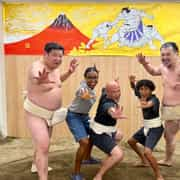
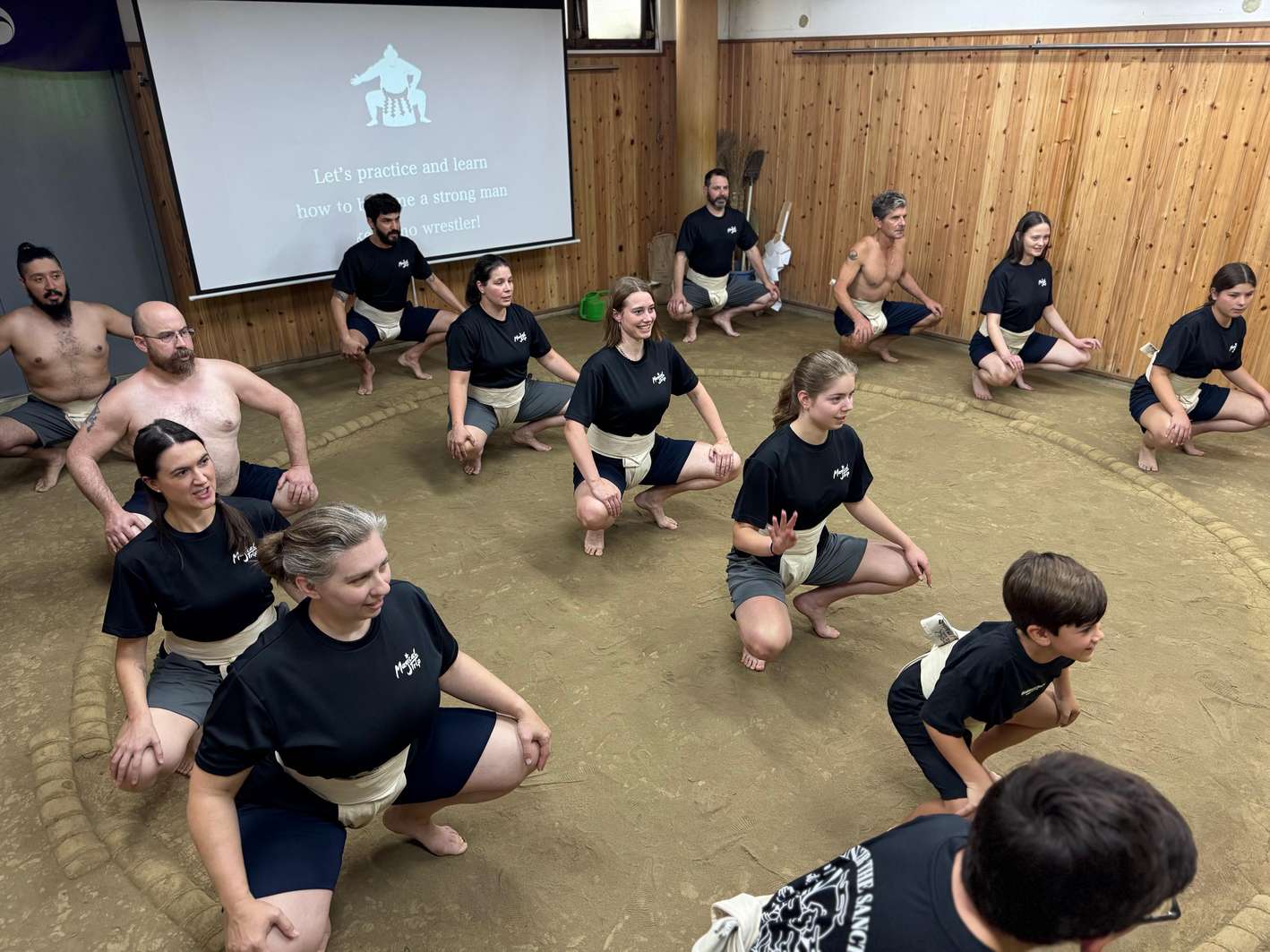
The hands-on sumo class runs about an hour in Ginza, led by a former professional rikishi who trained and competed at the top division.
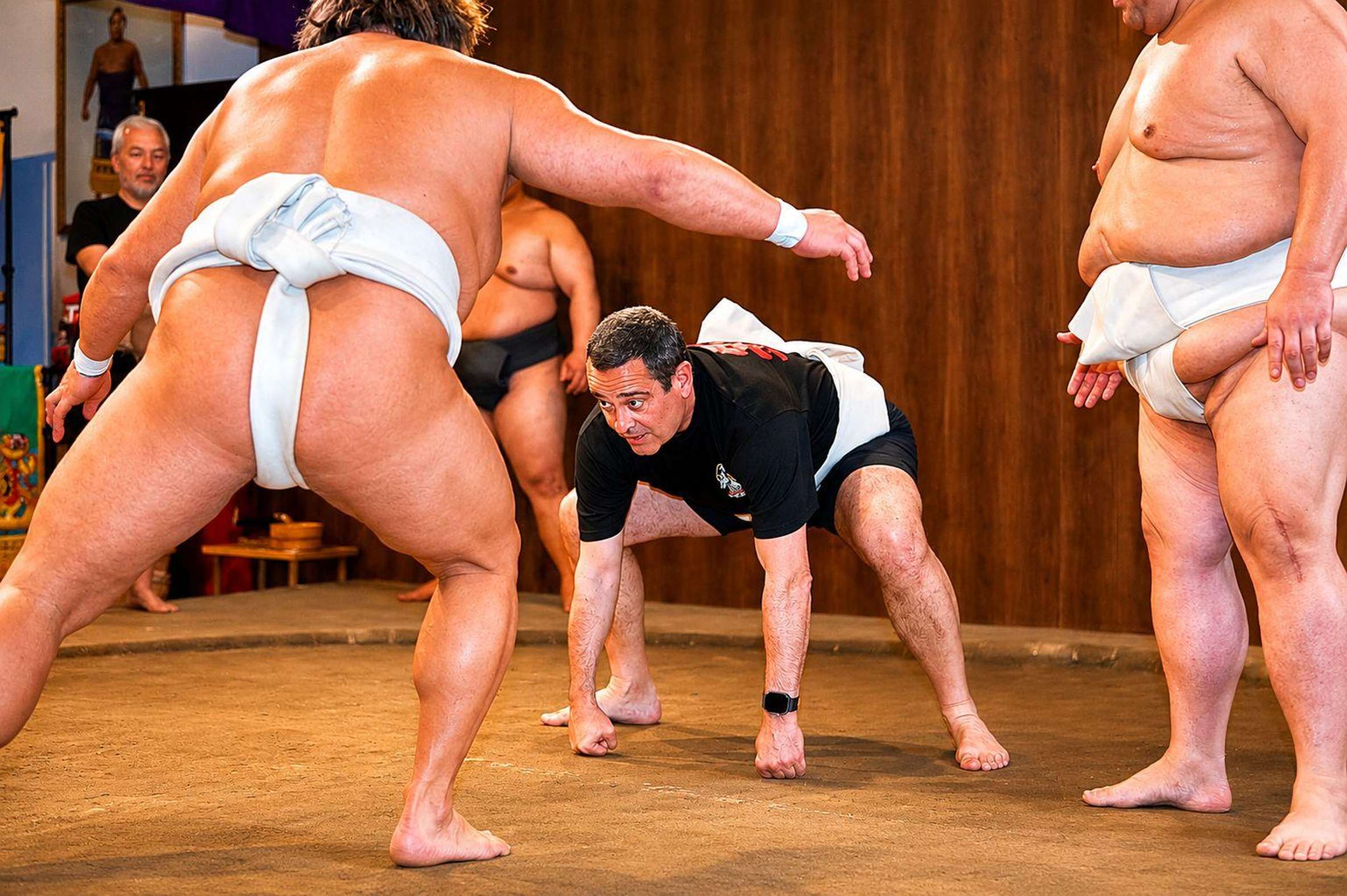
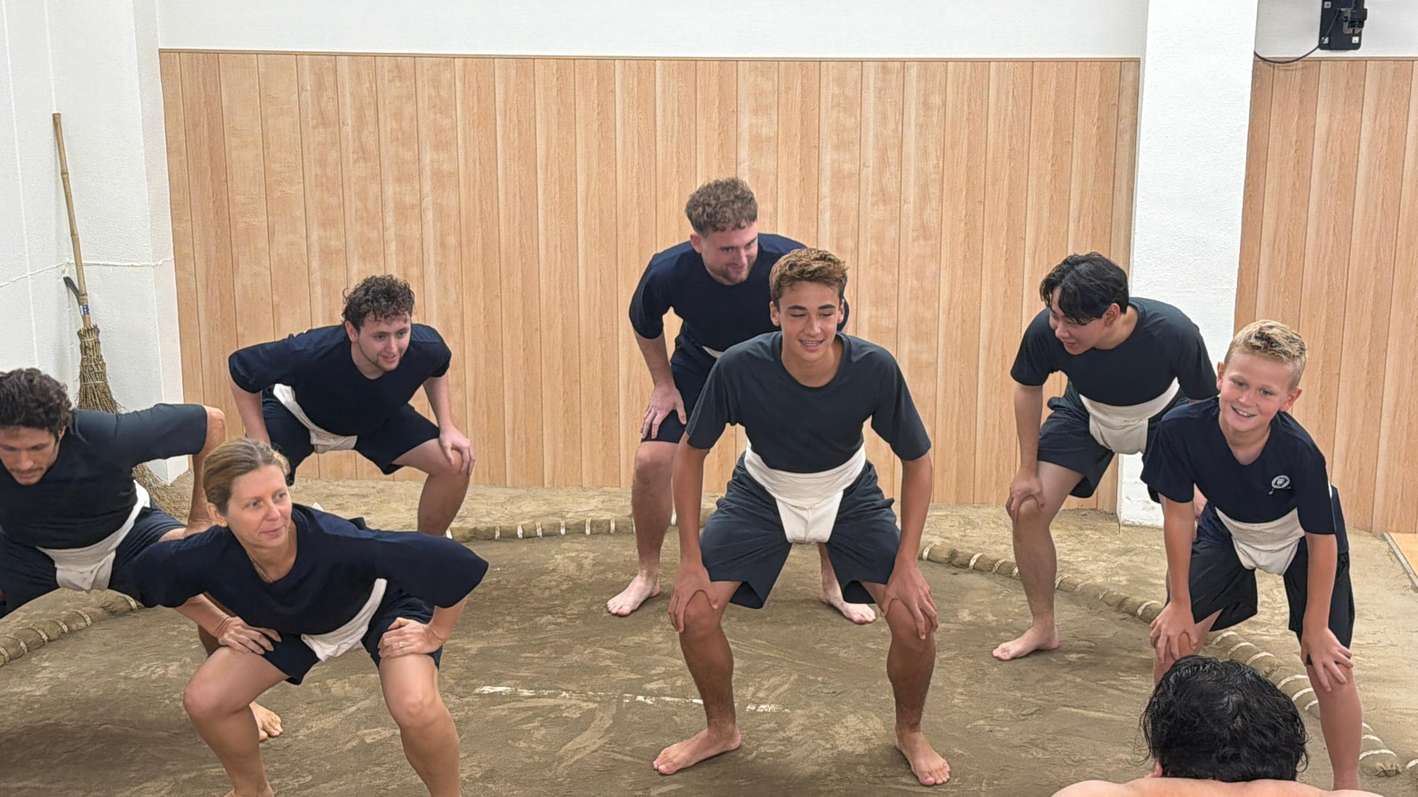
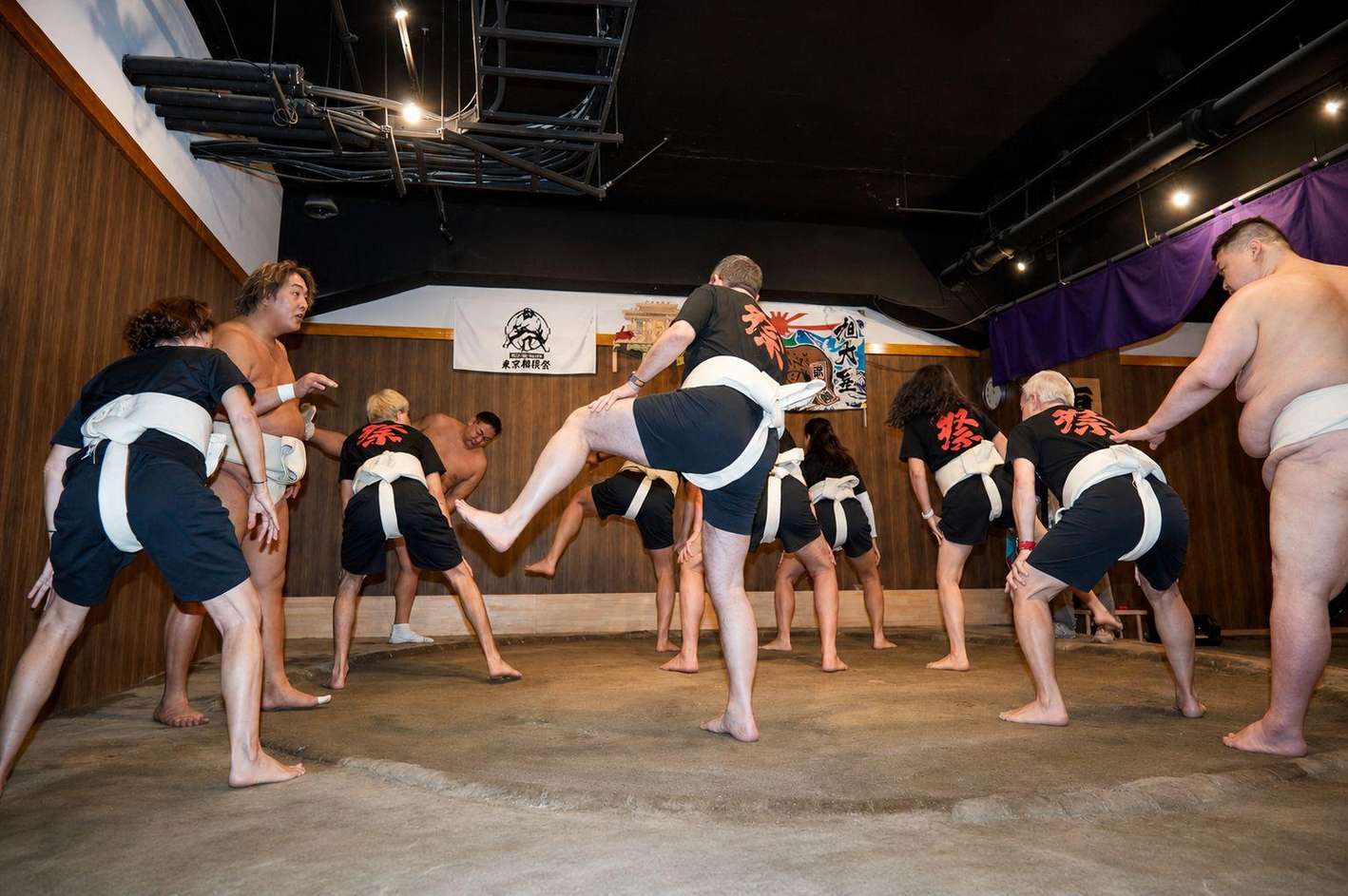
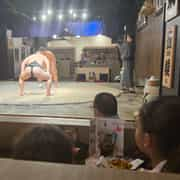
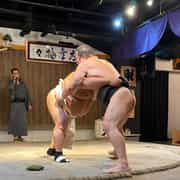
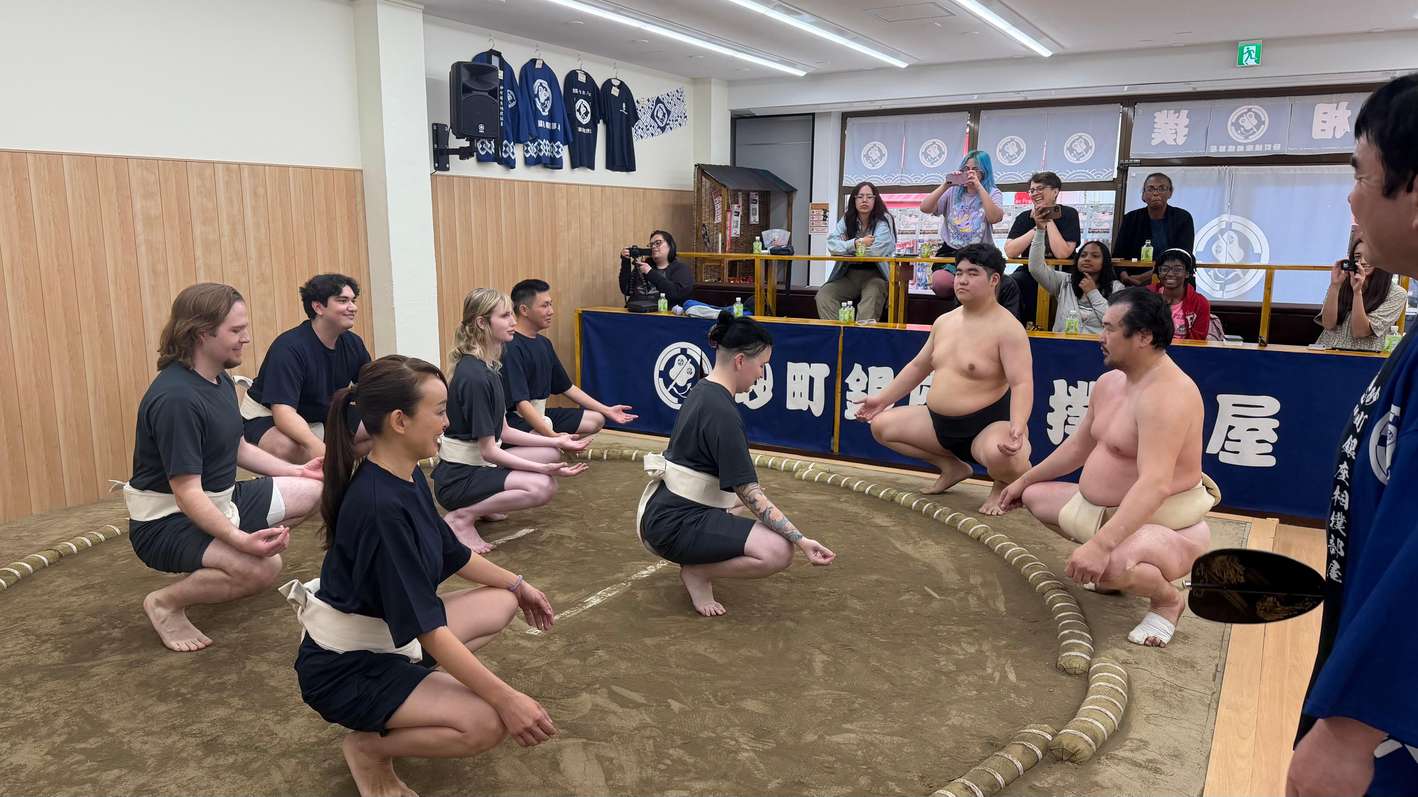
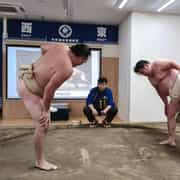
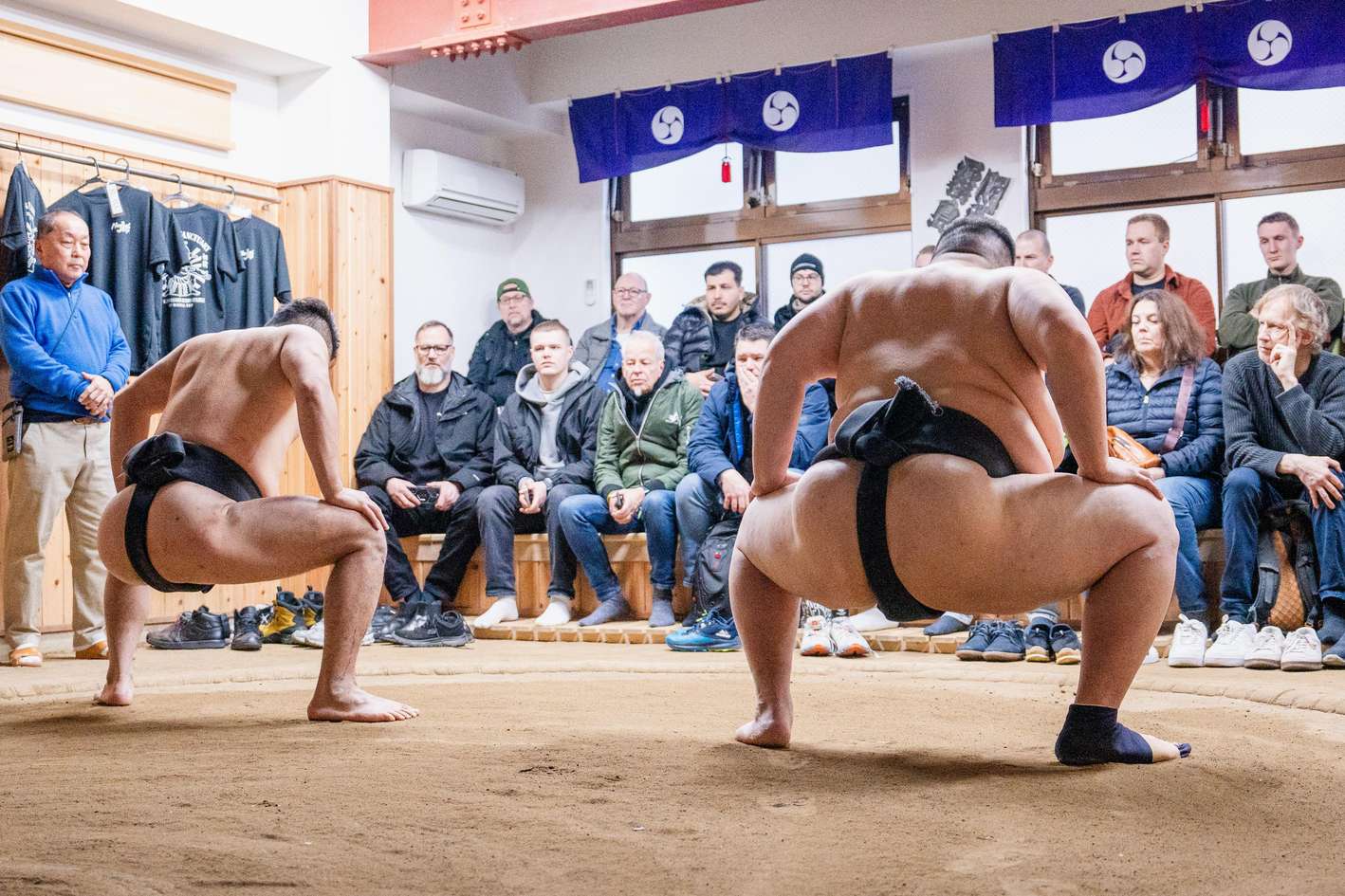
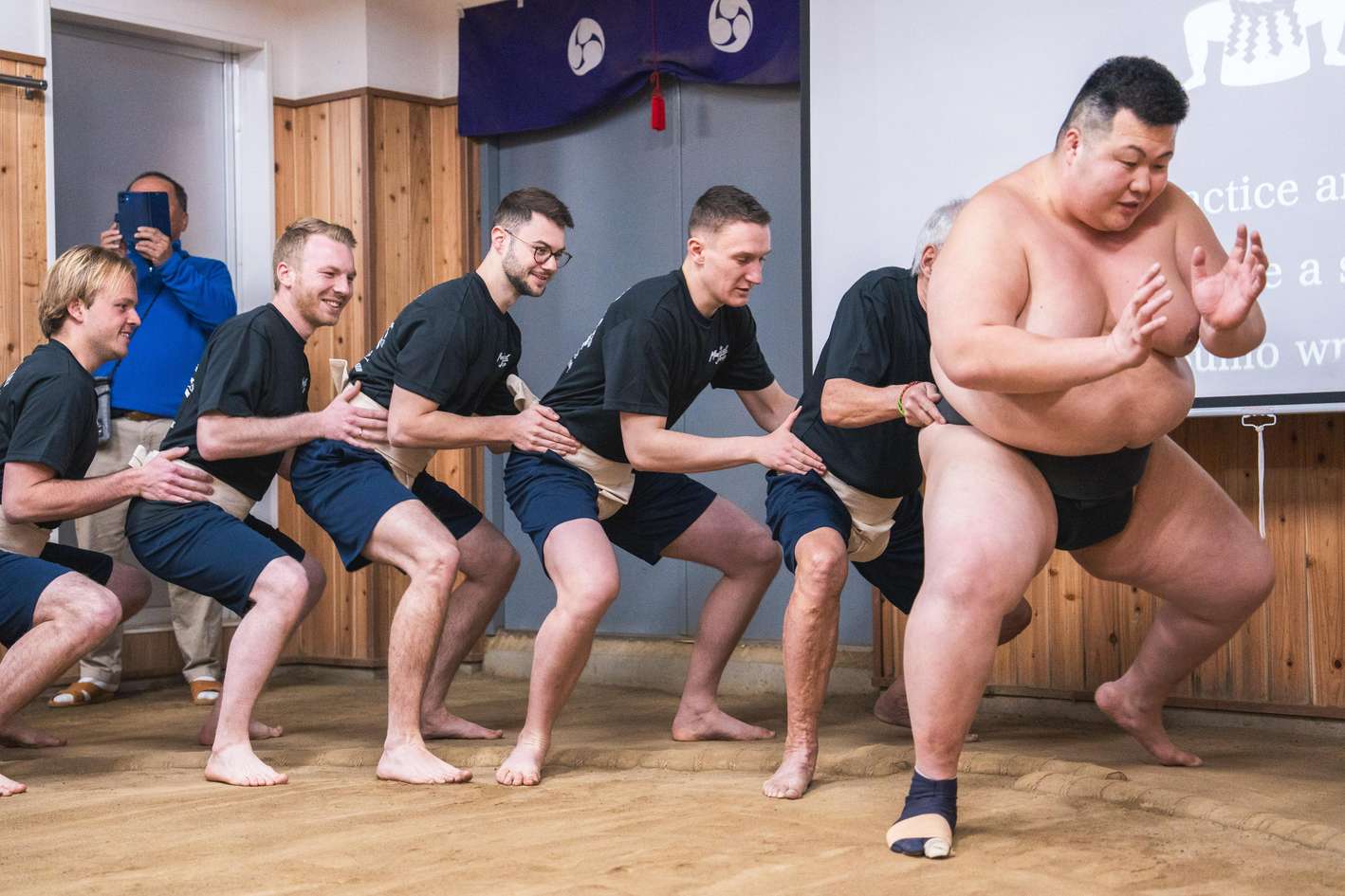
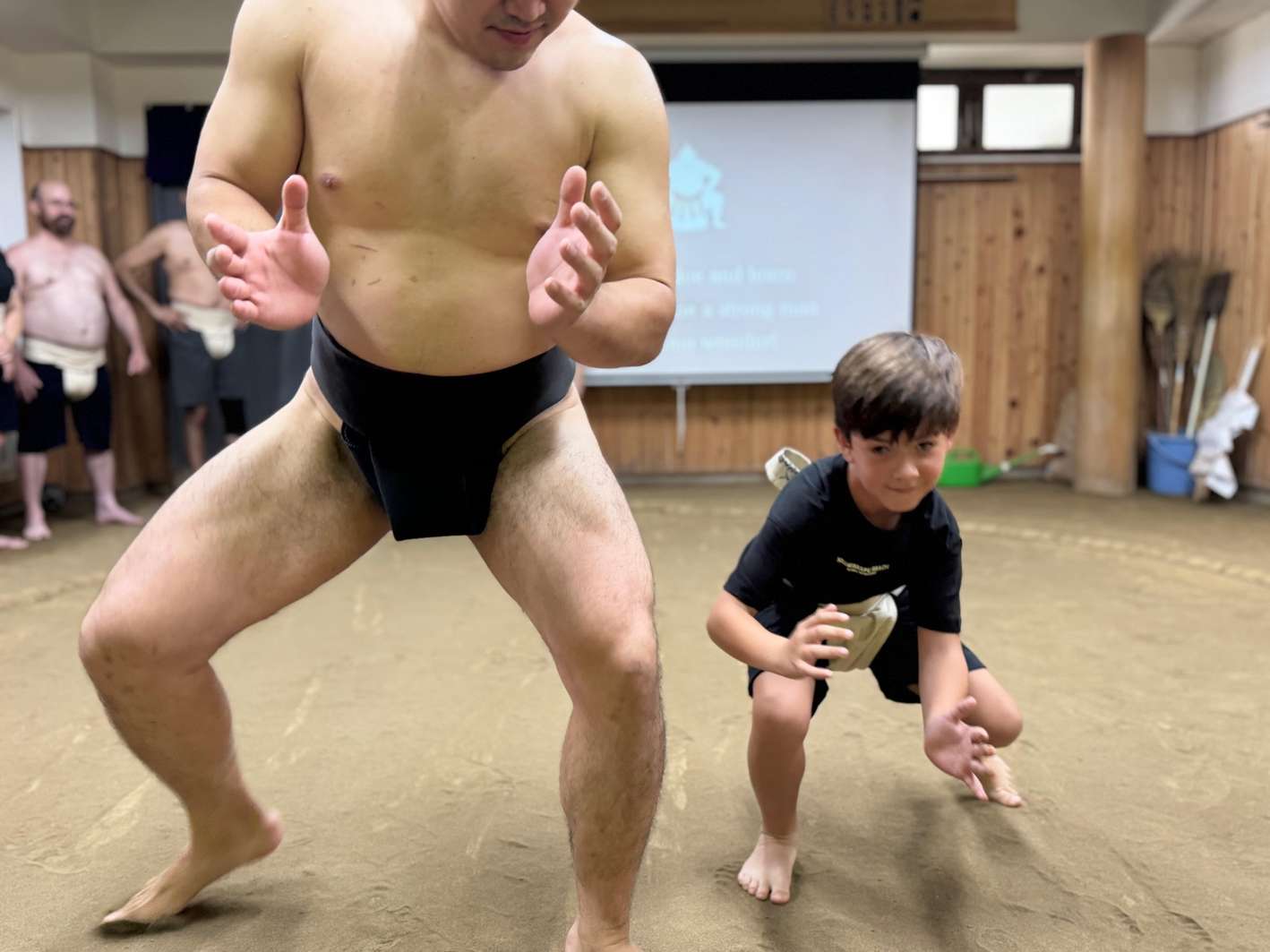
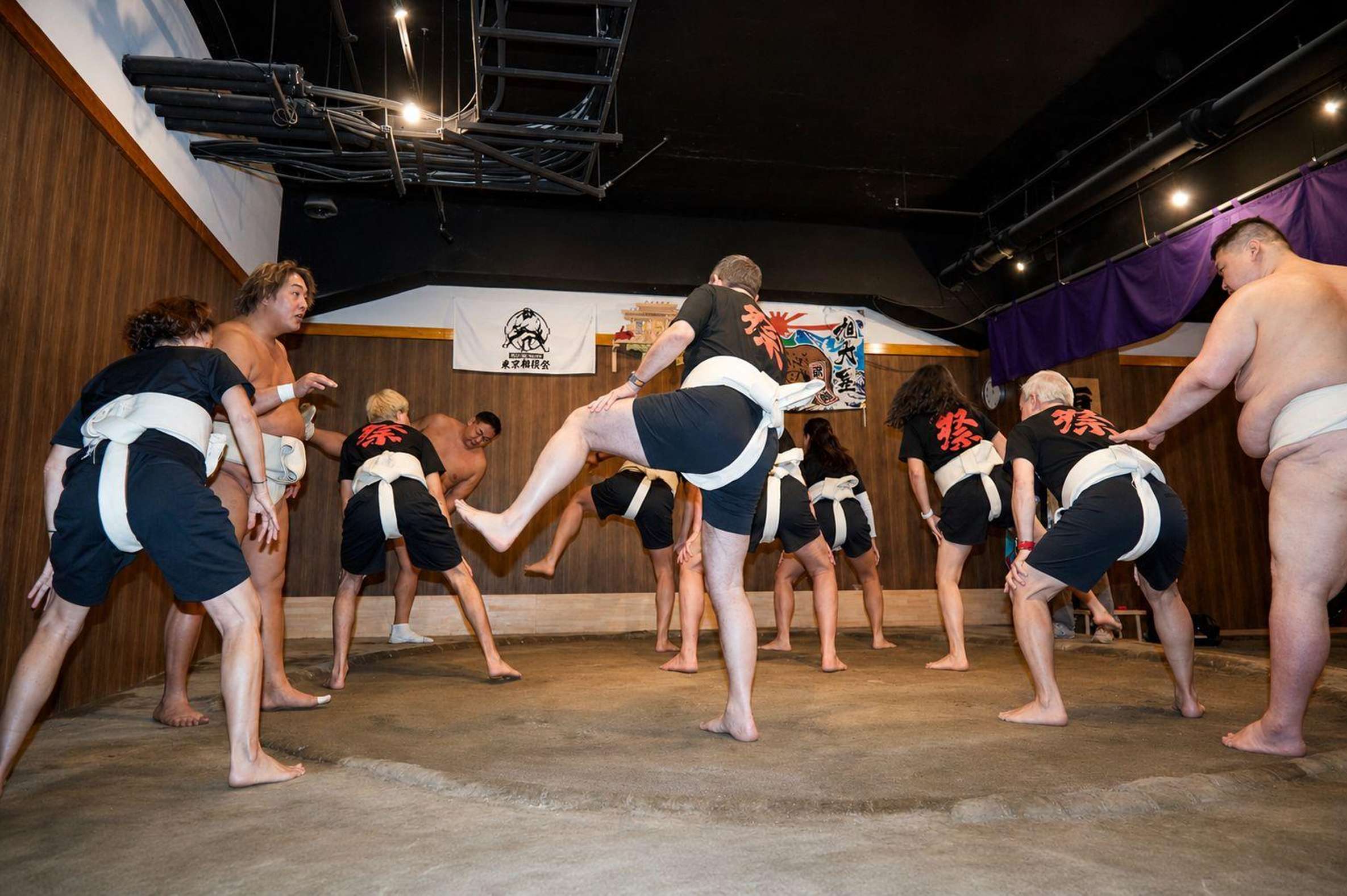
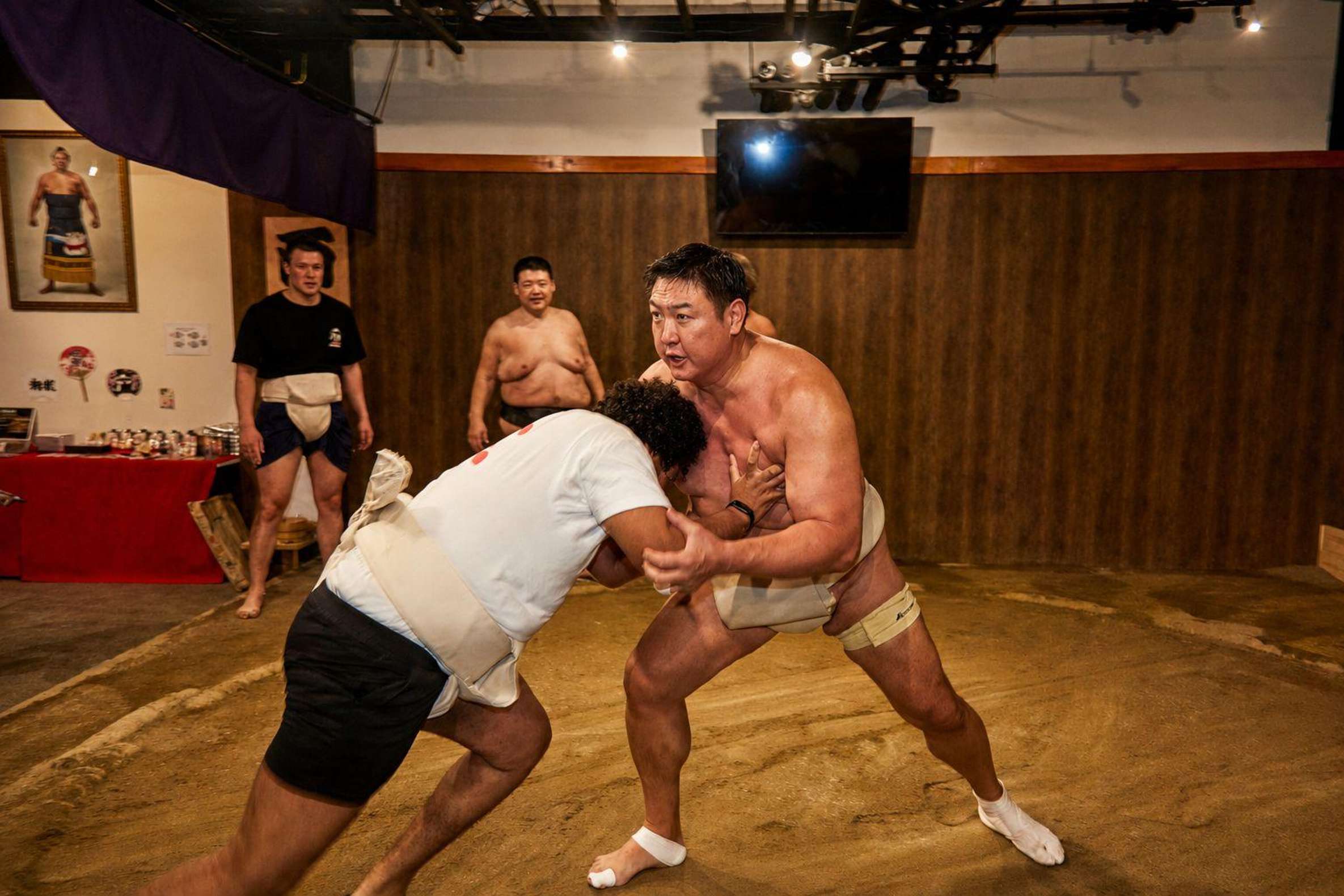
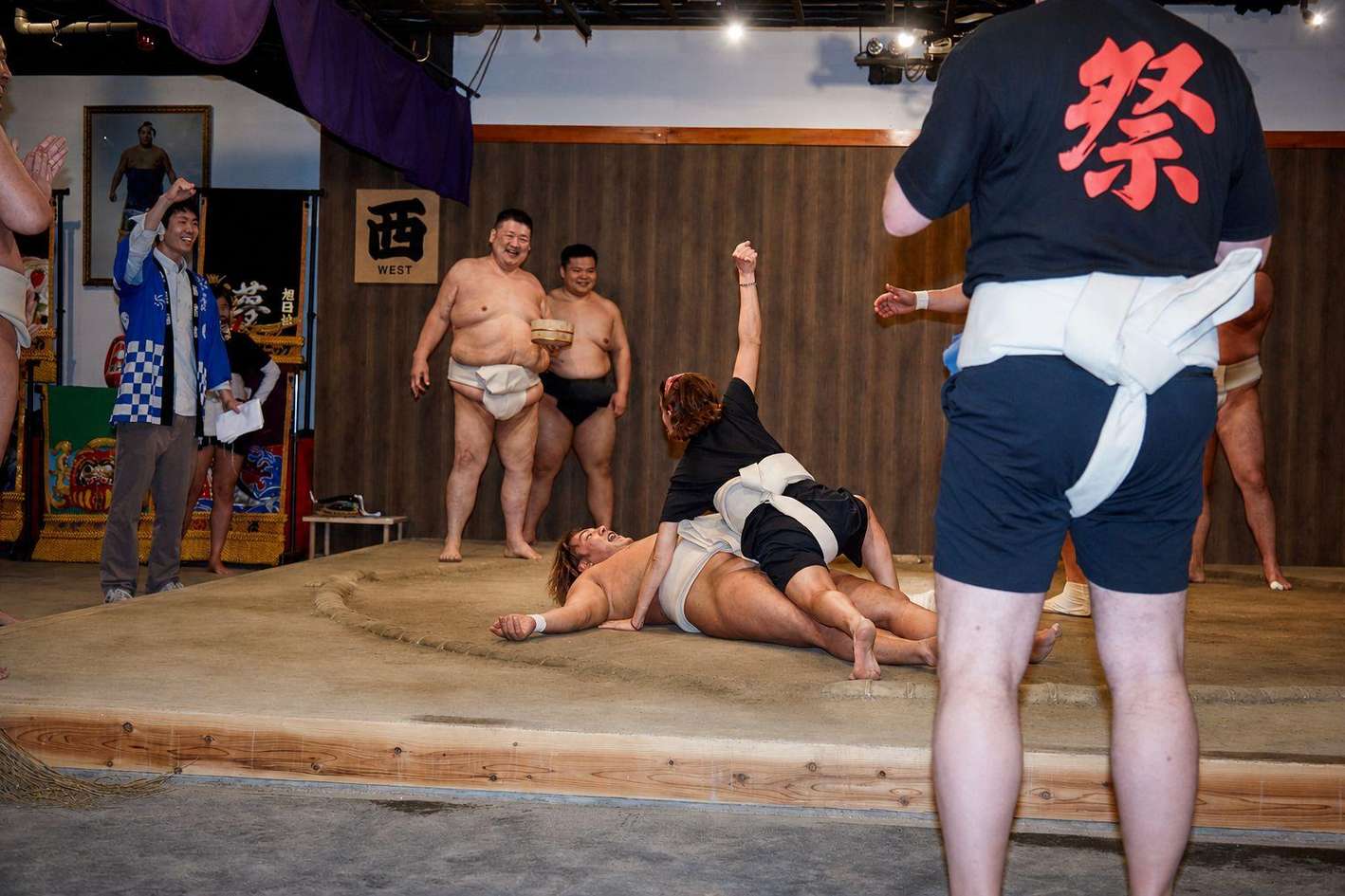
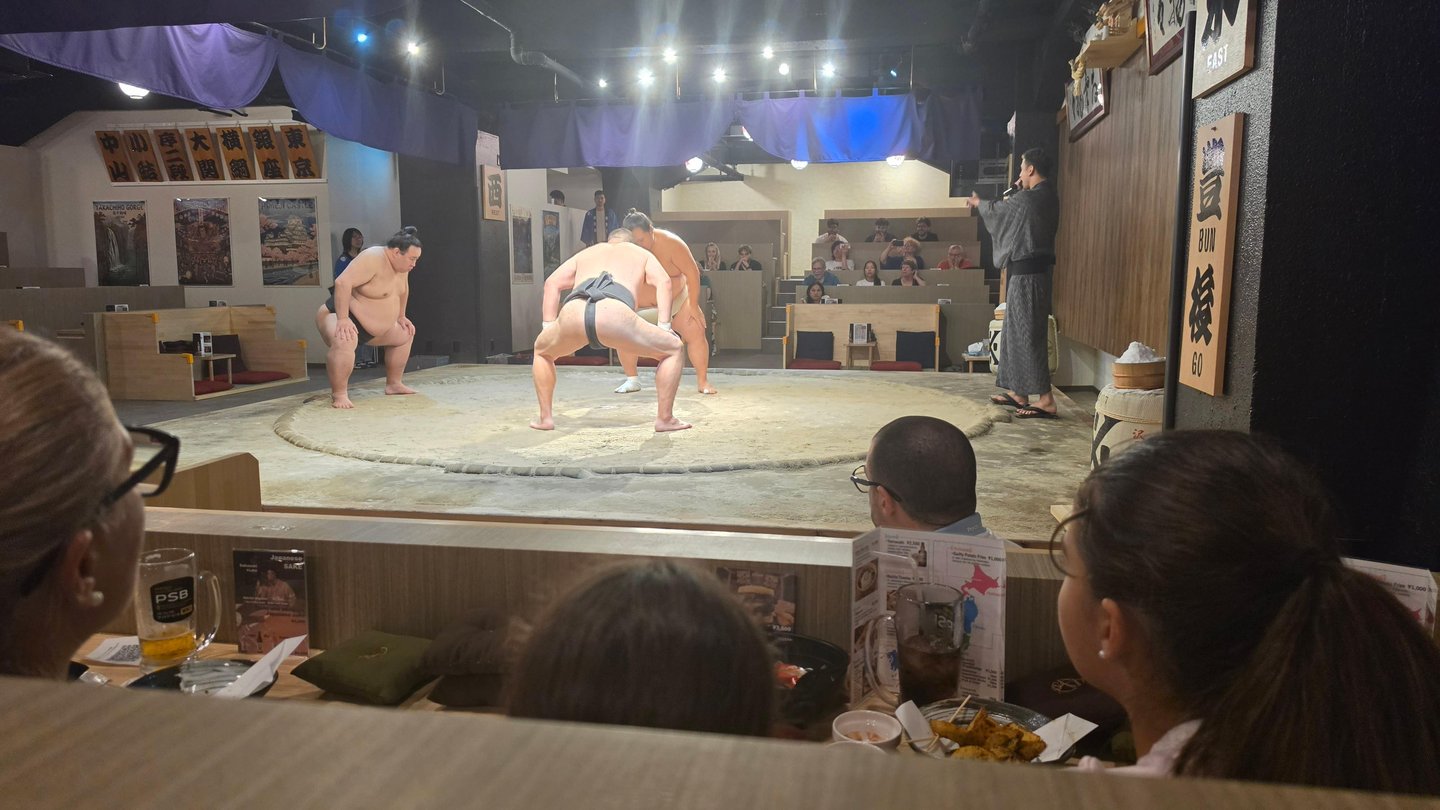
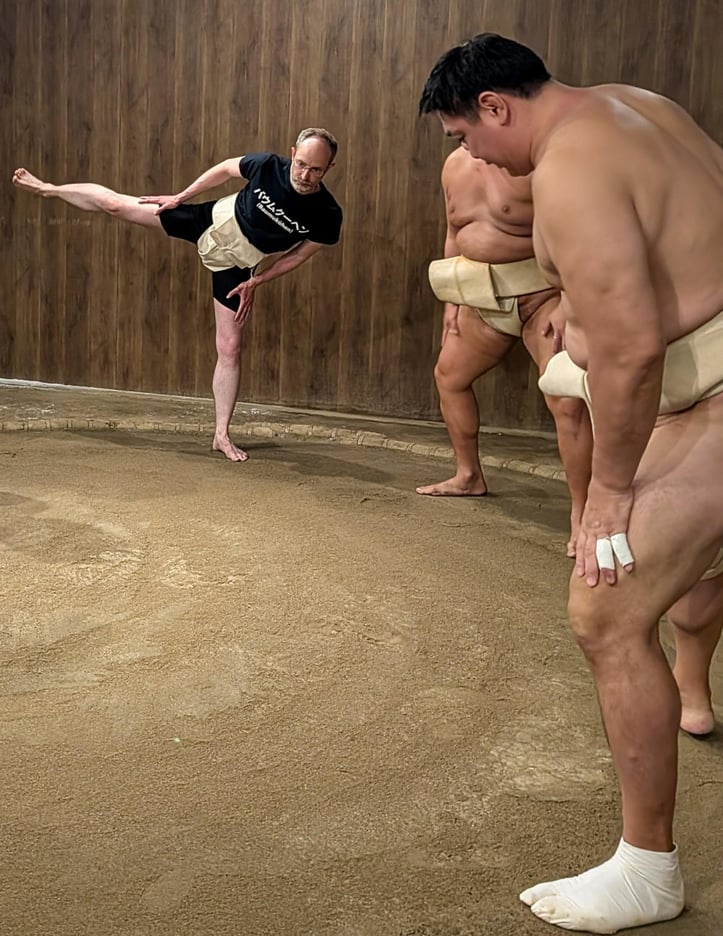
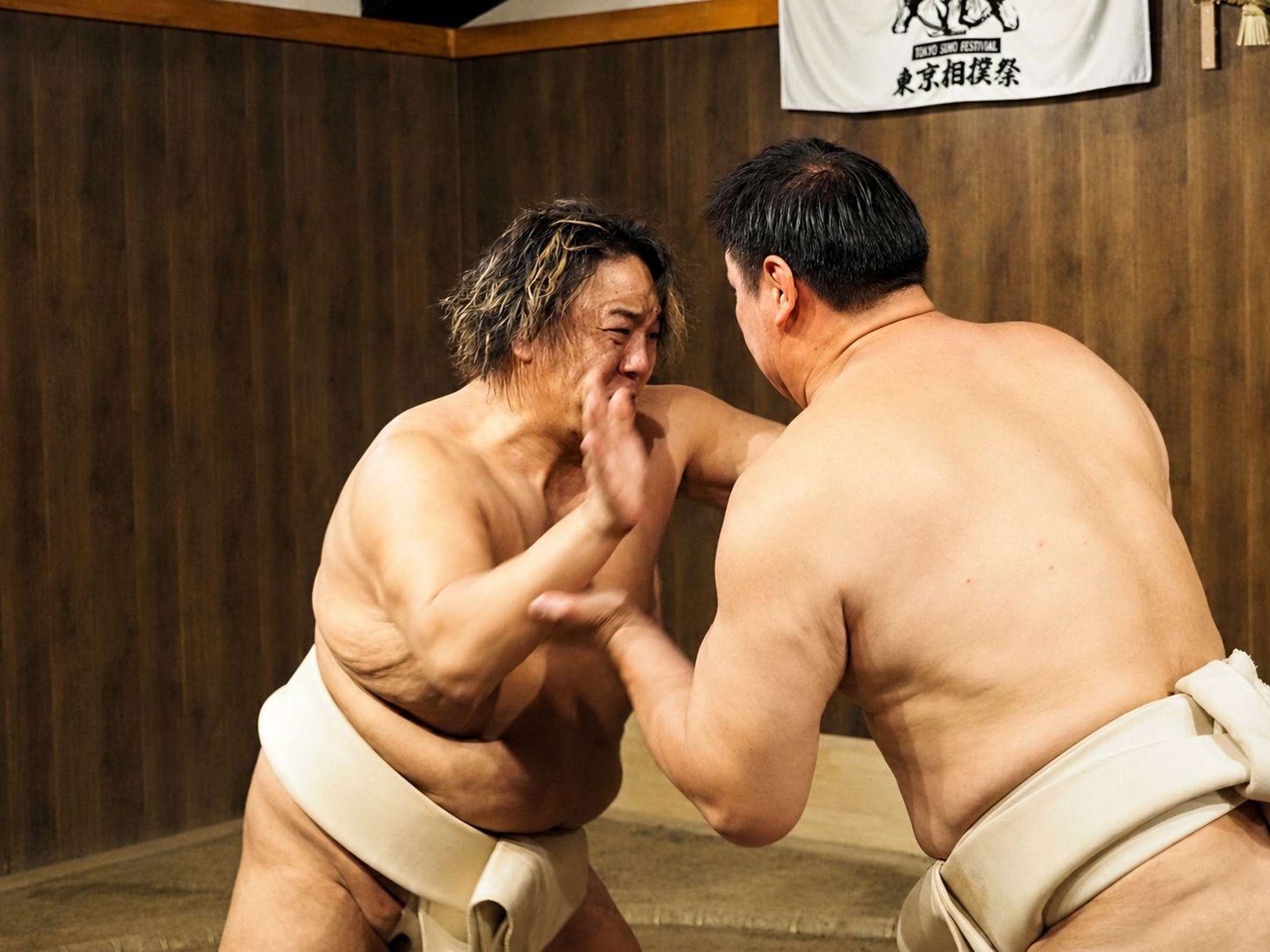
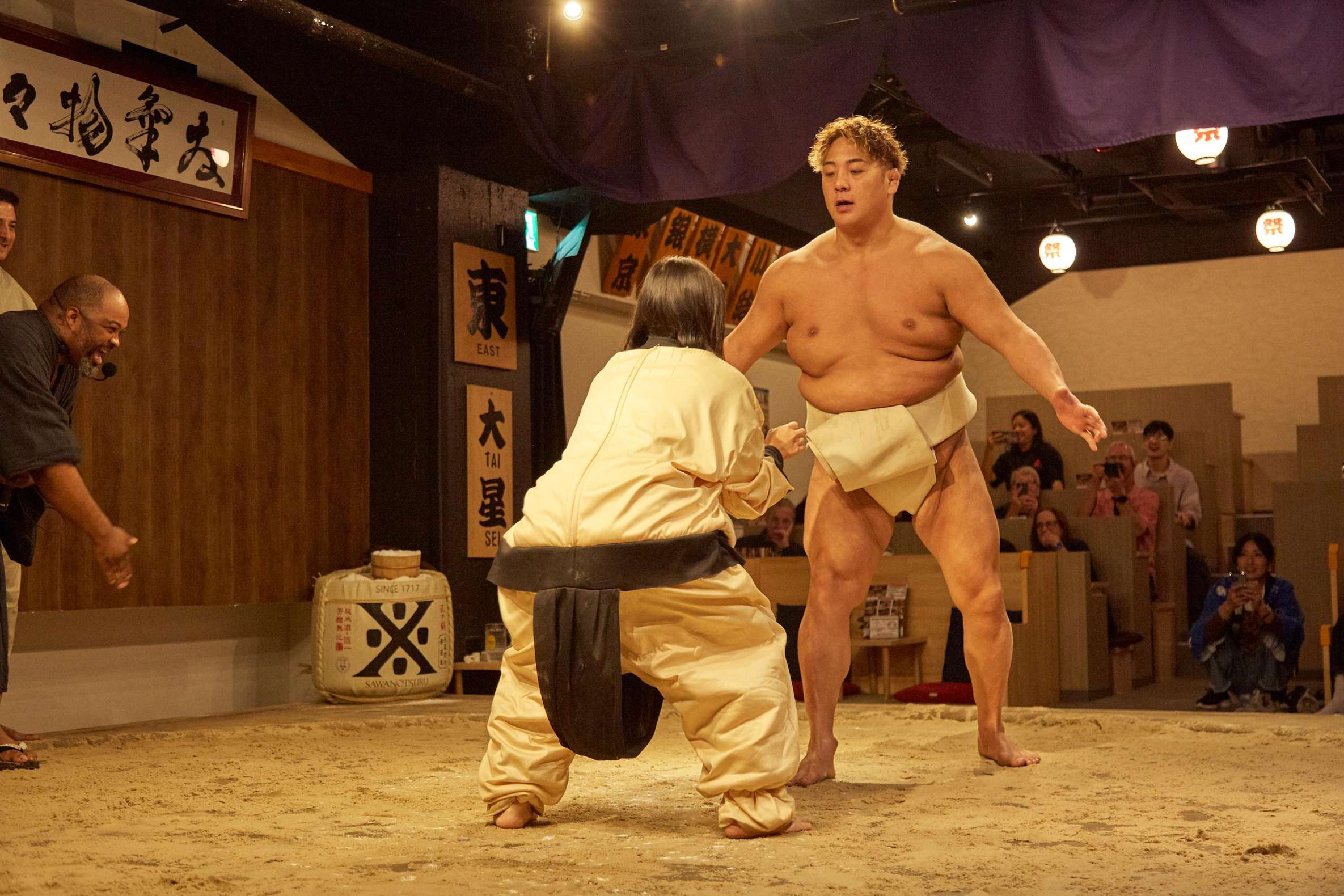
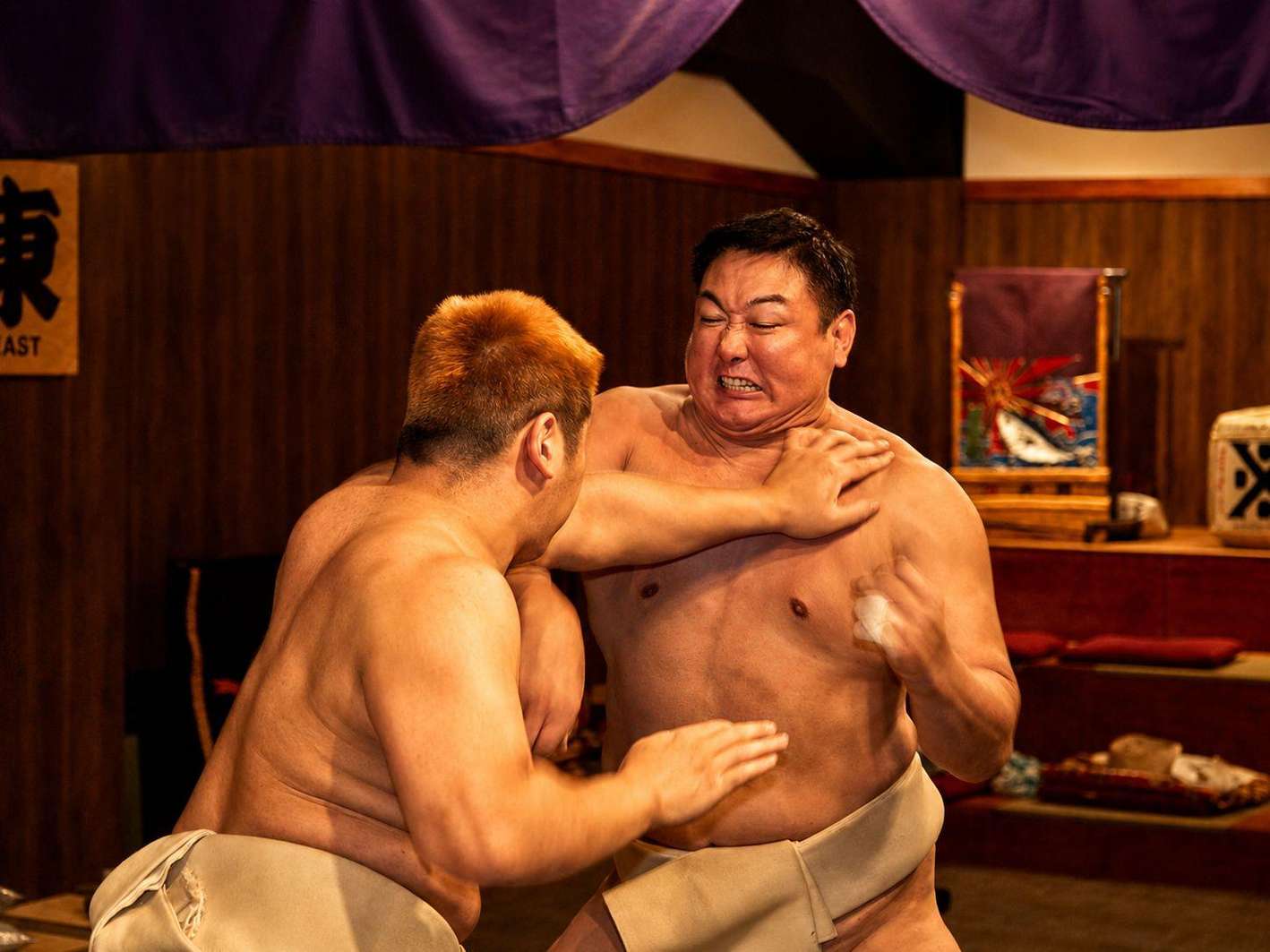
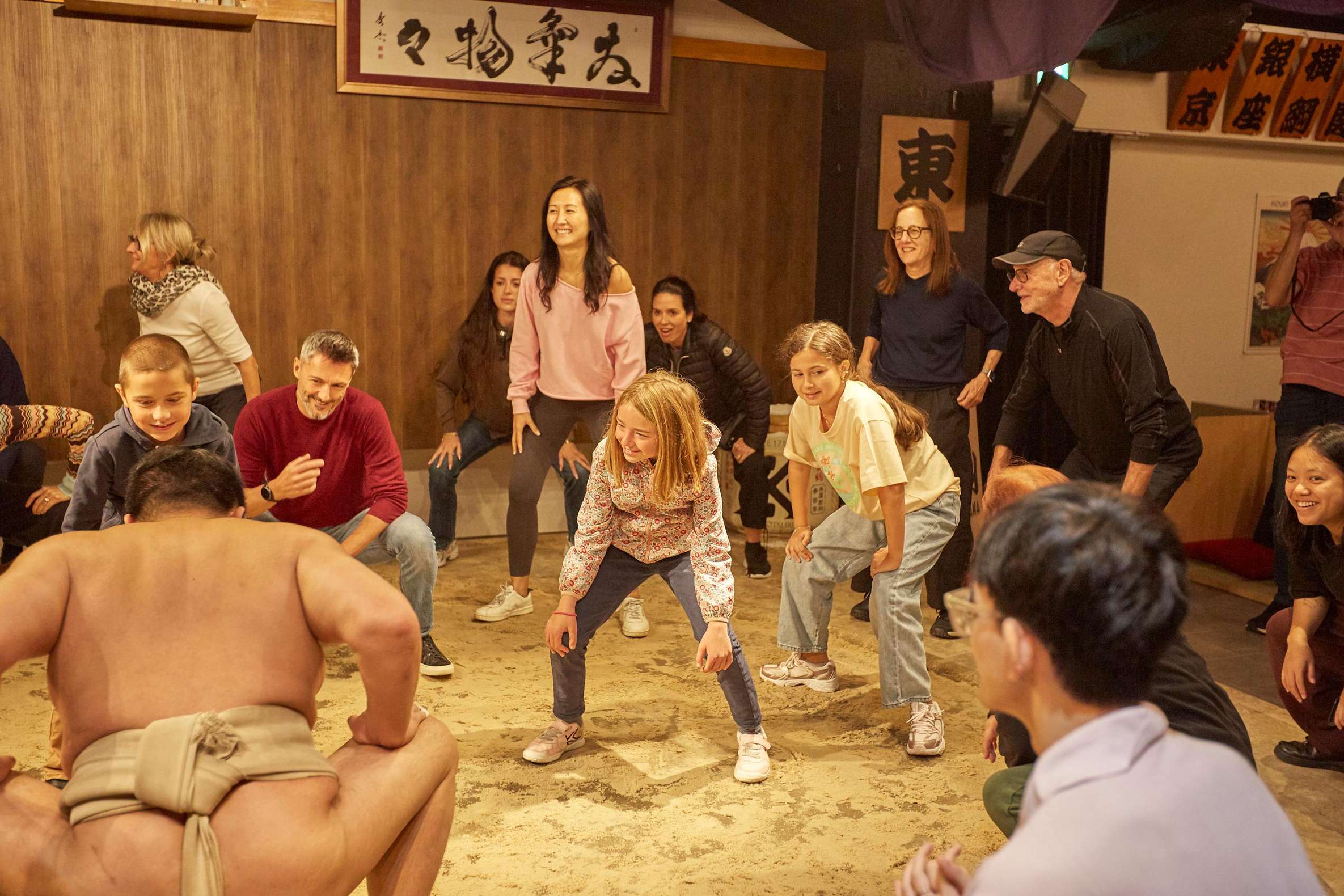
The session mixes watching live bouts with real training: you learn the shiko stomp, suriashi sliding footwork, and the pushing drills wrestlers use every morning, then step onto the clay dohyo yourself if you want to.
Everyone who wants to join gets ring time, which is not the case at the big entertainment shows where ring spots go by lottery.
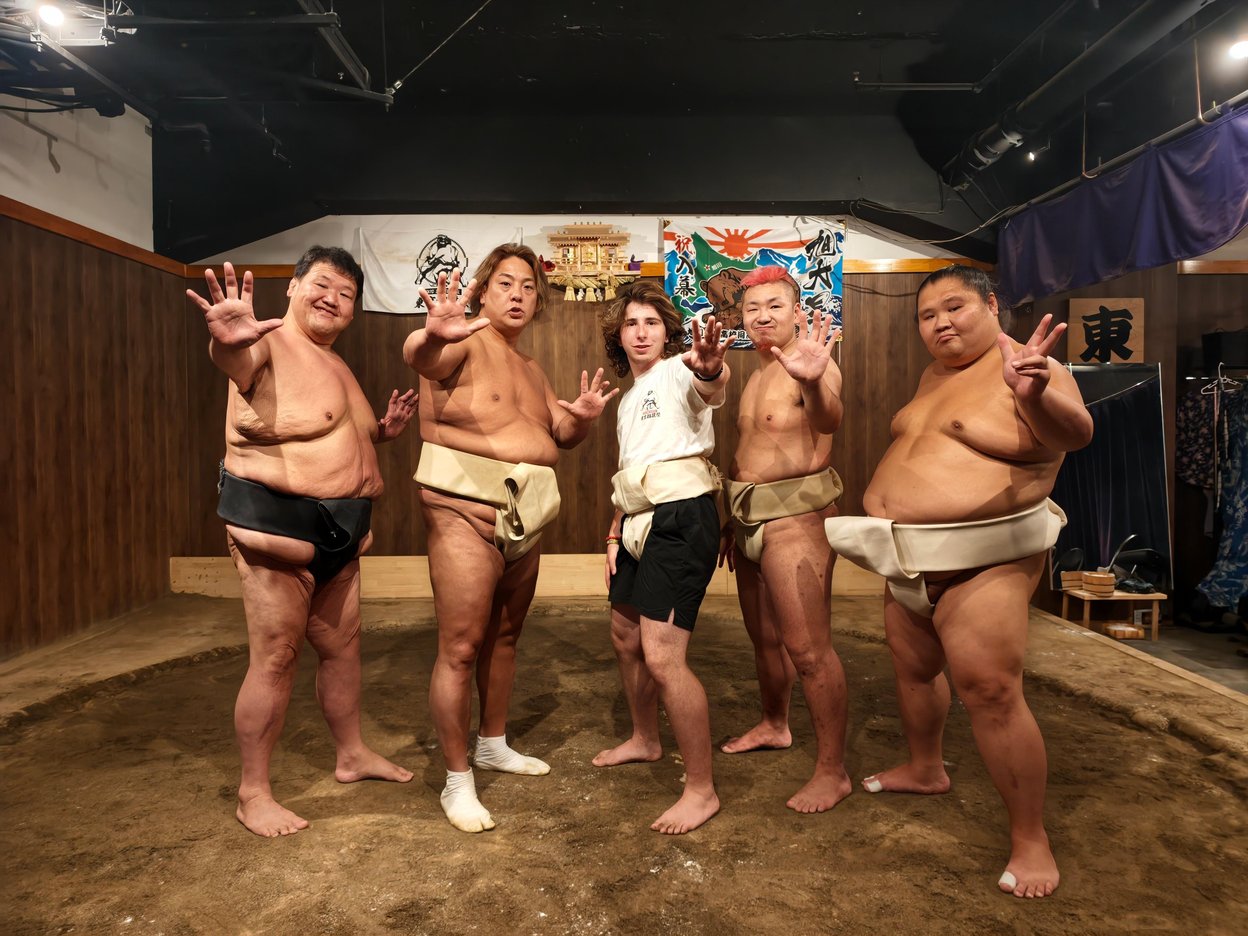
The pace stays light. Instructors match their strength to yours, explain which moves are forbidden before anyone grabs a belt, and everyone who trains wears a mawashi over their own shorts, never against the skin. Children from age 5 can take part with a guardian alongside.
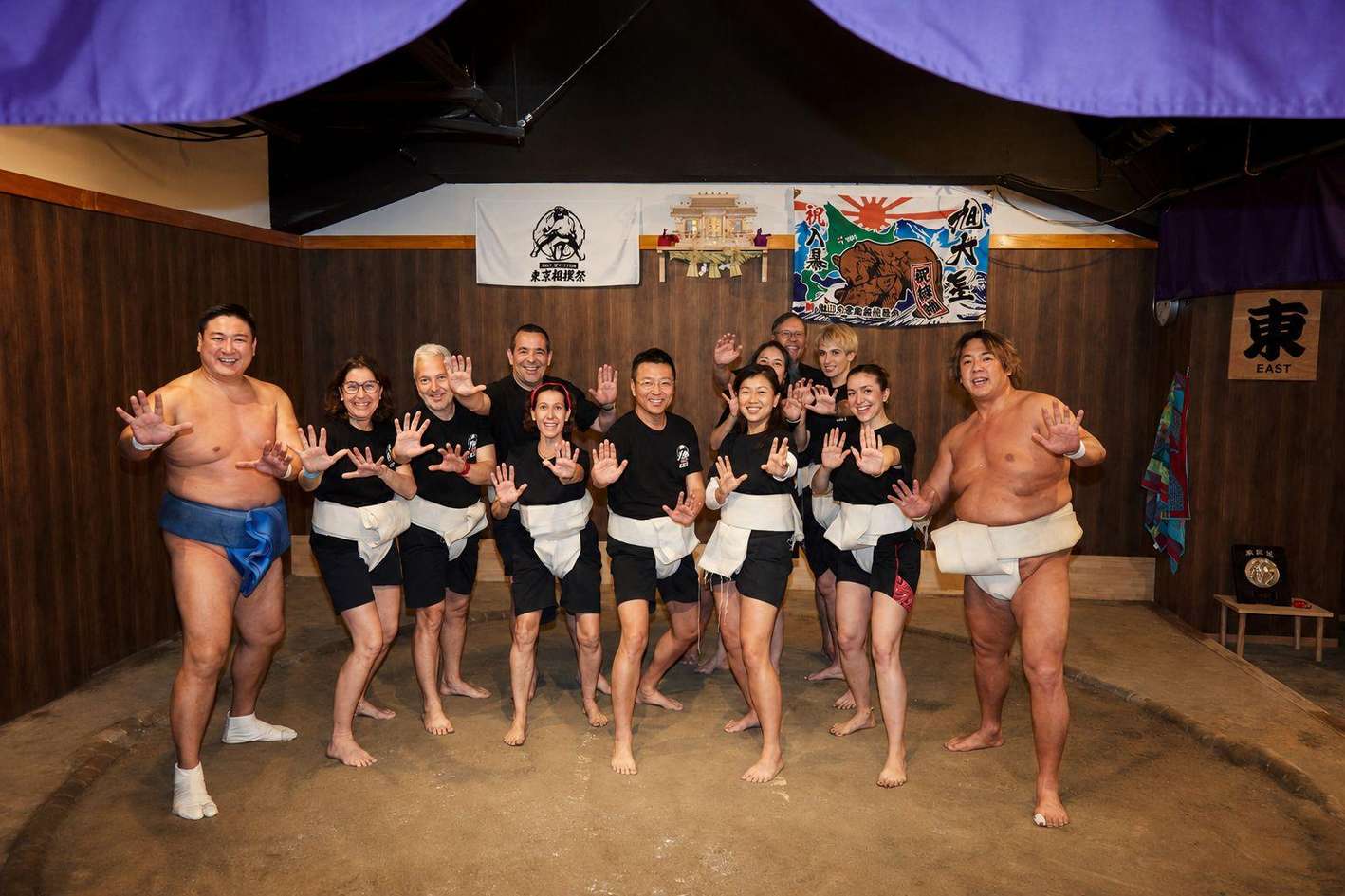
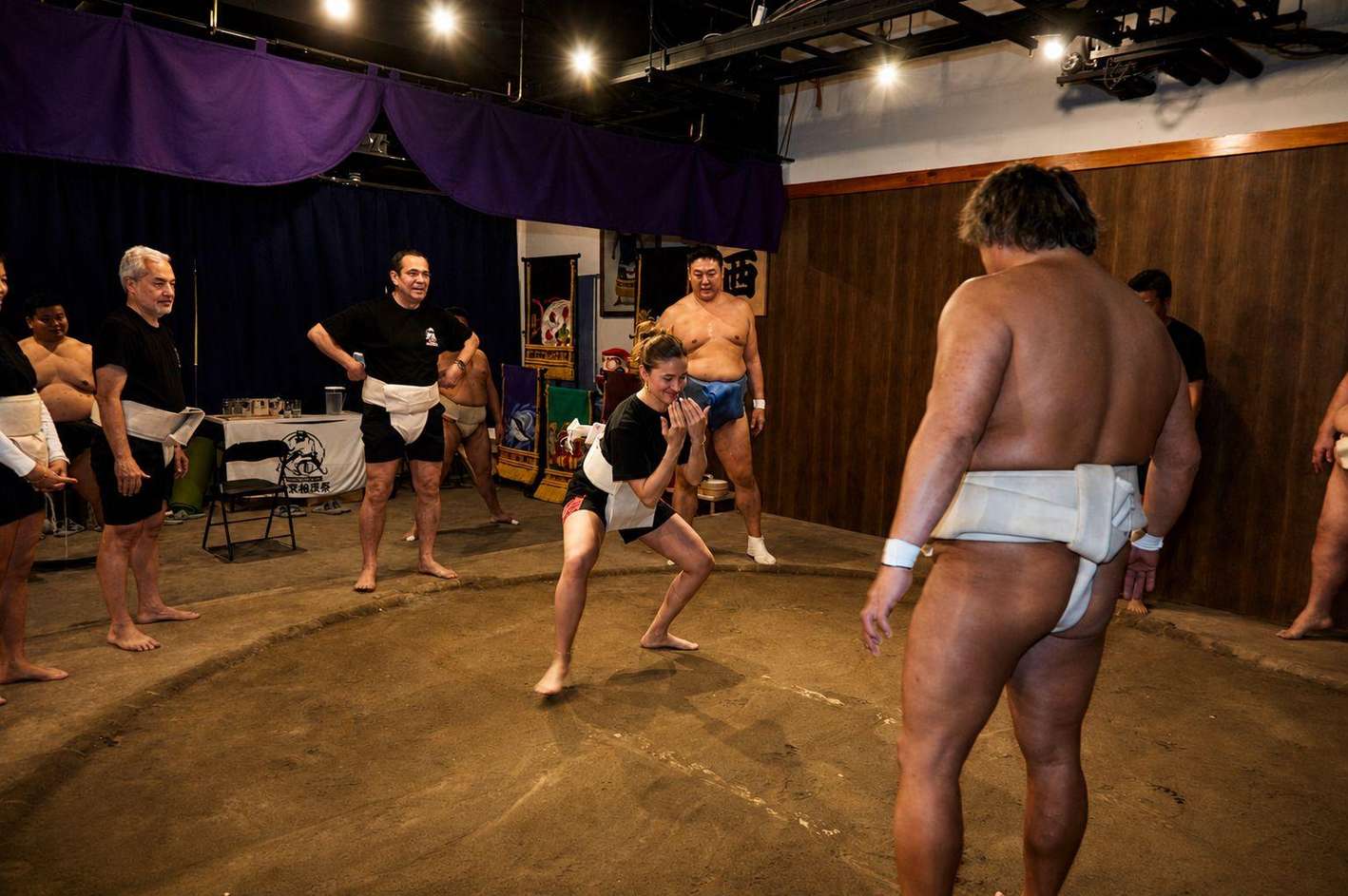
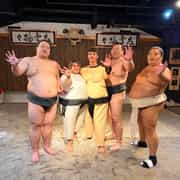
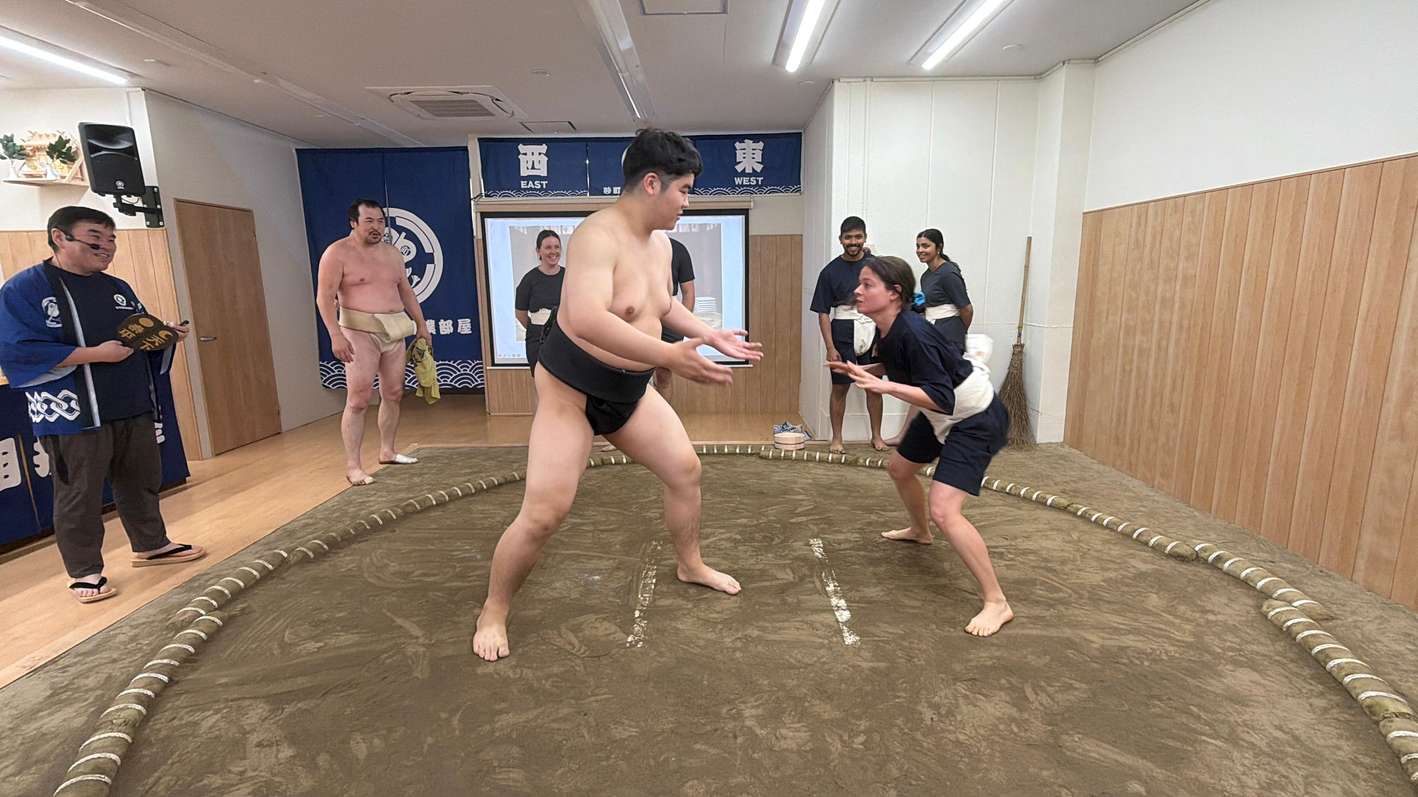
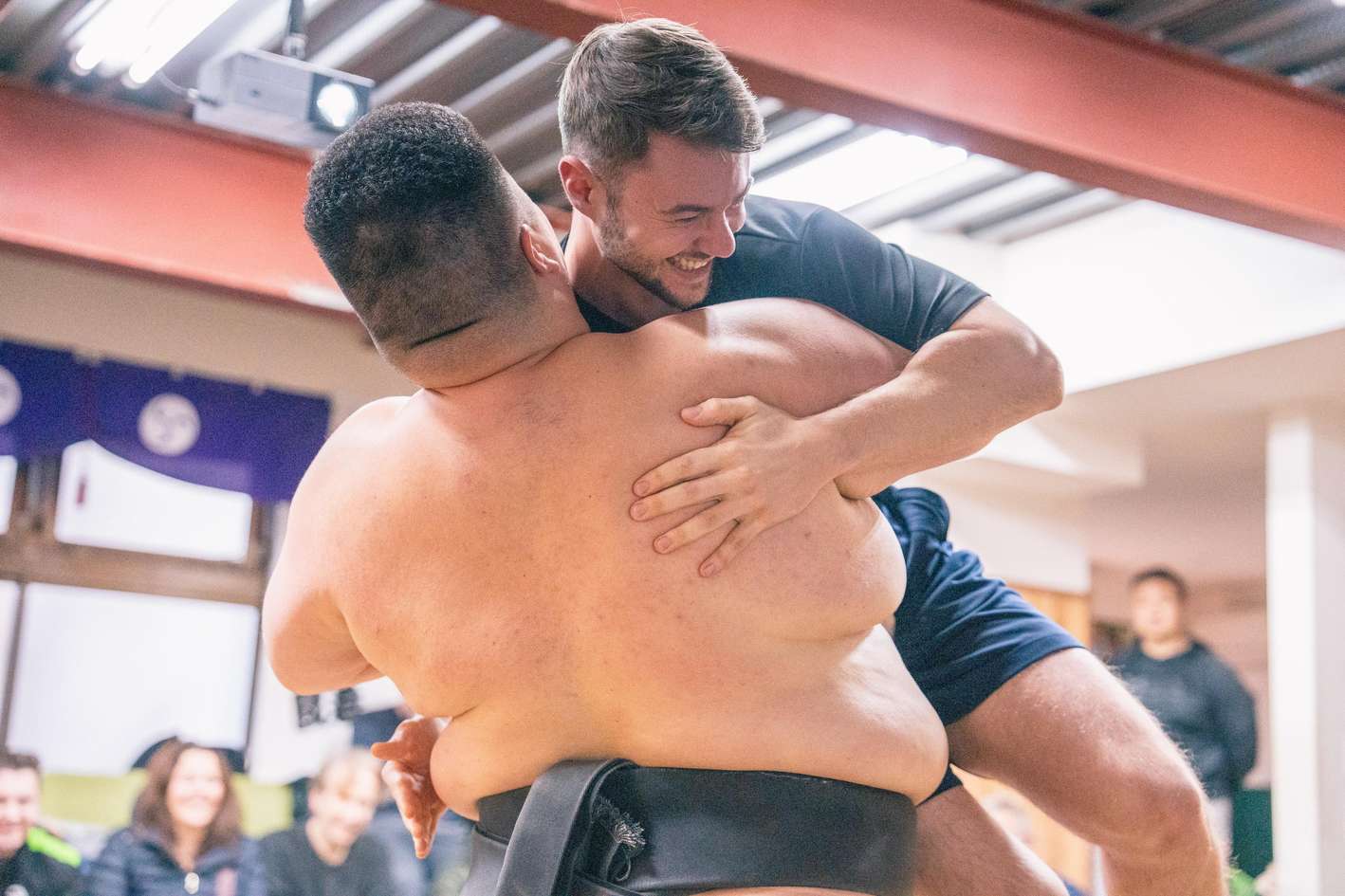
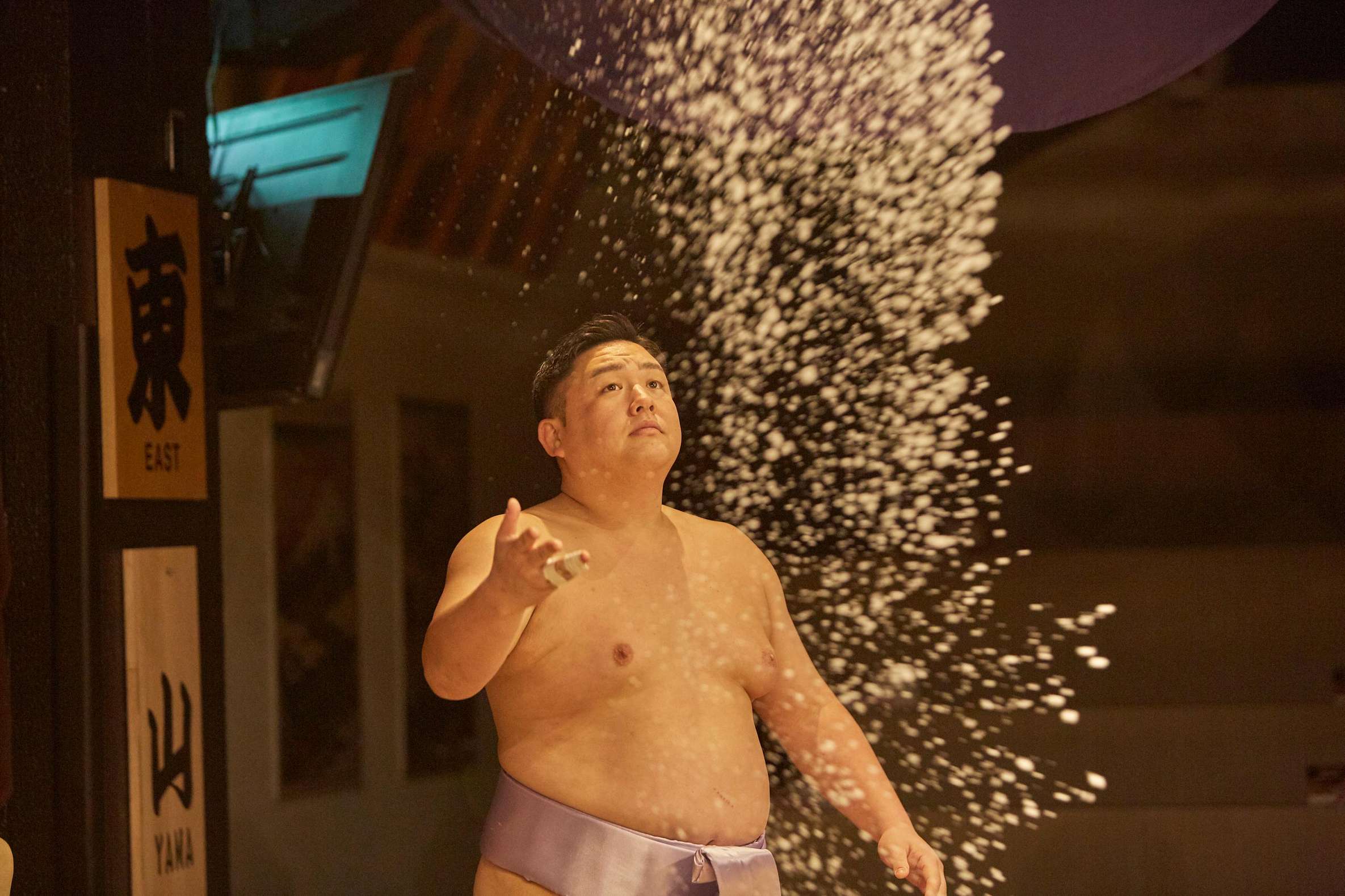
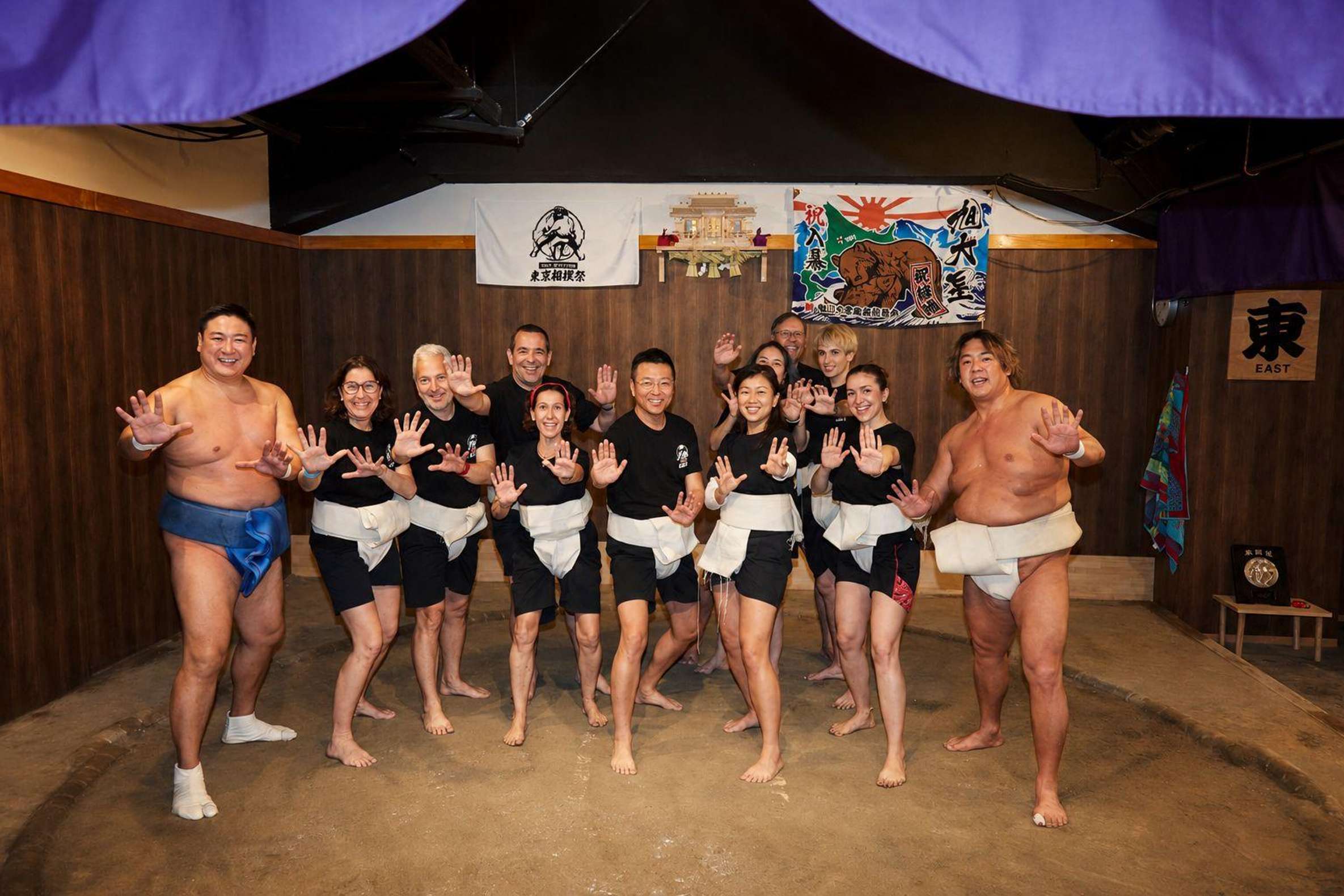
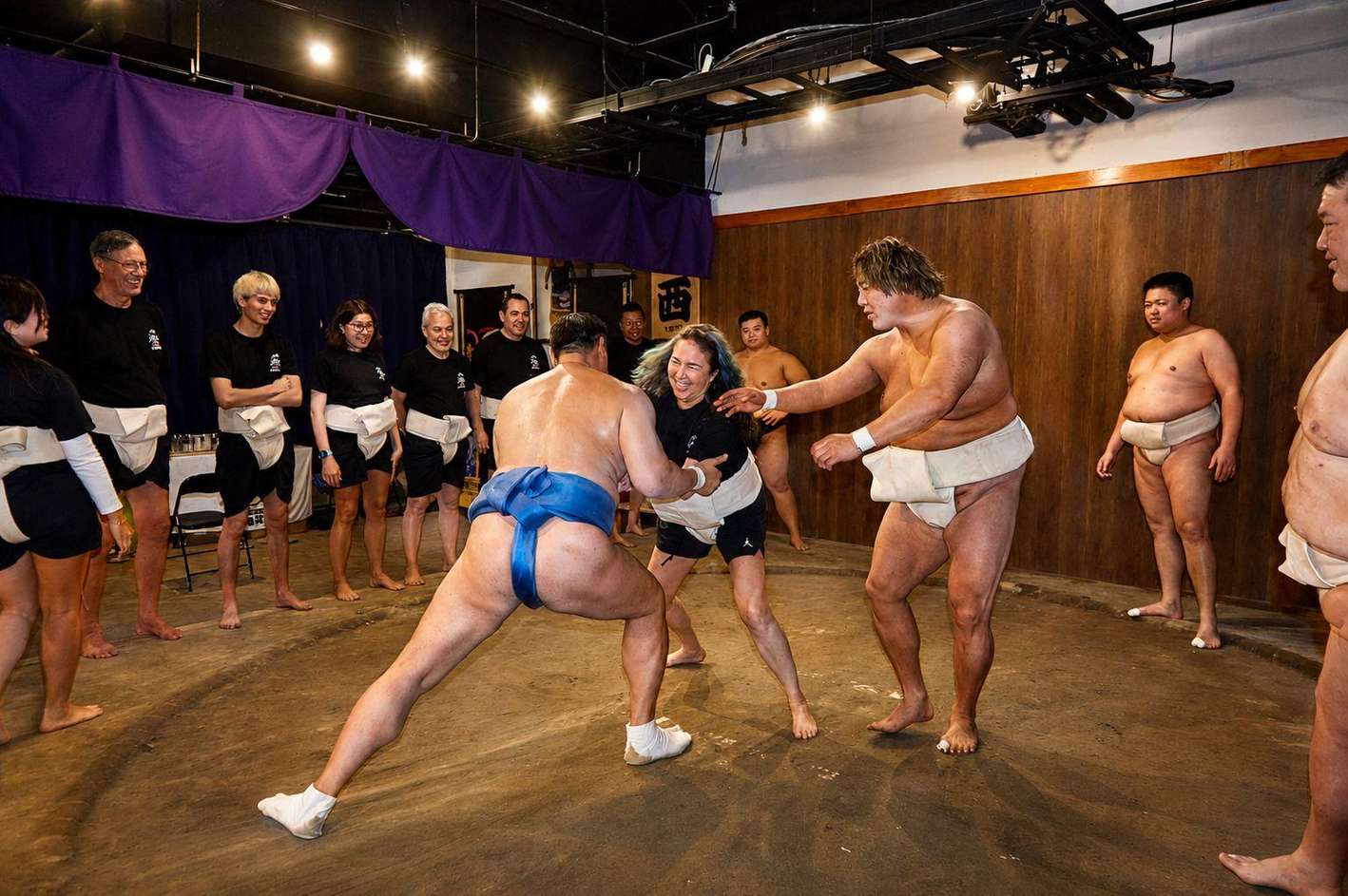
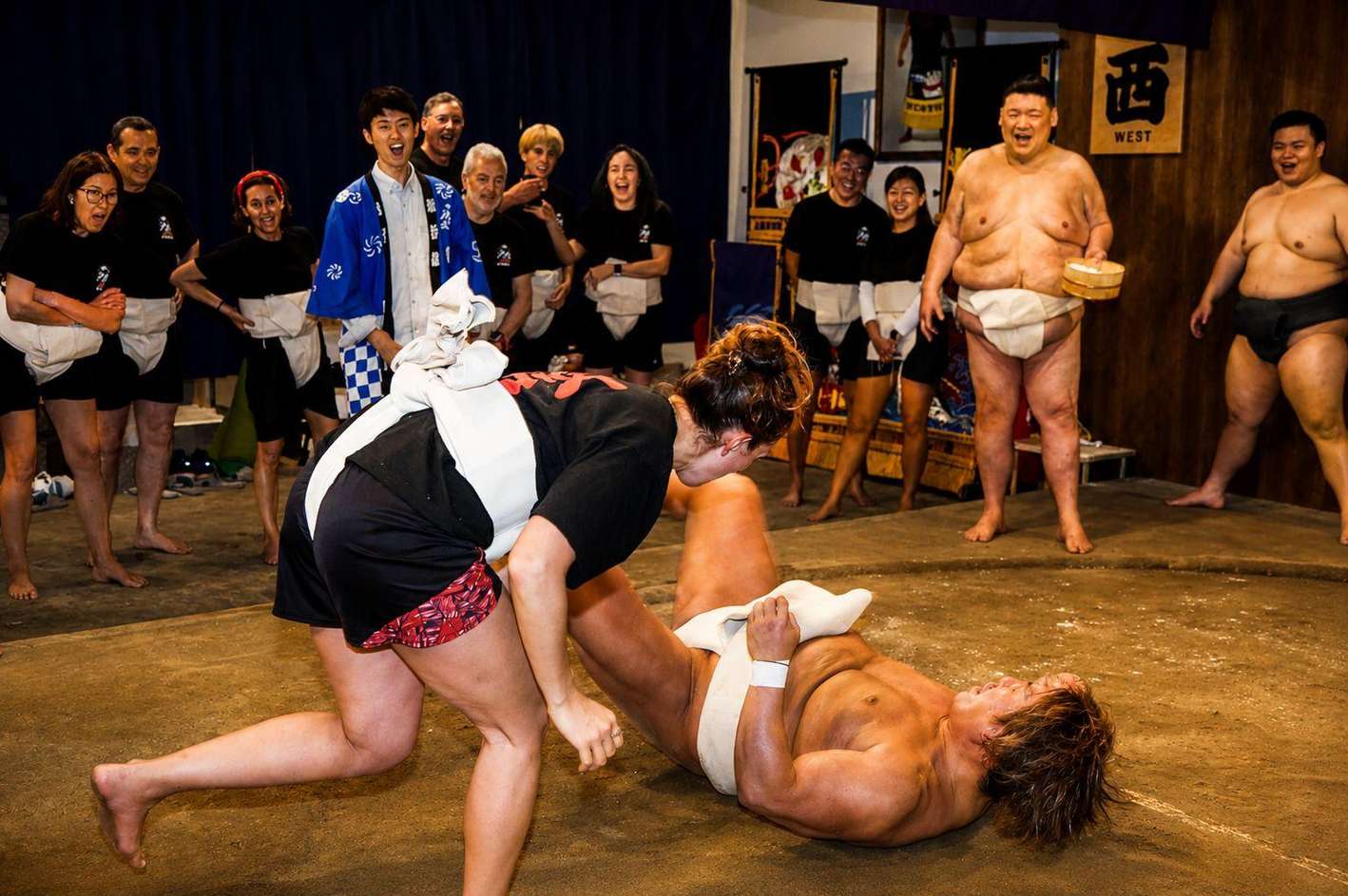
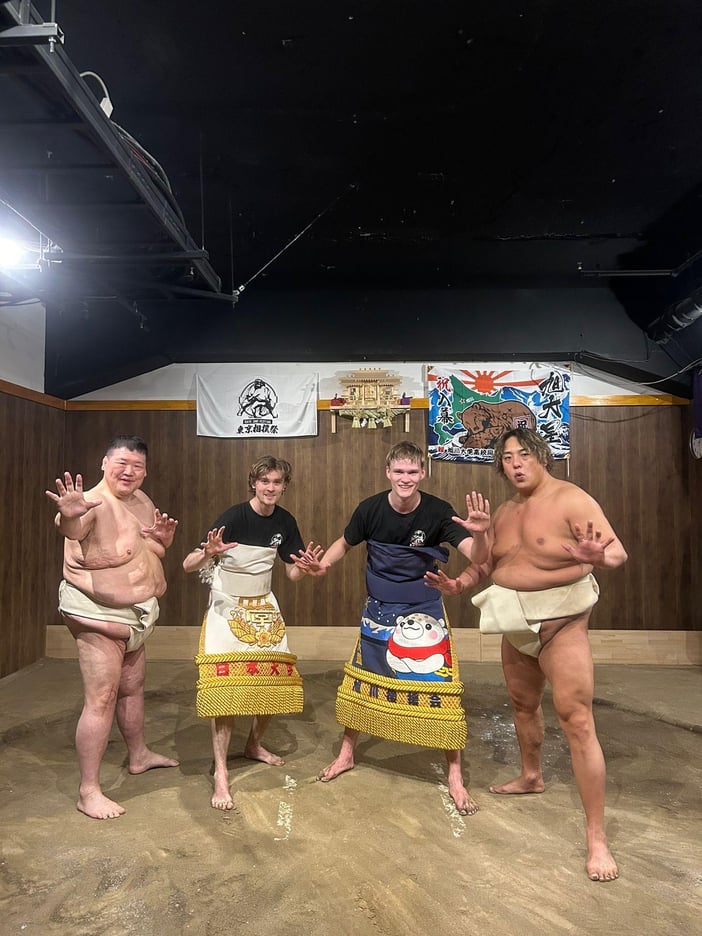
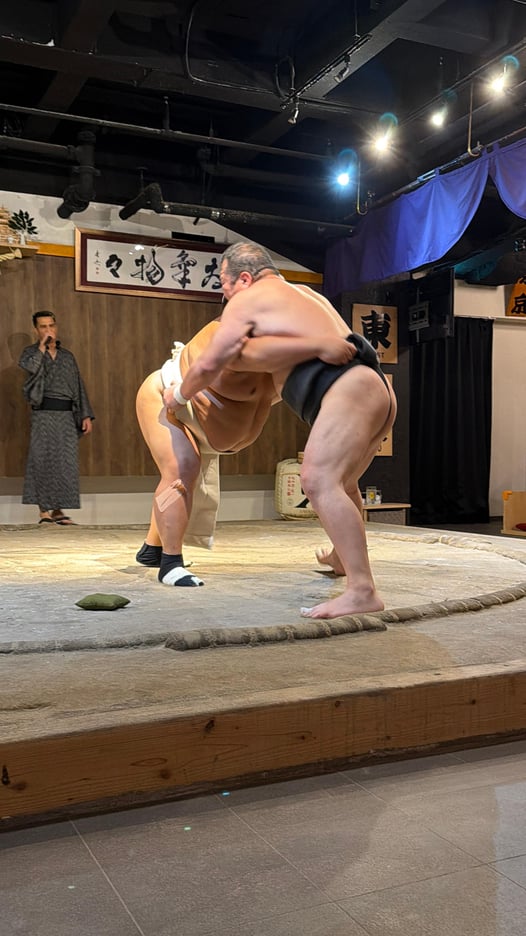
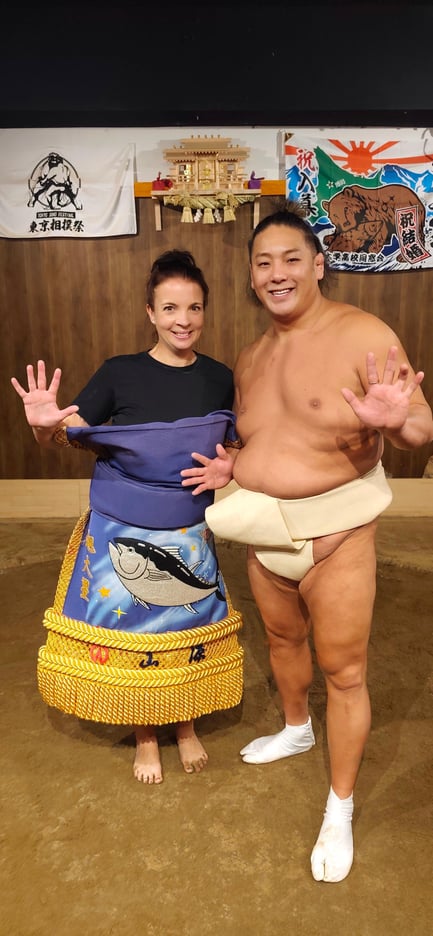
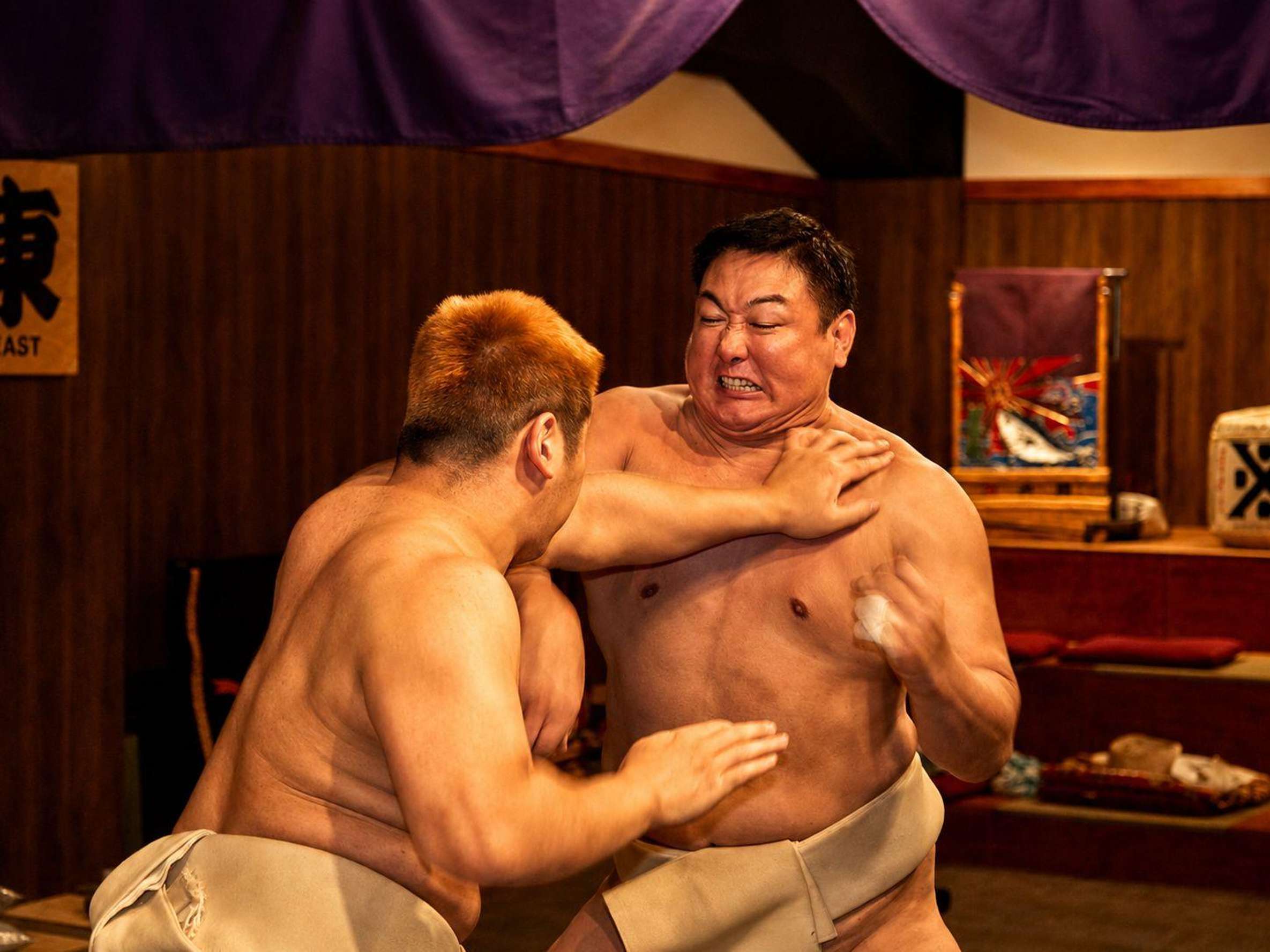
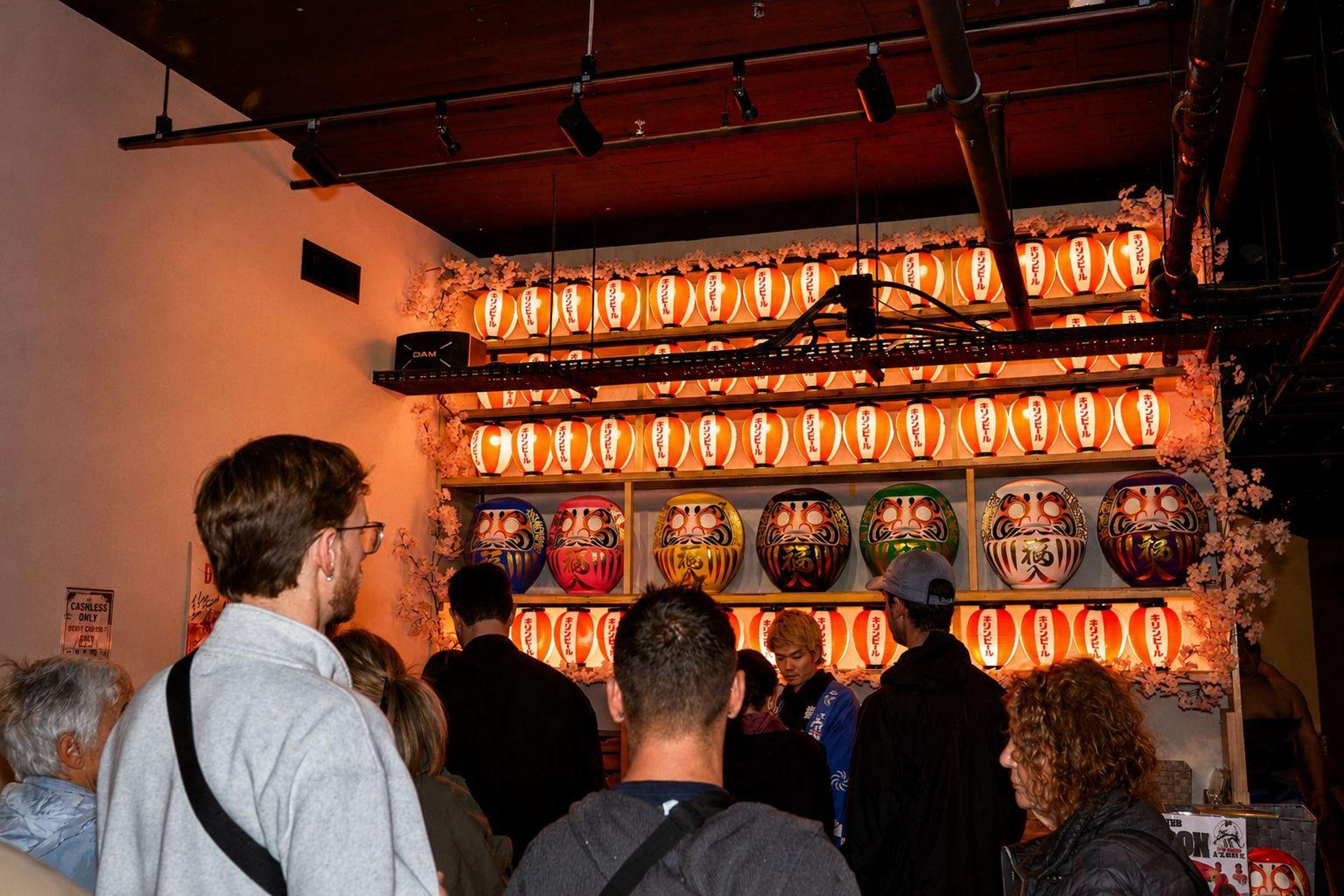
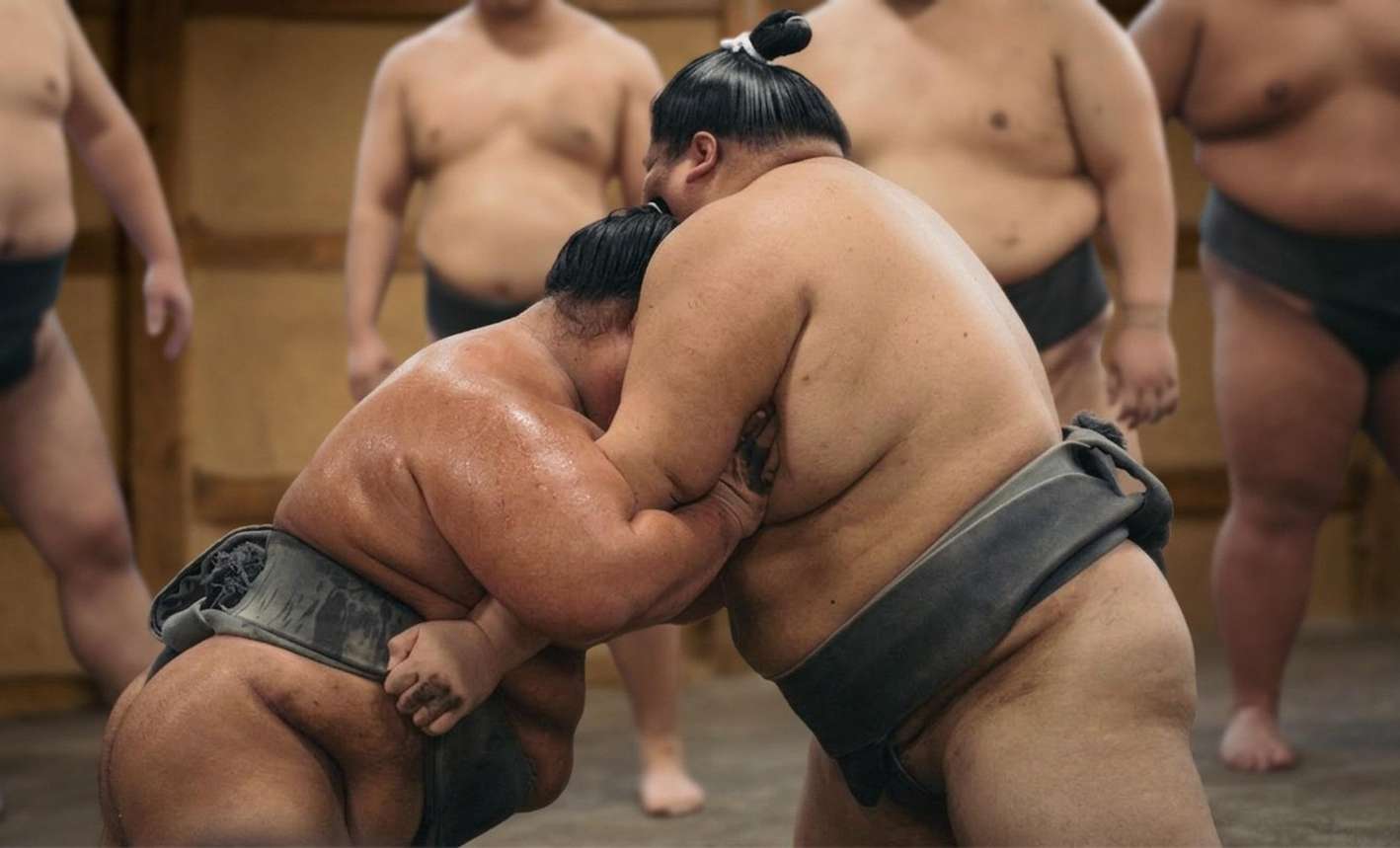
1Arrive and meet the ring· about 10 minArrive 10 minutes early, swap your shoes for bare feet, and get your first look at the dohyo with its straw bales, where four sit offset so rainwater could drain in outdoor matches.2Live bouts up close· about 15 minFormer professional wrestlers face off meters from your seat while an English-speaking MC explains the salt thrown to purify the ring and how a win is decided.3Learn the stomp and the slide· about 15 minOn the ring you practice shiko leg stomps and suriashi footwork at a beginner's count, five to ten repetitions, no need to lift the leg high.4Pushing drills and your bout· about 10 minTrain the pushing exercises wrestlers use in morning practice, then wear a traditional mawashi and test your balance against a former pro in a friendly, supervised bout.5Photos and goodbye· about 10 minAfter the final clash you get time for photos in the ring and with the wrestlers, then head back out with sore thighs and a new respect for balance.
Included
70-minute hands-on sumo training workshopInstruction by a former professional rikishiUse of training wearOption-specific items listed in the selected option
Not included
Transportation to and from the venueHotel pickup and drop-offFood and drinks not included in the selected optionAdditional on-site purchases
Which sumo class in Tokyo fits your trip
Green marks the lowest price. Prices per person.
Tour
Price
Duration
Languages
Best for
Our pick
Tokyo: Interactive Sumo Show & Hands-On Experience
5.0★ (64)
from $57lowest price
1 hour
English, Japanese
travelers who want a real training session, drills and a bout, all inside one focused hour
Most reviewers found the former pro wrestlers adjusted every drill and bout to their size and level.
Best surprise
Many say tying on the mawashi changed everything, and the stance suddenly made sense.
Most common wish
Several families wished there were enough suits and belts so every guest could take a turn.
How to book a sumo class in Tokyo
01
Pick your session early in the trip
Choose a date in the first half of your stay so a rained-out plan or a tired morning still leaves room to rebook. Most hands-on sessions run at set times rather than on demand.
Pro tipCheck whether your session needs a minimum number of participants; if you want certainty, pick a private booking so the class is guaranteed to run
RecommendedBook a morning or lunch slot, then leave the afternoon free in case you want to repeat the ring
02
Choose the right experience type
Read the options closely. Some sessions are a training lesson on the dohyo, others are a live show with an optional training add-on, and the duration shifts between 1 hour and 2 hours depending on which you pick.
ImportantHands-on training options are not suitable for children under 5, pregnant guests, or people with serious health conditions, and children must be with a guardian
Pro tipIf someone in your group only wants to watch, several venues let spectators stay seated and film while others train
03
Note the cancellation window before you pay
Most hands-on sumo workshops on this page let you cancel up to 24 hours in advance for a full refund. Mark that deadline in your phone the moment you book.
ImportantLate arrivals and no-shows are not eligible for refunds, and strict time-slotted shows can refuse entry at the door if you miss the start
Common mistakeBooking a session 30 minutes before a museum you really wanted; give yourself a full buffer
04
Plan what you wear and arrive early
Wear loose gym shorts and a t-shirt. The mawashi belt goes over your clothes, and shoes come off before the ring, so slip-ons beat laces. Aim to arrive at least 10 minutes early.
RecommendedBring clean socks you don't mind getting dusty, and well-fitting shorts for kids since loaner bottoms run adult-sized
Common mistakeArriving straight from a big breakfast; the shiko stomps and pushing drills go easier on an empty stomach
05
Sort payments and messages on arrival day
Some venues, including the Ginza sessions, are cashless, so have a credit card ready for any on-site food or drinks. Watch your email for the operator's confirmation and meeting details.
Pro tipSome hands-on venues include changing areas or showers, so you can train and head straight to your next stop
Common mistakeTurning up with cash only at a cashless venue and going thirsty through your own bout
What to know before you book a sumo class in Tokyo
Can stop the dayGood to knowGood news
01
ChoosingWhat it is, who it suits, when to go
4
Who teaches
Former professional rikishi run these classes. They trained and competed at the top levels of the sport, and they coach the drills themselves: shiko leg stomps, suriashi sliding footwork, and pushing technique on a real clay ring.
Getting in the ring
Ring drills are optional everywhere. If you would rather watch, you stay seated and cheer or film, and nobody pushes you onto the clay. Some venues cap ring spots and pick volunteers by lottery when the room is full.
Safe contact
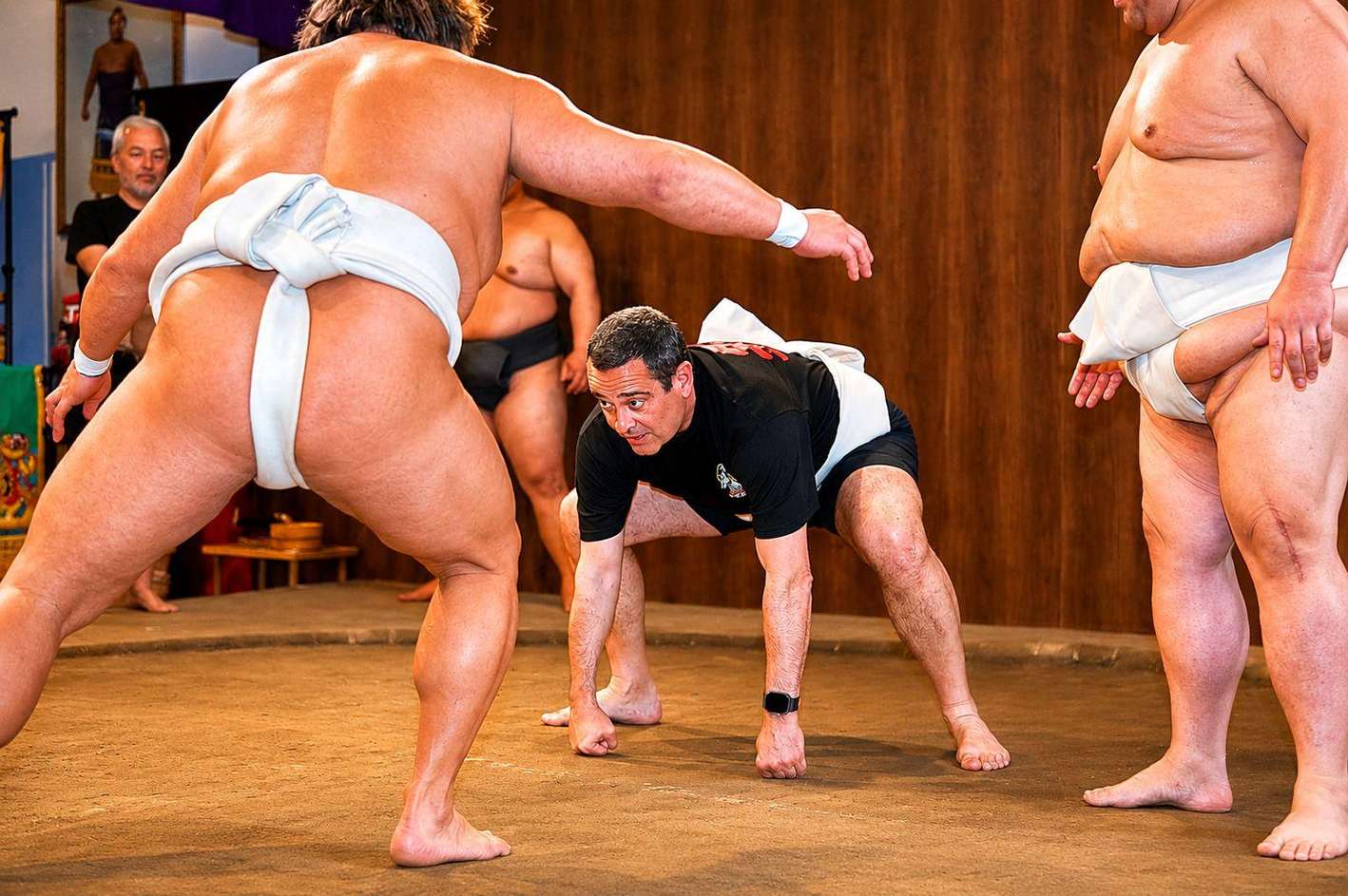
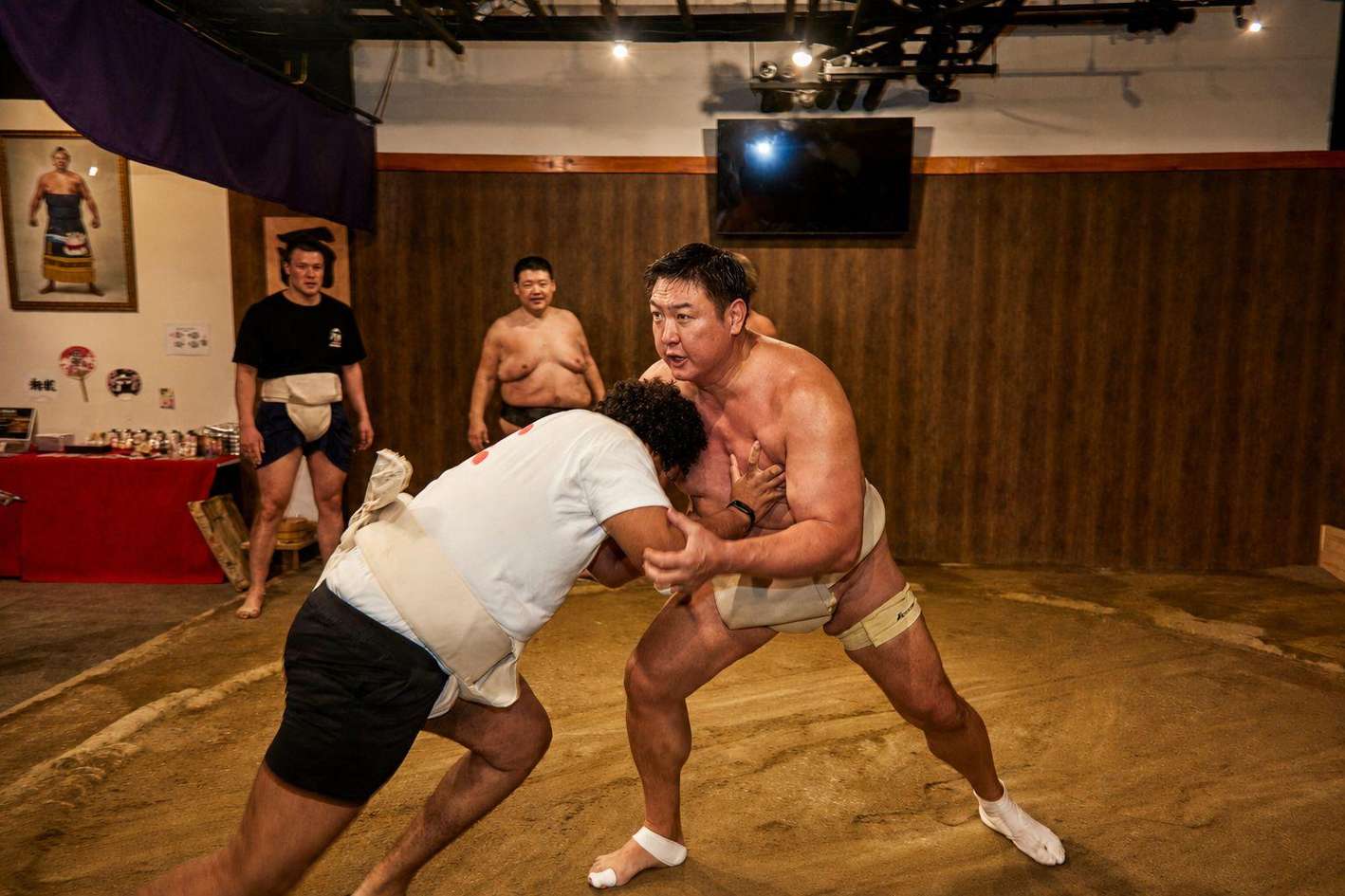
The instructor explains which moves are off-limits before anyone grapples, then matches his own strength to yours in the bout. The pace bends to the group, so an unfit beginner can do the shiko drill with five or ten relaxed stomps instead of high leg raises.
Changing rooms
Facilities vary by venue. One operator in Koto offers a private changing area for ring challengers, and the training session near Heiwajima has showers, so you can rinse off the sand before moving on with your day.
02
BookingHow far ahead, and what happens if plans change
2
Cancellation
Most hands-on workshops let you cancel up to 24 hours in advance for a full refund, so you can hold a slot while your Tokyo plans settle.
Cancellations
Hands-on lessons let you cancel up to 24 hours ahead for a full refund, so you can hold a spot early and rearrange. Arrive before the start time, because late arrivals and no-shows lose the refund.
03
Before you goPapers, health, what to bring
3
Age limitsCan stop the day
Hands-on training sessions admit children aged 5 and up, always with a guardian alongside. Anyone pregnant or with a serious health condition should sit these sessions out; check with the tour operator before booking if a condition could stop you joining.
What to wear
Come in loose gym shorts and a t-shirt, and skip stiff jeans. The canvas mawashi belt goes on over your clothes, never on bare skin, so a thin layer underneath also saves you from chafing. Shoes and socks come off before you step on the ring.
With kids
Wrestlers supervise children and control every bit of contact during training. At the family workshop in Ryogoku, kids train alongside adults, and younger children at the Koto session aged 3 and under join free.
04
On the dayWhere to be, when, and how you get there
2
TimingCan stop the day
Arrive about ten minutes before the start. Sessions follow a tight clock, and a front desk can refuse late entry; latecomers and no-shows lose the refund. A standard lesson runs about an hour from warm-up to bouts and photos.
Getting there
Most hands-on venues sit near Ryogoku, Tokyo's sumo quarter. It takes about 25 minutes from Shinjuku on the JR Chuo-Sobu line, or roughly 13 minutes from Tokyo Station with one change at Akihabara.
05
During the tourWhat is expected of you
1
Languages
Coaching and commentary run in English, or bilingually in English and Japanese depending on the session. Rules, rituals, and safety points are all explained before you move, so you never have to guess what a call means.
A sumo class in Tokyo - the whole day, told straight
The clay ring at a beginner sumo class in Tokyo takes anyone willing to bow, stomp and push. One session runs from first footwork drill to the chanko lunch, settling what to wear, when to book and whether your body or your kids can handle it.
Tokyo· 35.55° N, 139.67° E
If you only remember three things
1
Classes run almost daily all year, so no travel month blocks you.
2
Cancel up to 24 hours ahead for a full refund; latecomers lose it.
3
Wear gym shorts and a t-shirt: the mawashi wraps over clothes, never skin.
Why a hands-on sumo class beats watching
A morning stable visit gives you an hour of silence on a cushion. A dinner show gives you comedy and a meal. A sumo class gives you the clay under your own feet: shiko stomps, sliding footwork, then a bout against a former professional wrestler.
A class is the only format where you actually sweat. Active stables guard their tournament preparation and turn away visitors who want to join in, so the tourist workshop run by retired wrestlers is the one door that opens.
And stepping onto the ring there is not disrespectful: these are structured sessions organized by experienced wrestlers for visitors.
Wrong ideas about sumo classes
MythYou need to be huge or fit to join a sumo class
Reality
The drills scale down: beginners start shiko with five to ten relaxed stomps, no high kicks required
MythStepping on the ring offends Shinto tradition
Reality
Structured workshops run by experienced wrestlers welcome visitors onto the dohyo; the taboo covers pro rings only
MythA class is a cutthroat athletic regime
Reality
These are guided educational sessions, not competitions, and every drill adjusts to the group
One more reason to pick the class over the alternatives: it runs on its own schedule. Because retired wrestlers lead the sessions, tournament months do not touch them, and the chanko hotpot that follows a session is the same stew wrestlers eat daily.
Tour for this
Tokyo: Family Sumo Workshop & Live Wrestling Show with Lunch4.9★ (459) · 2 hours · Free cancellation
The clay under the ring carries more than footprints. Before any class begins, a ceremony buries salt, kelp, dried squid and chestnuts at the center of the dohyo, and the instructor explains it before anyone trains. That context separates stomping in a gym from learning a ritual.
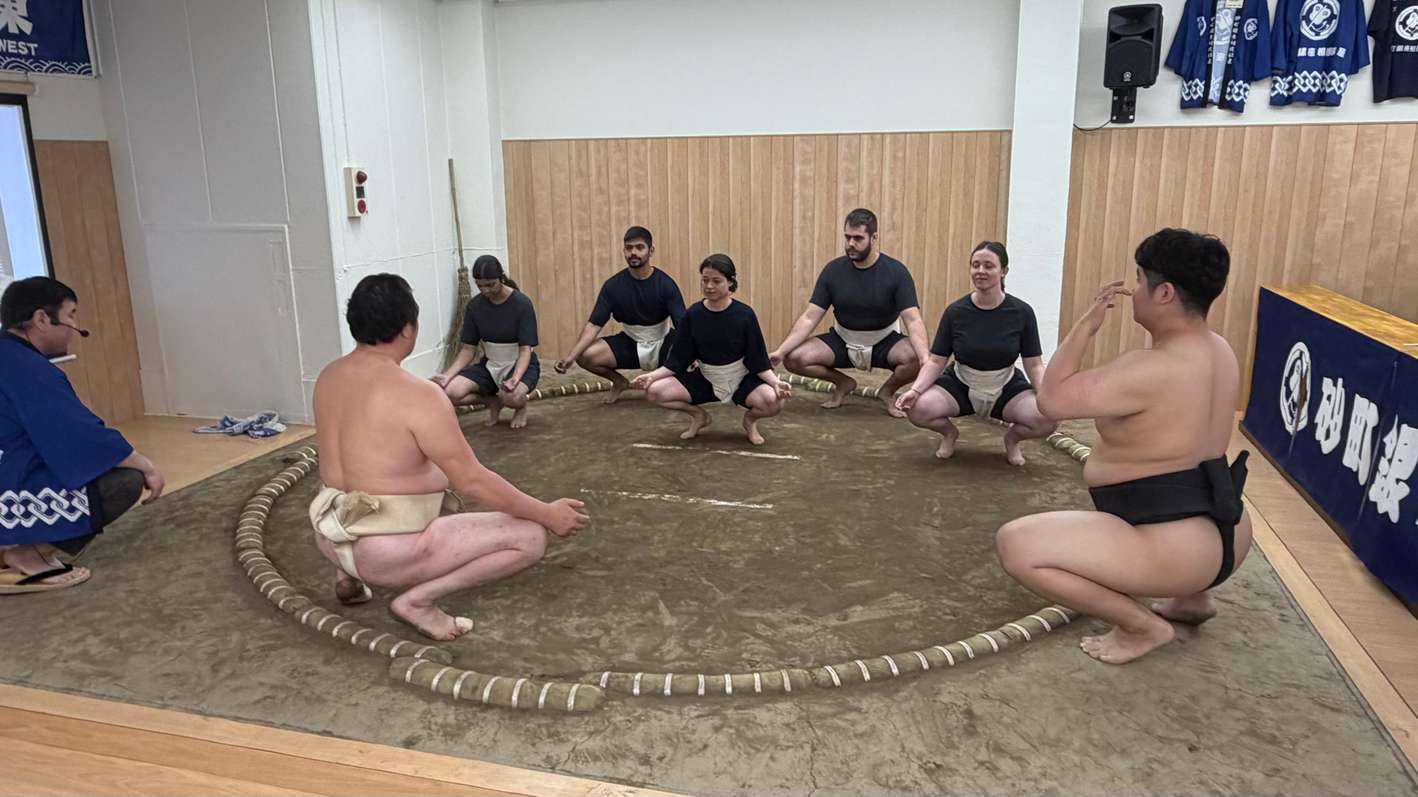
The whole arc fits in about an hour. Warm-up stretches come first, then shiko leg stomps and suriashi, the sliding footwork that makes pushing possible. Attack and push drills follow, taught directly by former professional wrestlers.
A beginner sumo class, minute by minute
1
Arrival
Welcome and ritual context
The instructor explains the dohyo and its meaning before anything physical
2
Warm-up
Stretching and flexibility work
Loosens shoulders and hips for the stomp drills ahead
3
Shiko and suriashi
Leg stomps and sliding footwork
Five to ten relaxed stomps to start; no one is forced to raise a leg high
4
Push drills
Attack and pushing technique
Practiced against an opponent's resistance, supervised throughout
5
Bout and photos
Optional match, then commemorative photos
Volunteers enter the ring; spectators stay seated and film
Some venues, like the operator on Sunamachi Ginza, run the bout as a volunteer match in a real mawashi. Others, including the family workshop in Ryogoku, select challengers by lottery when demand runs high. Either way, the photographer position stays open to everyone.
The floor is padded, the rules are spoken and the referee is on your side. Instructors explain which moves are prohibited before anyone lays a hand on anyone, then match their own strength to yours in the bout. The contact bends to you, and only as far as you like.
Women and children are openly welcome on the dohyo in these classes. Professional sumo bars women from the ring on religious grounds; the tourist workshops do not. Former wrestlers supervise every piece of physical contact, and children get an adult's eyes on them the whole time.
What nobody tells you
The ban on women on the dohyo does not apply here
Professional Shinto custom governs tournament rings; commercial classes explicitly welcome women and kids
Ring drills are optional every time
You can stay seated, cheer and film while your travel partner wrestles
Padded suits exist for the cautious
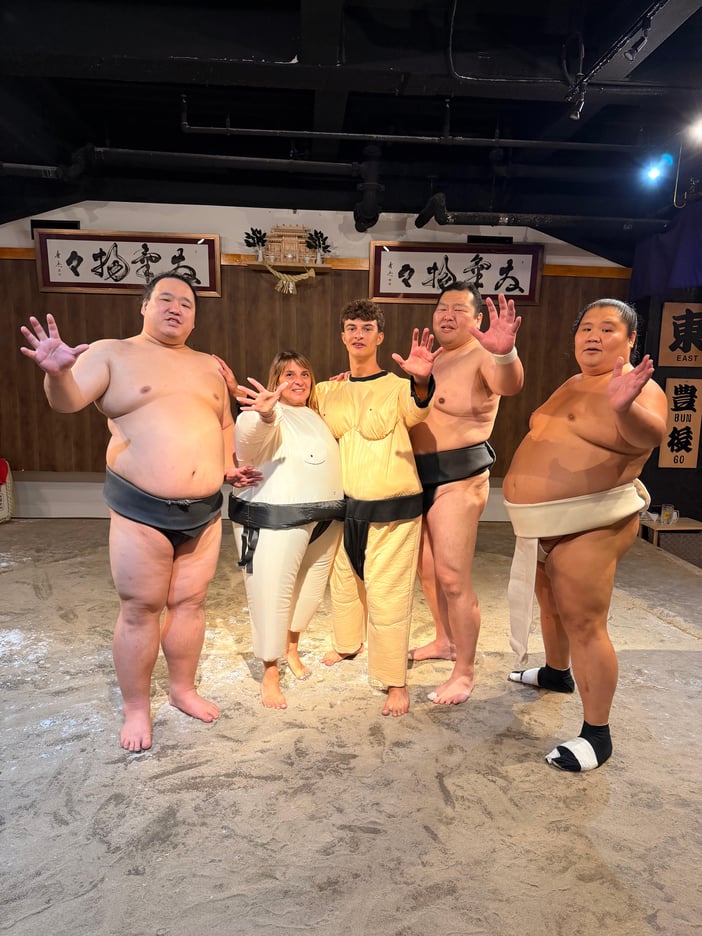
Several venues offer an inflatable sumo suit for a lighthearted bout instead of a real belt
The age rules deserve one clear sentence. Hands-on training is not suitable for children under 5 at most venues, and interactive ring activities generally ask for age 5 with a guardian alongside.
One family-friendly operator in Koto runs a gentler format where kids from age 4 join and under-fours attend free, which explains why you will hear both numbers.
After the drills, wander the neighborhood. The Sumo Museum inside the Kokugikan, free on weekdays from 10:00 to 4:30 pm outside tournaments, sits a short walk from most class venues.
Tour for this
Tokyo Ginza Sumo Show: Live Performance & Photo Experience4.7★ (2,064) · 1.5 hours · Free cancellation
Tournament season, the thing that ruins every other sumo plan in Tokyo, does not touch the classes. The January, May and September tournaments at the Kokugikan empty the stables and close morning practice, yet the workshops keep their calendars, because retired wrestlers lead them and never travel with the tournament.
Beginner sumo class availability and tournament schedule
January: 5 out of 5 for class availability. Classes run daily without tournament disruption.
Highestall year
Darker: a higher class availability score, out of 5
Tap a month to read it.
So the sumo calendar never decides your booking day. Pick the class around the rest of your trip: morning sessions pair well with an afternoon in Ryogoku, and a two-hour workshop with lunch slots neatly into a full day.
Almost daily, twelve months a year. It is the rare sumo experience in Tokyo that survives a bad schedule.
If your trip lands mid-tournament, this is the hands-on option that still runs; the stables will not, and even a guided morning practice tour comes up empty in March, July and November when wrestlers relocate for the regional tournaments.
One comparison worth making before you book: morning practice is the authentic, unscripted workout, silent and uninterrupted. A class trades that stillness for your own participation. If learning sumo wrestling in Tokyo is the point, the class wins; the two pair well on the same trip.
Tour for this
Tokyo: Authentic Sumo Experience with Hot Pot, Photo & Gift5.0★ (153) · 2 hours · Free cancellation
Choosing your sumo class - three shapes to compare
Three shapes of session exist, and the difference is how much real wrestling you want. The Tokyo: Interactive Sumo Show & Hands-On Experience in Ginza gives ring training to every guest who wants it: a 70-minute workshop of shiko, suriashi and pushing drills under a former top-division rikishi, with live matches to watch first.
The family workshop adds lunch and bends to kids. Guaranteed ring time versus lottery is the first fork. Some shows hand out the padded suits and draw names for the ring; only the dedicated classes promise clay to everyone.
Which sumo class shape fits you
Hands-on class
Family workshop with lunch
Padded-suit show
Physical intensity
Real drills, real exertion
Light drills, kid-paced
Low, comedy-led
Guaranteed ring time
Yes, for every guest who wants it
Ring challenge selected by lottery
Only selected audience volunteers
English support
Full English throughout
English and Japanese commentary
English MC
Kids
From age 5, with a guardian
From age 4 at the Koto venue, under-4s free
All ages watch; challenges limited
Hands-on class
Physical intensity
Real drills, real exertion
Guaranteed ring time
Yes, for every guest who wants it
English support
Full English throughout
Kids
From age 5, with a guardian
Family workshop with lunch
Physical intensity
Light drills, kid-paced
Guaranteed ring time
Ring challenge selected by lottery
English support
English and Japanese commentary
Kids
From age 4 at the Koto venue, under-4s free
Padded-suit show
Physical intensity
Low, comedy-led
Guaranteed ring time
Only selected audience volunteers
English support
English MC
Kids
All ages watch; challenges limited
Experienced martial artists should look elsewhere: university sumo clubs and private coaching offer the rigorous grappling a commercial class cannot. For a first taste of sumo wrestling in Tokyo, the three-session spread covers everyone else, and since every format runs year-round, the appetite decides, not the calendar.
The class itself is an hour: arrival and warm-up at one end, practice bouts and photos at the other. Standalone interactive sessions run 60 to 75 minutes, so you can slot one between breakfast and an afternoon plan without gutting the day.
Time needed for a sumo workshop
60 minring training and photo session
105 minstandard workshop and lunch schedule
2 hoursfull session with hotpot dining
The extension is lunch. Book the workshop with a chanko hotpot meal and the visit stretches to roughly 105 minutes to two hours, with the first hour on the ring and the rest at the table. Protect a two-hour block if you want the meal.
The travel on either side is short. Ryogoku, where most of Tokyo's training dohyos cluster, sits 25 minutes from Shinjuku on the direct Chuo-Sobu line and about 13 minutes from Tokyo Station with one change at Akihabara.
Build the morning around a 10 am session and you are still free by noon, full by half past if you stayed for the stew.
Tour for this
Authentic Tokyo Sumo: Enter the Ring & Chanko Lunch4.9★ (97) · 4 hours · Free cancellation
Ryogoku holds most of the city's training stables, dohyos and hands-on experiences, so the trip ends in one neighborhood regardless of which class you book. The JR Sobu line drops you practically at the door.
Take the train; skip the taxi. From Shinjuku the direct Chuo-Sobu local takes about 25 minutes. From Tokyo Station, ride the Yamanote or Keihin-Tohoku line one stop to Akihabara and change to the Sobu line: about 13 minutes in total, faster than a car in any traffic.
A cab makes sense only with small children or luggage, around 20 minutes from Tokyo Station or longer from Shinjuku depending on the streets. Once you arrive, the venues themselves sit close to the station; the hard-to-find buildings in side streets are the active stables, which you cannot enter anyway.
Wear the right clothes under your coat and the trip from the station to the ring takes minutes. That packing question comes next.
Tour for this
Tokyo: Sumo Wrestling Experience with Chanko Nabe & Mochi4.8★ (746) · 1 - 2 hours · Free cancellation
Gym shorts and a t-shirt. That is the whole wardrobe, because the thick canvas mawashi belt wraps over your clothes, never against bare skin, and the layer underneath saves you from canvas friction during the pushing drills.
What to wear and bring for hands-on sumo training
Gym shorts or athletic pantsTourists wear the mawashi belt over their shorts for hygiene and comfort, never directly on bare skin.
T-shirt or athletic topWear comfortable sports clothes that allow free shoulder and torso movement during drills.
Bare feet or slip-on shoesShoes and socks must be removed before stepping onto the traditional clay dohyo.
TowelNeeded for drying off after rinsing ring sand and clay from your feet and hands.
Own shorts for small childrenBorrowable gear is often adult-sized, so children should bring their own comfortable shorts.
Water or sports drinkSumo warmups, shiko leg stomps, and practice bouts are physically demanding workouts.
Shoes come off before the clay. You step onto the dohyo barefoot or in socks you do not mind dusting, and venues provide hand showers or washing stations to rinse the sand off afterwards. Jeans are the one garment to leave at the hotel; the drills ask for deep crouches.
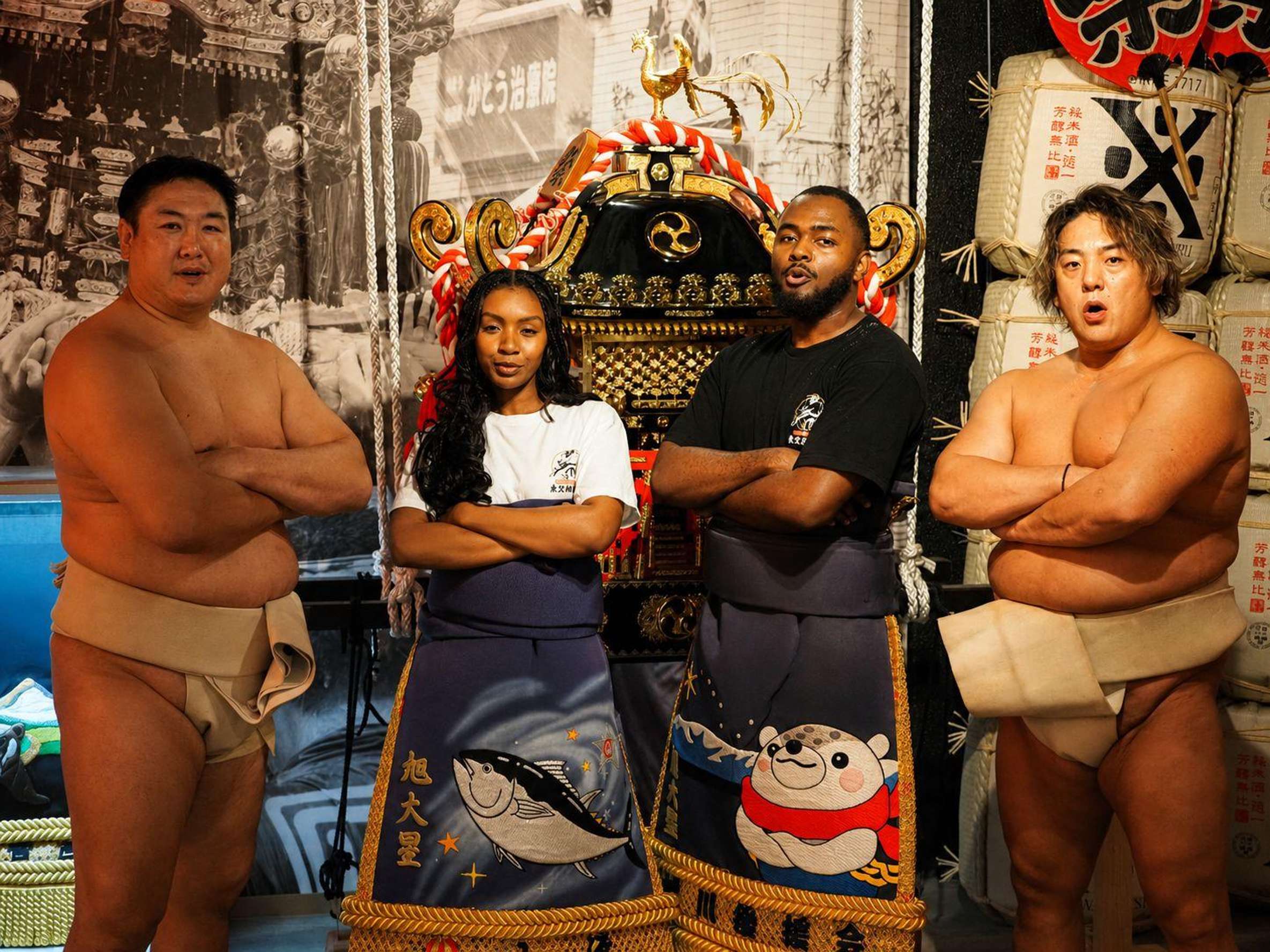
The instructors are former professional rikishi, wrestlers who trained and competed at the highest levels, and they supply the loaner gear: mawashi belts, padded suits, training wear. You carry the towel and the water, and parents pack well-fitting shorts for small children because borrowed bottoms run adult-sized.
One packing note that saves the day: bring your own water bottle, because warm-ups, stomps and bouts add up to a real workout even at beginner pace.
The terms are simple and worth reading once. Most hands-on classes let you cancel up to 24 hours ahead for a full refund; inside that window, the fee stands.
What happens when plans change
If this happens
What happens then
Cancel more than 24 hours ahead
Full refund, no questions
Cancel late or not at all
The fee is forfeited
Arrive after the start time
Strict-schedule venues may refuse entry at the desk, and the fee stands
A child falls ill before the session
Cancel within the 24-hour window and you are covered
The clock matters more than the reason. A sick kid or a missed train reads the same at the front desk: late arrivals and no-shows are not eligible for refunds, and shows that run on a fixed timetable turn latecomers away.
Set out early; the venues sit a short walk from the station, and arriving ten minutes ahead is the norm.
The ring itself forgives weather. Four of the straw bales edging the dohyo sit offset at the cardinal points, a leftover from outdoor sumo that let rainwater drain away, so the session goes on whatever the sky does. Your plans are the only variable, and the 24-hour line is the one to watch.
Families split the day three ways: who wrestles, who watches, who rides free. The gentlest family format takes kids from age 4, under-fours sit in for free, and the padded suit exists precisely for the child who wants the bout without the real belt.
The Tokyo Sumo Experience in Koto runs on a real clay ring with a private changing area, a real mawashi and a full changing kit for challengers, and women and kids step on it freely. Spectators never pay the wrestler's price to sit: staying seated and filming is a fully supported choice.
Groups scale further. A private charter at the Sunamachi Ginza stable takes up to 40 guests, and for corporate events the stable dispatches wrestlers and a portable ring mat to hotels and banquet halls, supporting incentive groups of 100 to 300.
A private reservation on the family workshop guarantees the event runs even if the minimum headcount is missed.
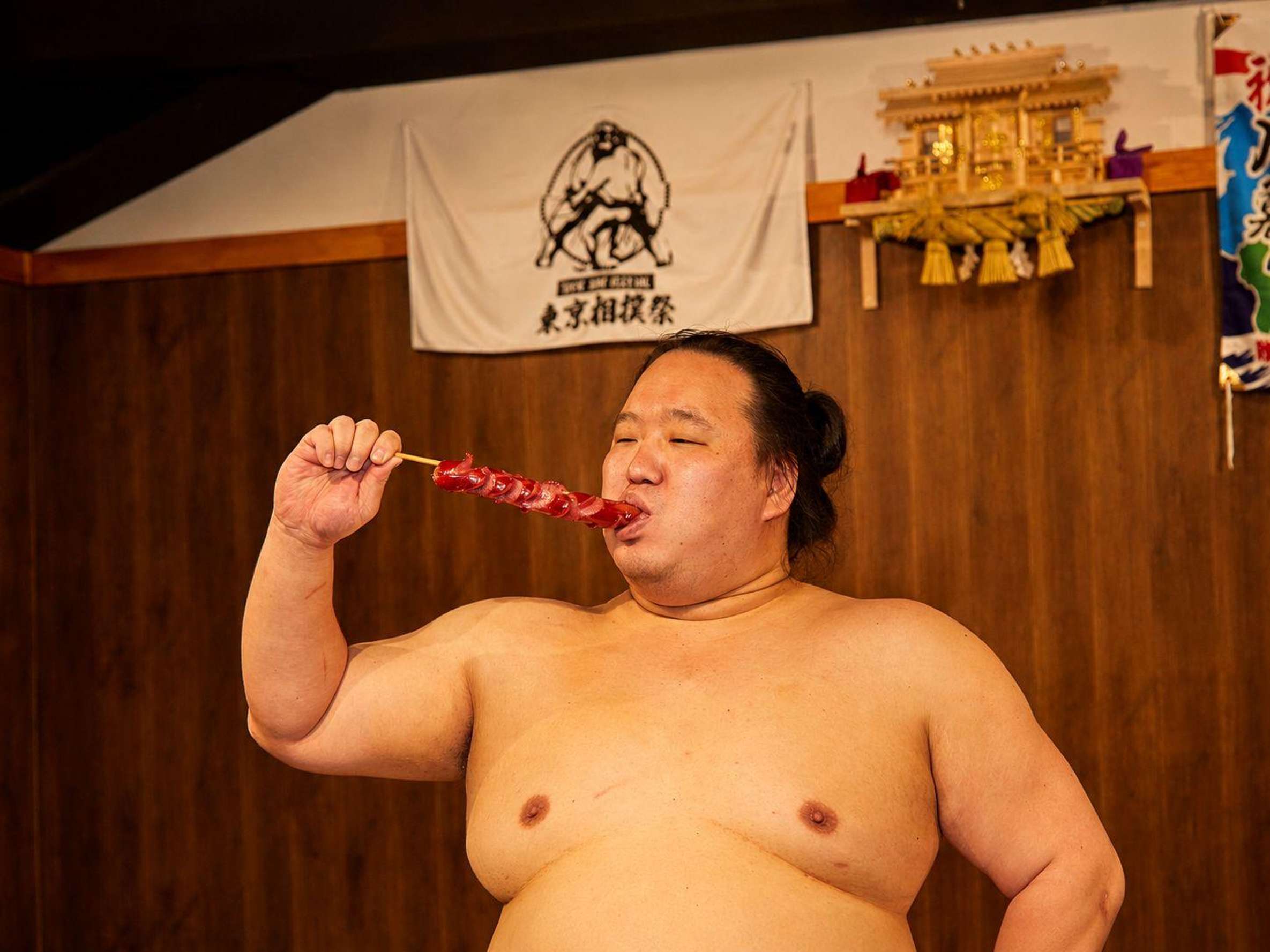
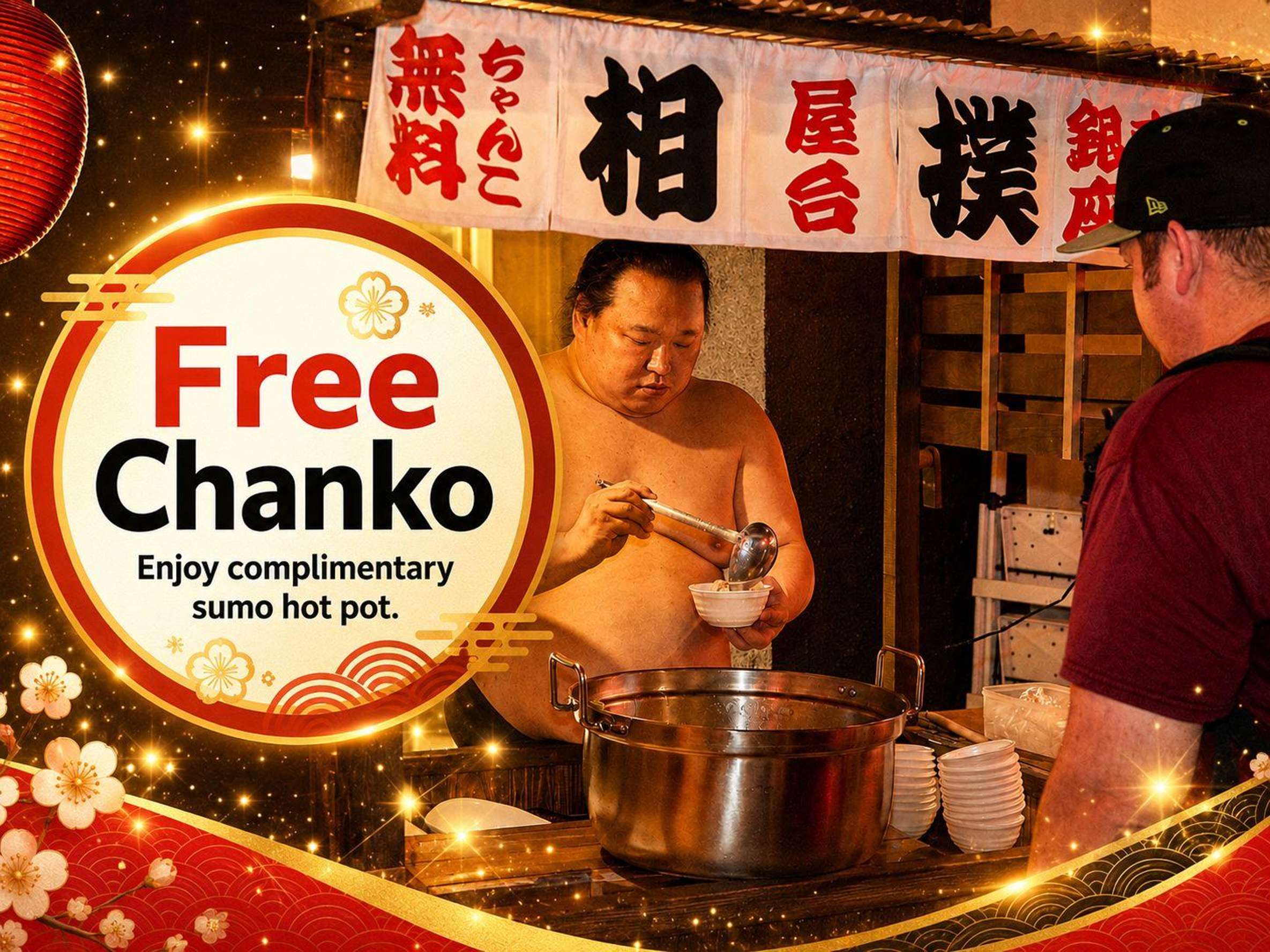
After wrestling, everyone eats. Chanko-nabe is the traditional post-training meal, often served in generous or all-you-can-eat portions, and venues provide showers or washing stations so nobody carries the clay to lunch.
The stew arrives steaming, thick with chicken, napa cabbage, carrots and green onions in dashi broth. Chanko-nabe is what wrestlers eat twice a day, and the classes that include a meal, like the Ryogoku family workshop with its mini hotpot lunch, serve it straight after the bouts.
A traveler's note
Fantastic! So fun. Host explained everything brilliantly, never boring. Great wrestlers, happy for photos, delicious Japanese soup. Premium ticket seats completely change the experience. Would do it again! Authentic sumo!
The chicken is not a coincidence. Wrestlers avoided beef and pork because touching hands to the ground means losing a match; chickens stand on two legs, a figure of stability, and the round meatballs echo the white victory circle. The meal carries the lesson the drills started.
Dietary needs fit in with notice. The family workshop takes vegetarian, vegan, allergy-friendly and pork- and alcohol-free requests if you advise them at least 48 hours ahead.
The deepest version of this day is the Authentic Tokyo Sumo: Enter the Ring & Chanko Lunch, a four-hour session inside a real sumo stable that ends at the table with the athletes, guide and tour photos included.
Tour for this
Authentic Tokyo Sumo: Enter the Ring & Chanko Lunch4.9★ (97) · 4 hours · Free cancellation
Ryogoku rewards the afternoon. Ekō-in Temple sits five minutes from the ring: the place where Edo-period public tournament sumo began, home to the Chikara-zuka, the Mound of Strength where wrestlers still pray.
The Kokugikan arena and its ground-floor Sumo Museum stand just north across the station, free on weekdays from 10:00 to 4:30 pm outside grand tournament periods, with ceremonial kesho-mawashi aprons and old woodblock prints.
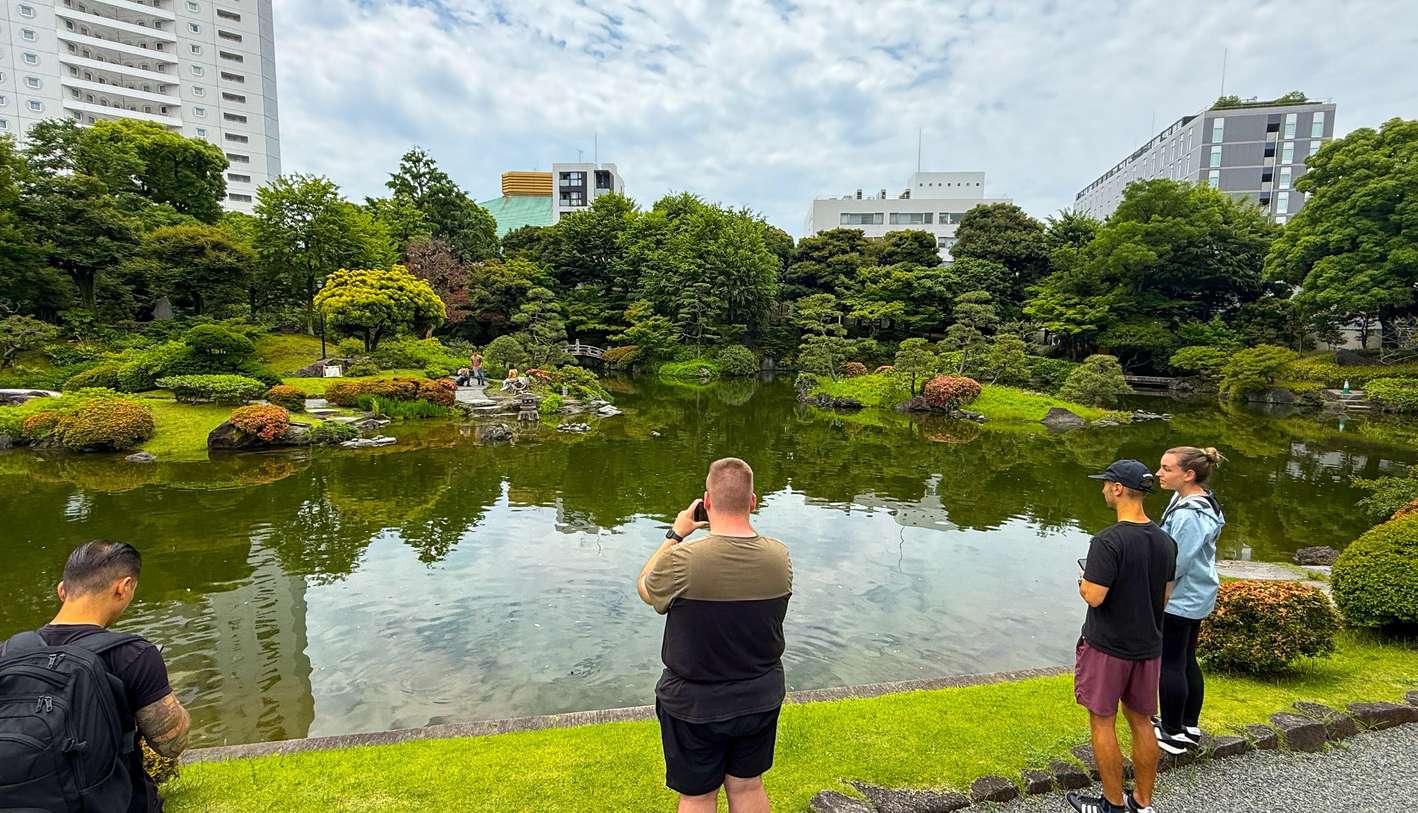
Behind it, the Former Yasuda Garden offers a quiet Edo-period pond walk. One class becomes a full sumo day without a taxi.
What you cannot add is a stab at the real stables. Walking into an active beya unannounced gets you turned away, and morning training at a professional stable treats no visitor as a training partner; the sacred dohyo there is closed ground. Your class already gave you what the stables will not.
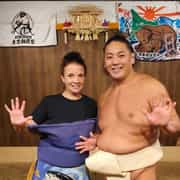
So end the day on the clay you touched. The bronze yokozuna statues and handprints along Kokugikan-dori make a fitting last stop, each set of hands bigger than the ones you shook an hour earlier.
A beginner sumo class in Tokyo is the only format where you learn the techniques and feel the ring, and it runs almost daily regardless of the tournament calendar.
The Ginza hands-on session earns its spot at the top of this page with guaranteed ring time, a former top-division rikishi, and an hour that fits any schedule.
Families with under-fives or anyone wanting the meal should choose the workshop shapes instead.
Go ifYou came to learn sumo wrestling in Tokyo yourself, with your own feet on the clayYour trip falls during a tournament month, when stables closeYou are over 5, any build, and willing to stomp
Skip ifYou want serious competitive grappling; look at university sumo clubsYour child is under 5; spectator seats or a show suit them betterYou cannot commit to arriving before the start time
Short answers to what travelers ask before booking a hands-on sumo lesson in Tokyo.
Tokyo2026
The floor shook when our coach charged. Wear gym shorts, and ask for the padded suit if you want a gentle first bout.
Who actually teaches the classes?
Former professional sumo wrestlers lead the hands-on training sessions. They trained and competed at the top levels, and they coach beginners directly on the ring.
What should I wear to a sumo class?
Wear loose athletic clothes, such as gym shorts and a t-shirt. The mawashi belt goes over your clothing, never against bare skin, and you take off shoes and socks before stepping onto the ring.
Can women step onto the dohyo?
Yes. In these hands-on classes, women are welcome to enter the ring and take part. Professional sumo bars women from the dohyo under religious tradition, but the tourist workshops do not.
Do I have to wrestle, or can my family just watch?
Ring drills are optional. Anyone who prefers to stay seated can watch, cheer, and film while the others train. At the Sunamachi Ginza experience, children aged three and under attend for free.
Will I spar against the wrestlers or other guests?
Both, depending on the session. You may face a former professional in a friendly mini bout at the end, and some programs let you wrestle friends or group members too.
Is the coaching in English?
Yes. Workshops across Tokyo run with English or bilingual English and Japanese commentary, so every explanation and demonstration is easy to follow.
Can I wear a padded suit instead of a real belt?
At some venues, yes. The family workshop in Ryogoku provides a padded sumo suit for the audience ring challenge, which makes the first bout lighter and a lot funnier.
How fit or heavy do I need to be?
Any fitness level works. The instructor adjusts the pace and the level of contact to each participant, and the shiko stomps can start at five to ten relaxed repetitions with no need to raise your legs high.
What age do children need to be?
Hands-on training is not suitable for children under five. Some family-friendly venues let kids from age four join, and a guardian accompanies children on the ring.
Can I book a private class for a group or company event?
Yes. One operator on Sunamachi Ginza offers private charters for up to 40 guests and can even bring wrestlers and a portable ring mat to a hotel, banquet hall, or corporate venue.
Is there food after the training?
Some sessions end with chanko nabe, the hot pot stew wrestlers eat daily. The family workshop serves a mini chanko lunch with vegetarian, vegan, and allergy-friendly options if you request them at least 48 hours ahead.