
2 hours·English
5.0(153)
Tokyo: Authentic Sumo Experience with Hot Pot, Photo & Gift
Free cancellationSumo experience with former sumo wrestlersTraditional sumo meal served buffet-style
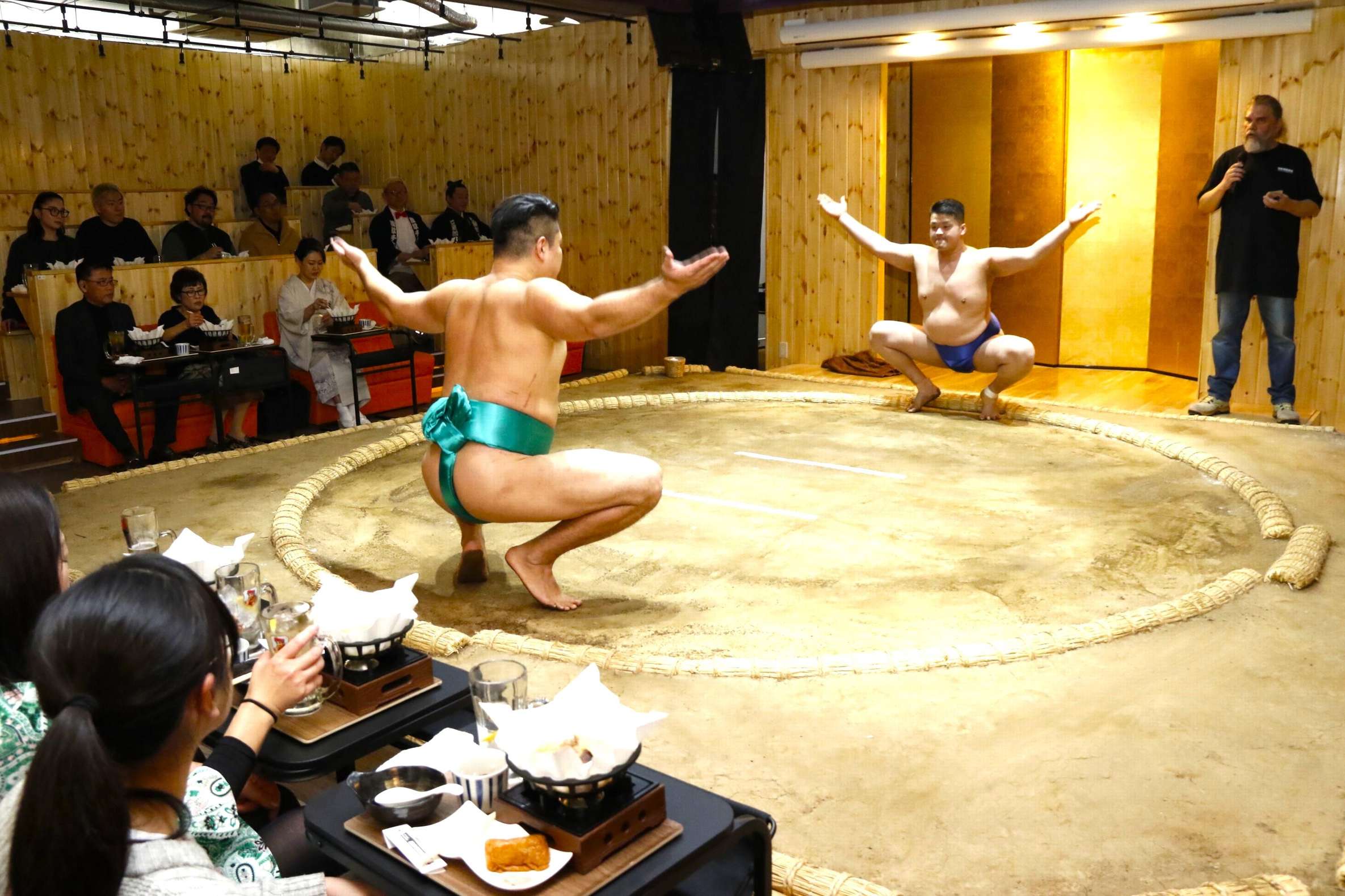
Book a sumo restaurant in Tokyo where dinner is the show - all-you-can-eat chanko nabe hot pot beside a real dohyo, retired pro wrestlers sparring, a geisha dance to open, and your chance to step into the ring. Reserve an English-friendly table in Asakusa before seats go.
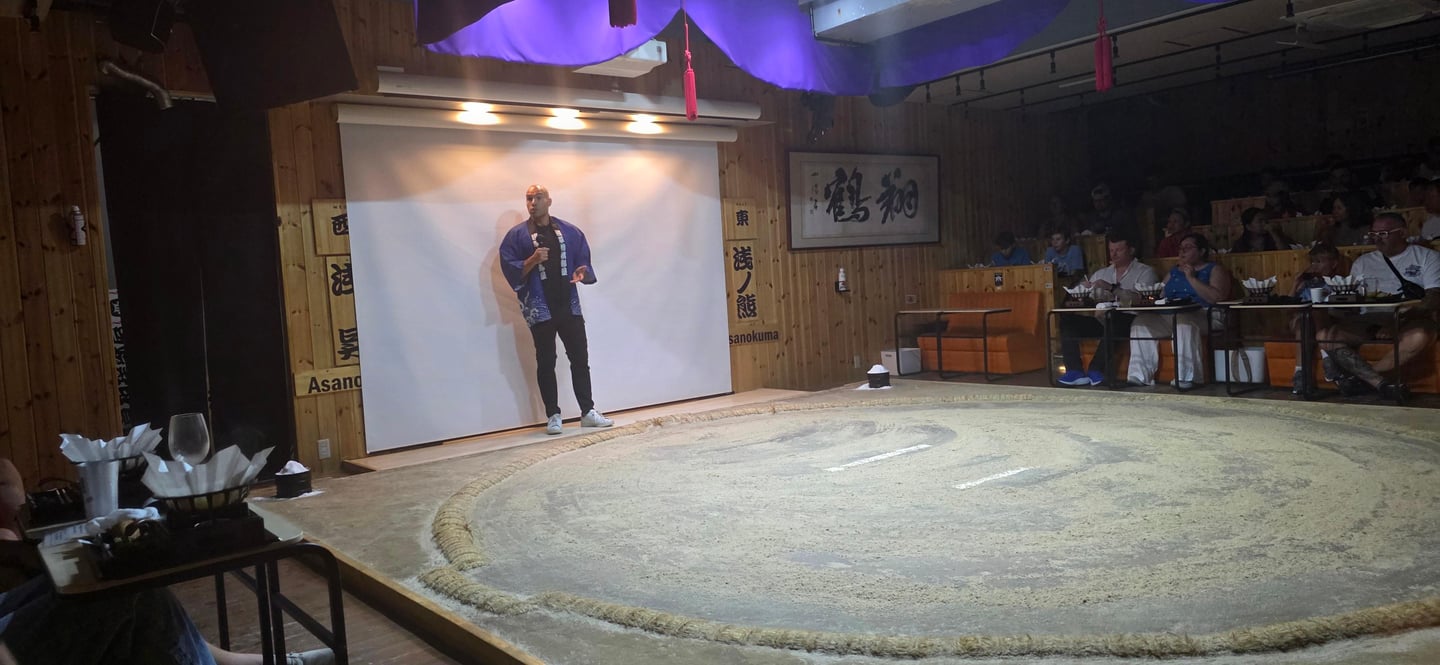
"Loved it! The show kept me engaged the whole time, blending comedy with genuinely interesting facts about sumo wrestling. Great as a solo traveler."
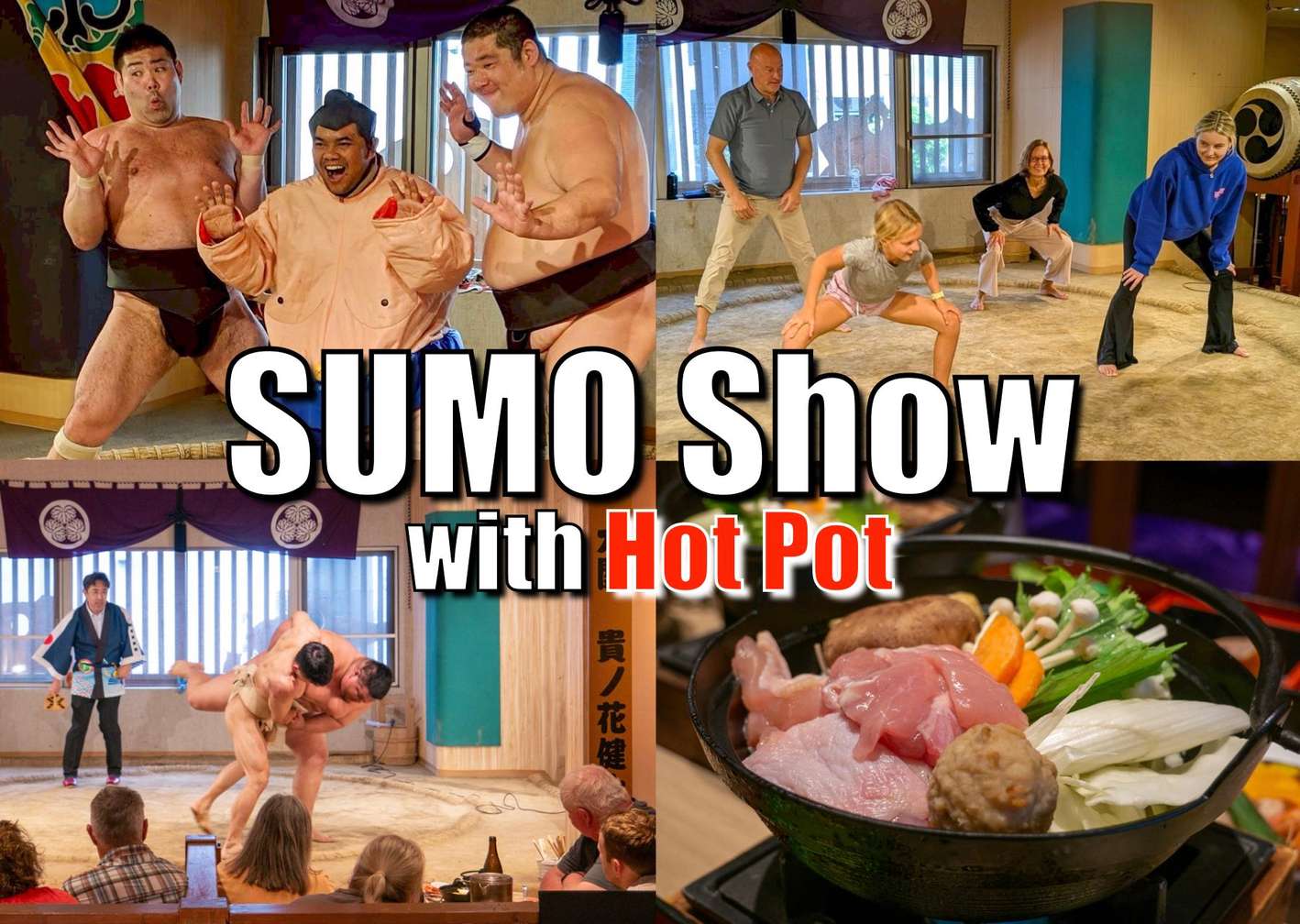
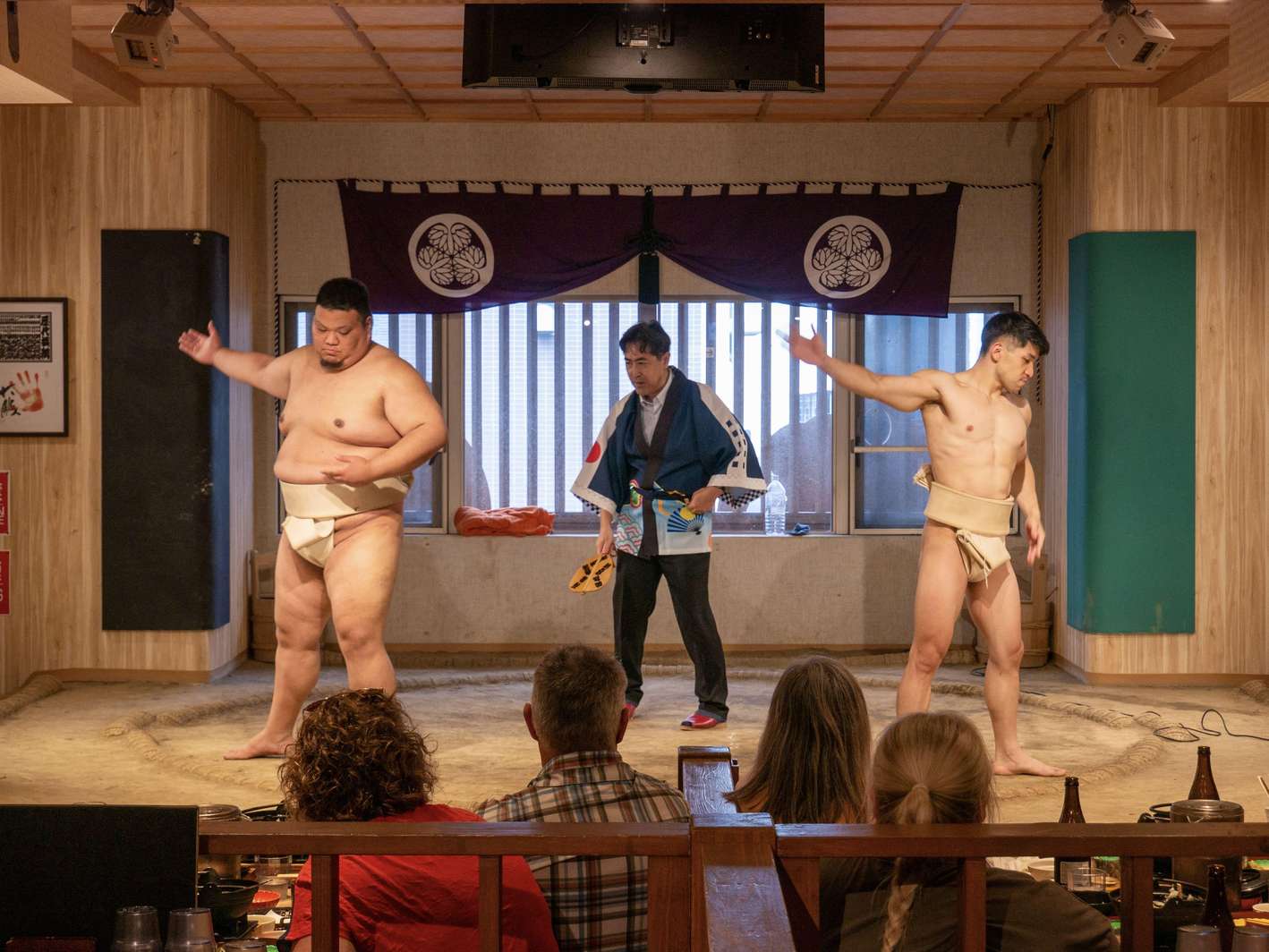
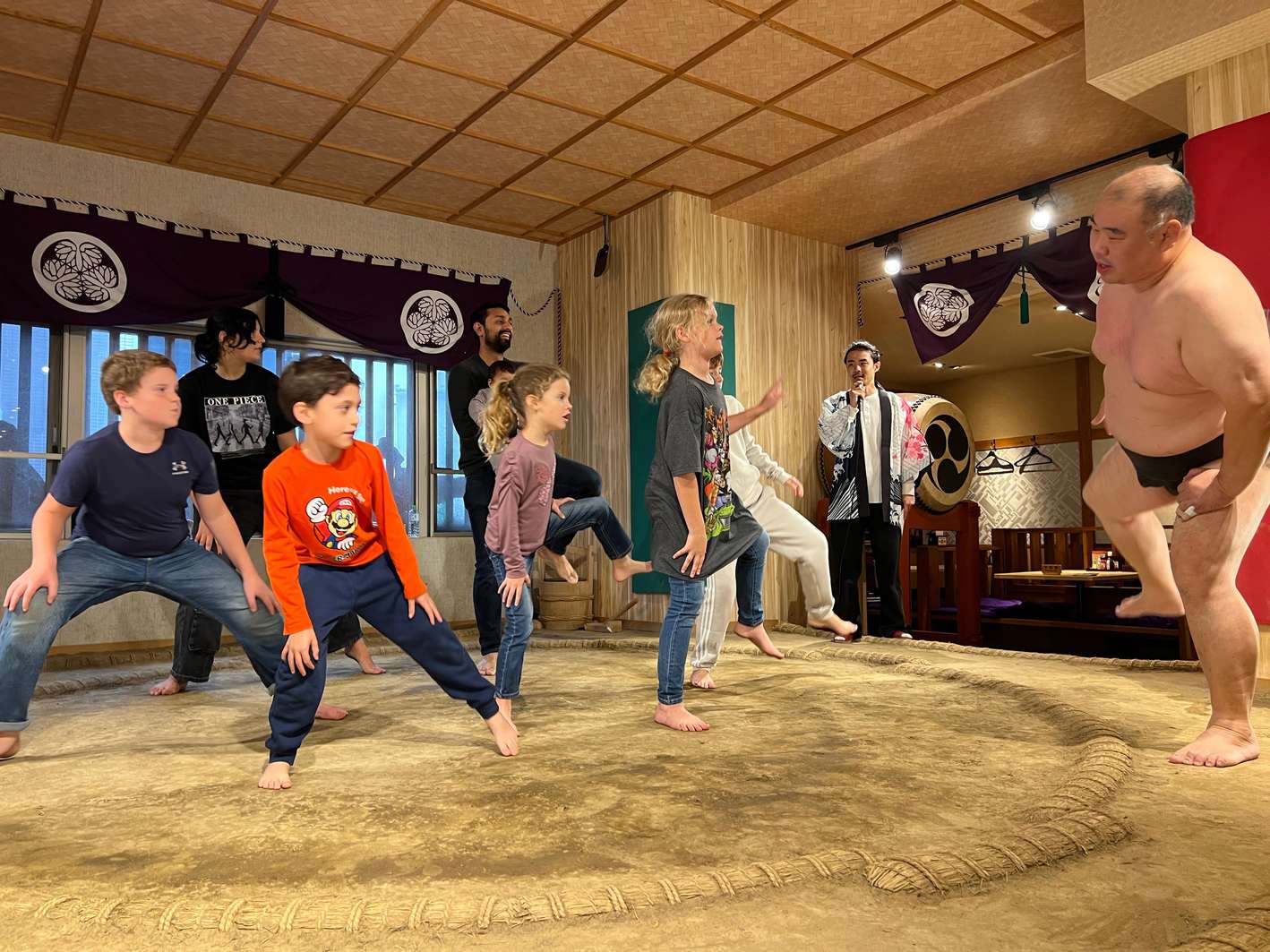
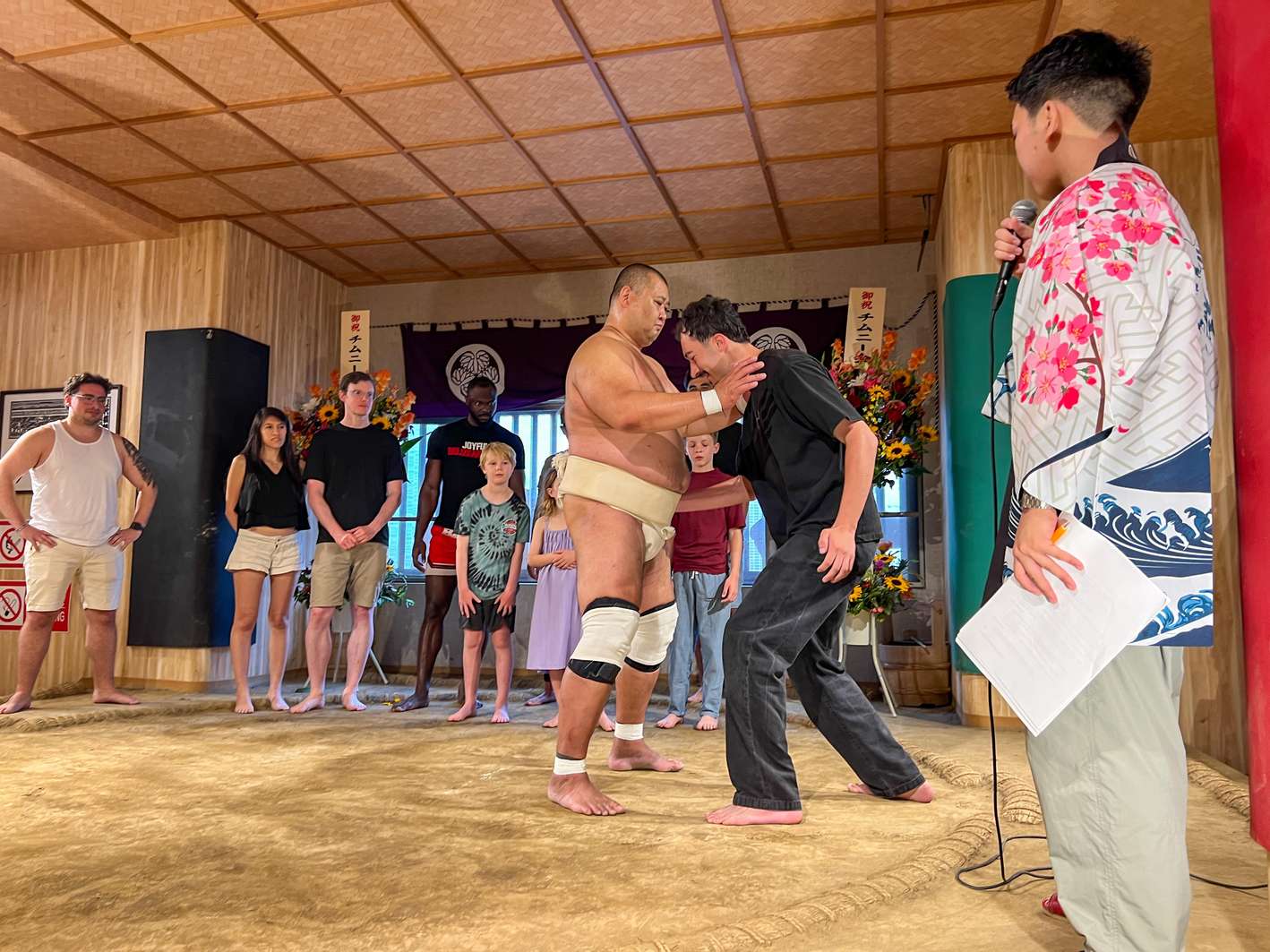
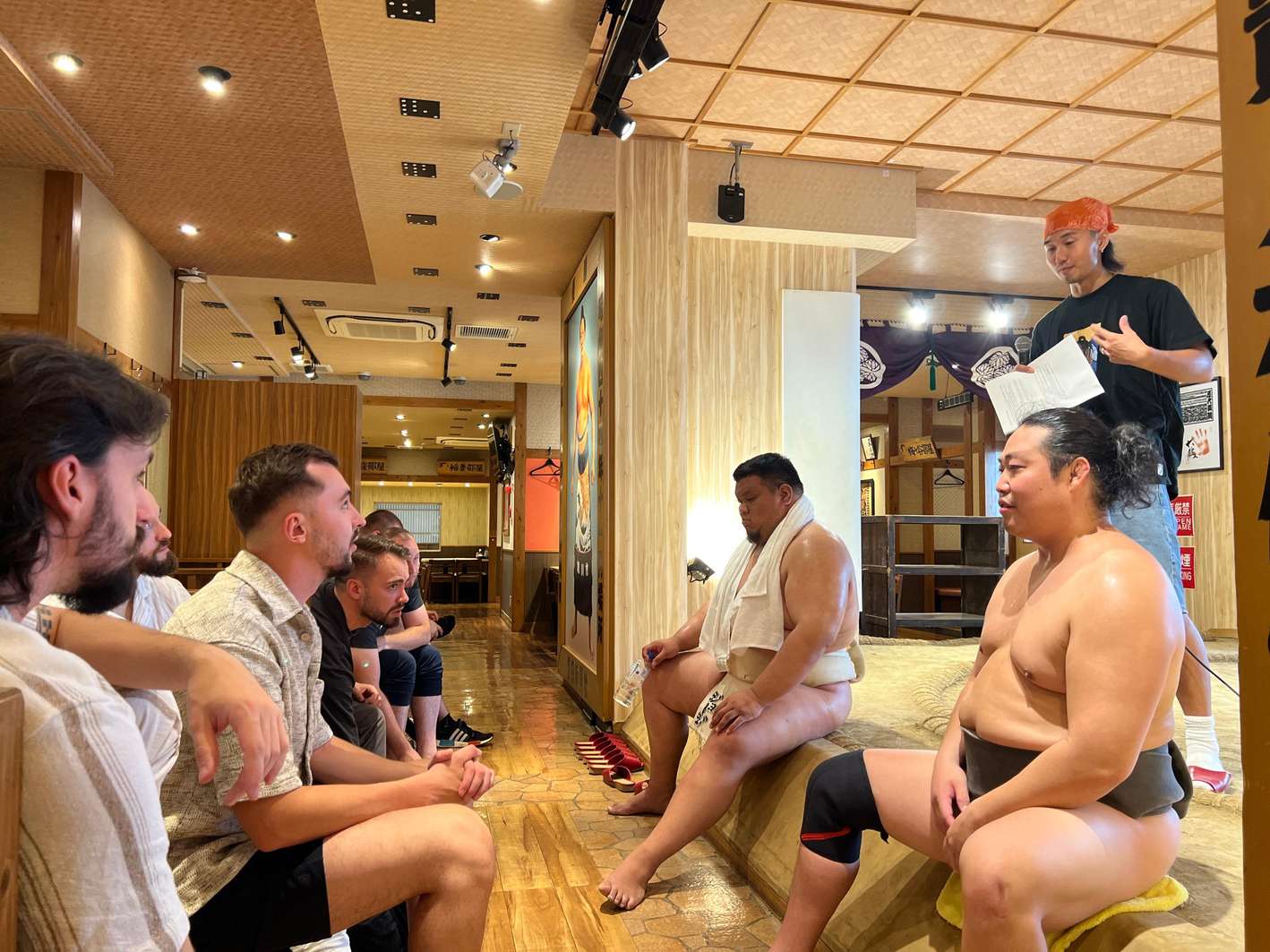




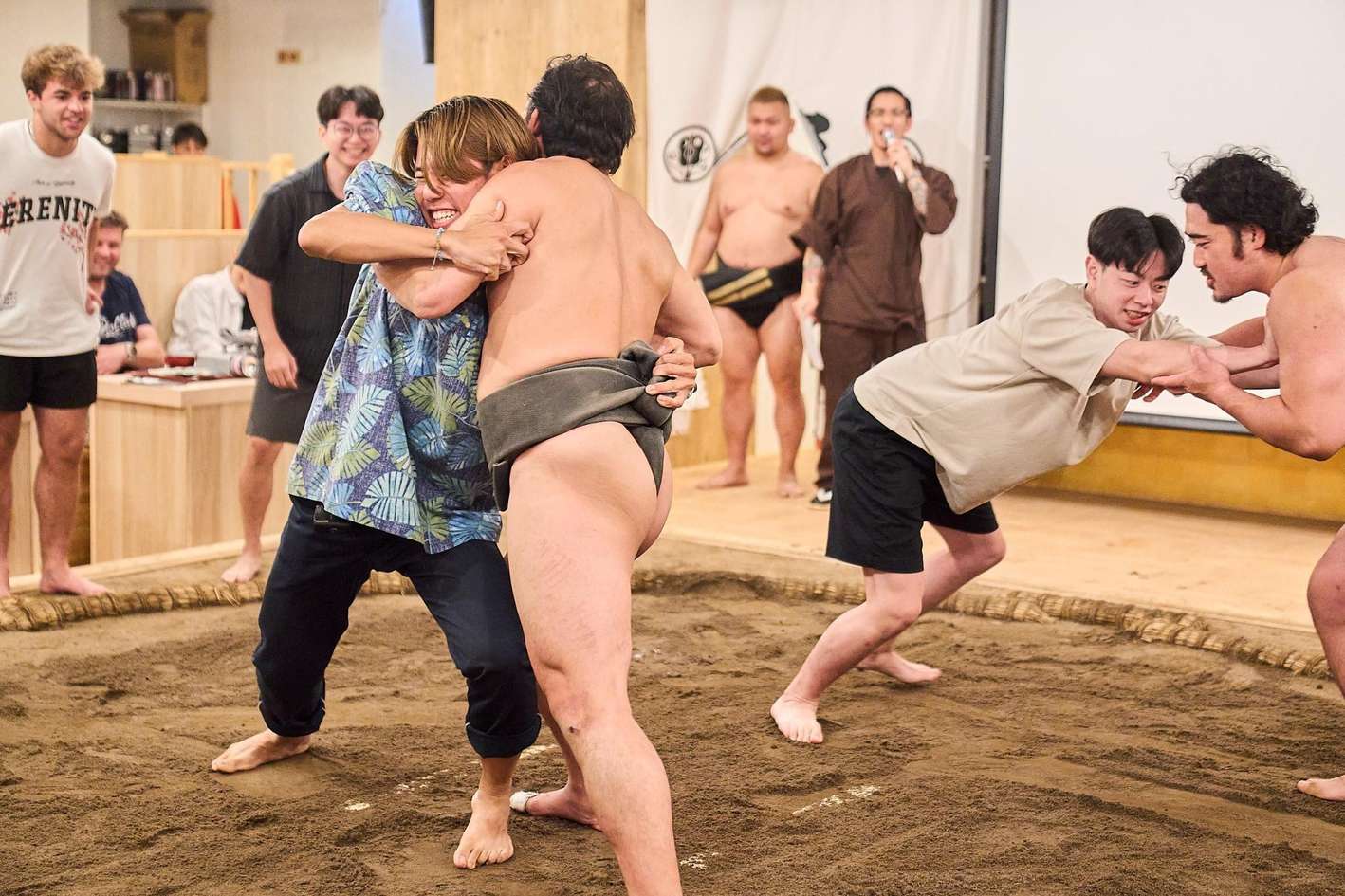
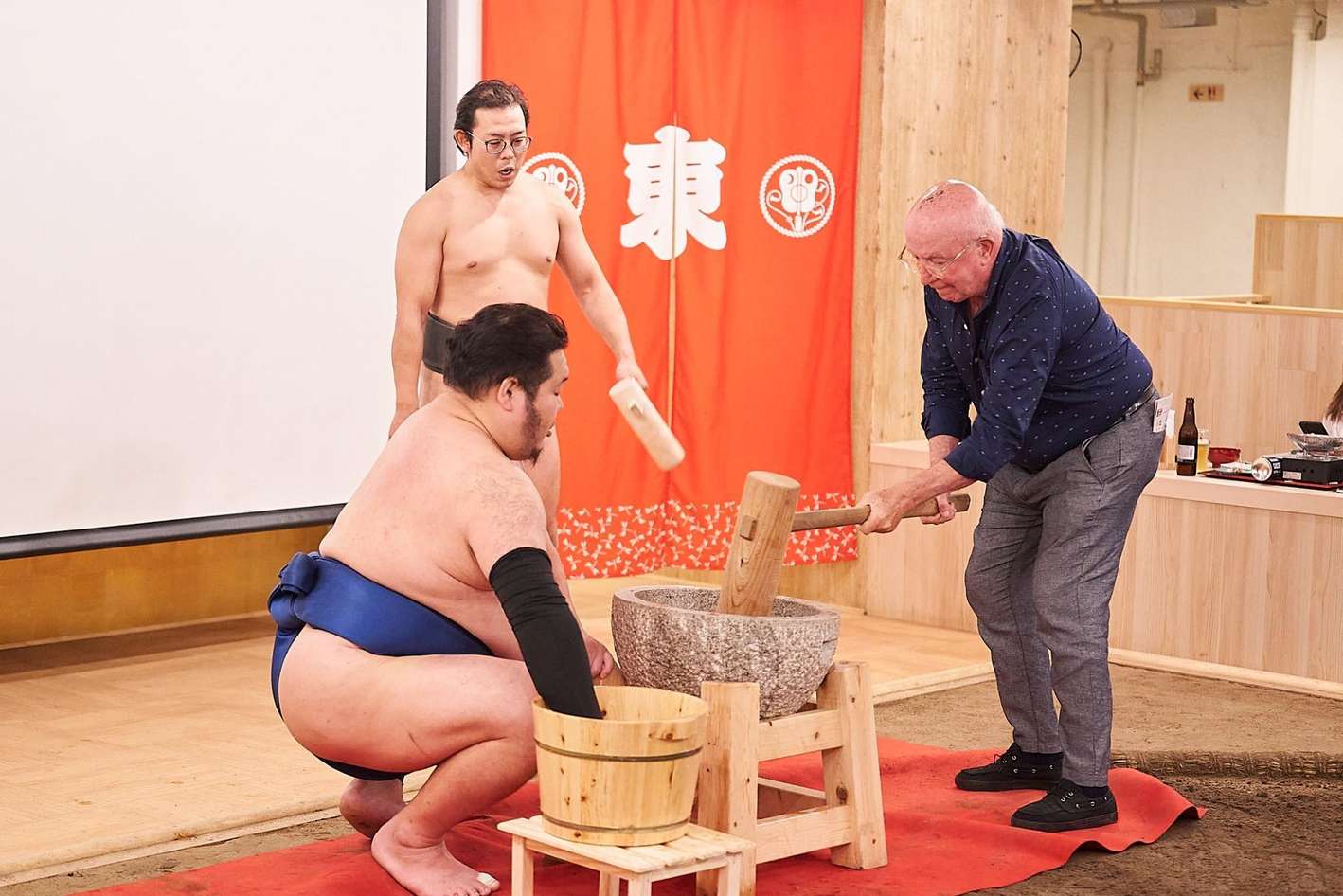
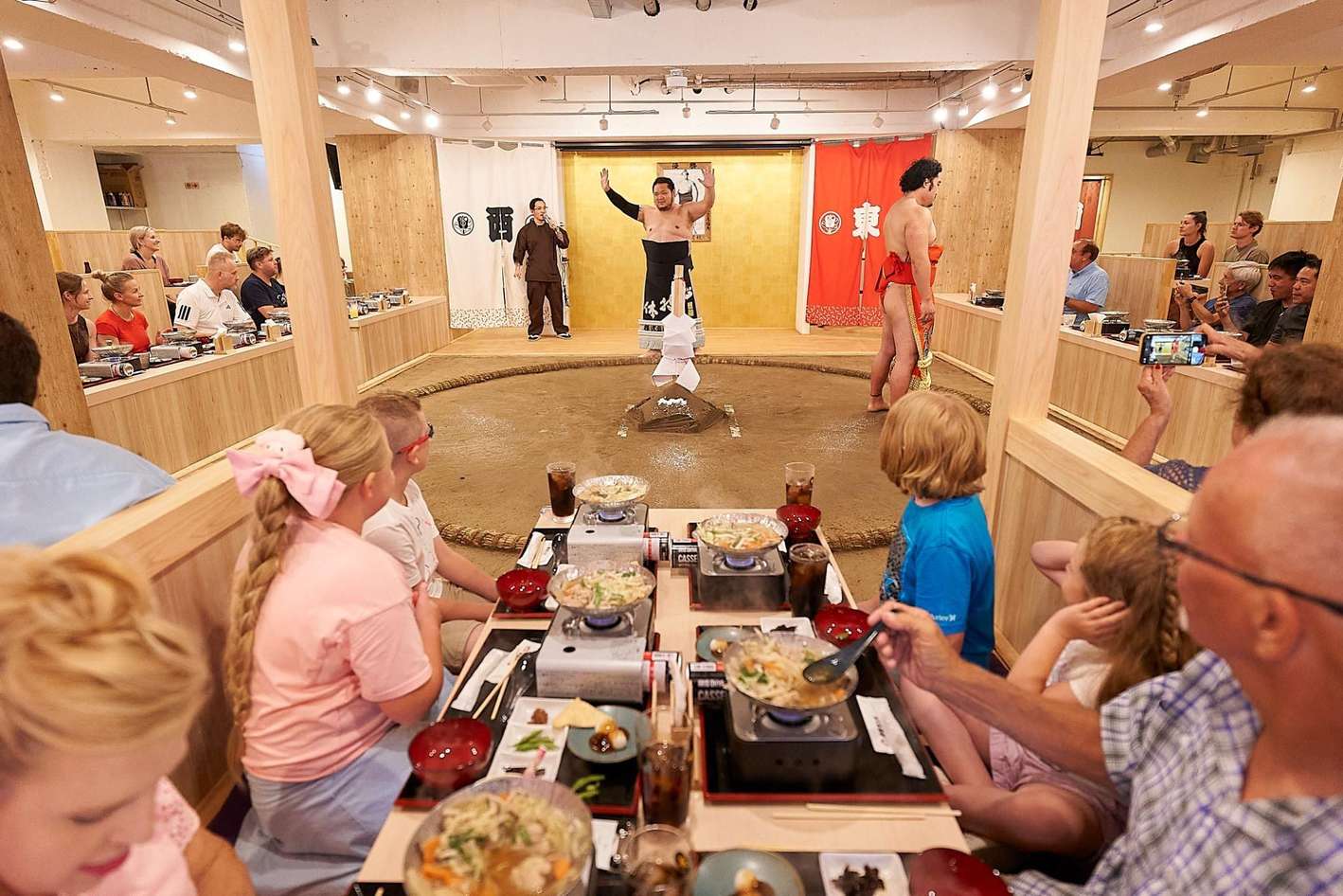
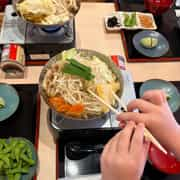
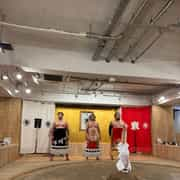
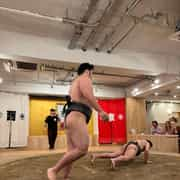
The hot pot that builds 300-pound wrestlers, served a few meters from a real dohyo, with two retired pros throwing each other down while you eat. Whether you take it in a quiet Ryogoku dining room, a two-hour dinner show or a wrestler's own bar decides the shape of your evening.
There are three ways to eat sumo in Tokyo: a quiet chankonabe restaurant in Ryogoku, a full dinner show with ring action, or a casual sumo bar.
The wrestlers are genuine retired professionals, and the bouts they perform at dinner shows are choreographed comedic demonstrations.
Ring challenges at most shows go to guests picked by lottery, so volunteering early is the only way to improve your odds.
Vegetarian, vegan and allergy meals must be requested at least two days ahead, and some venues cannot do gluten-free at all.
Shows with strict schedules refuse late entry, and late arrivals and no-shows get no refund.
Book a venue that fits your diet and tell them what you need at least two days ahead, since vegetarian and vegan meals are only prepared on advance request. Where gluten-free or halal food is off the menu, you are usually allowed to bring your own food to eat during the show.
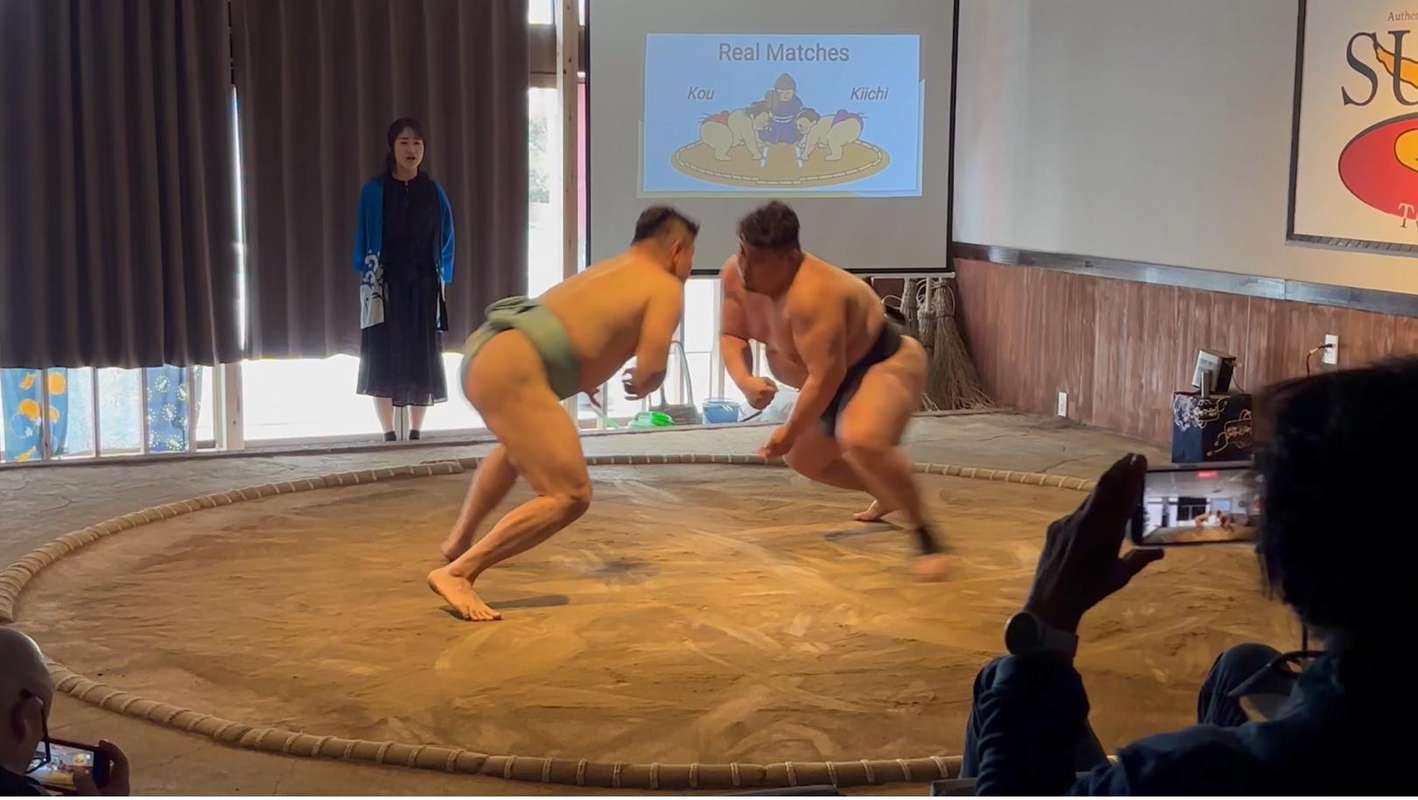
Steam rises off a shared pot of chankonabe while, three meters away, two retired professional wrestlers collide on a clay ring. That is the dinner show version of a sumo restaurant Tokyo night out, and it is only one of three ways to do this.
The second way is the quiet one. Ryogoku, the sumo quarter east of the river, holds Tokyo's densest cluster of chankonabe restaurants, many founded by retired rikishi who cook the recipes of their former stables. No show, no commentary, just the food the wrestlers eat twice a day.
The third is the sumo bar: a casual izakaya built around ring memorabilia or even a ring itself, where beer, sake and small dishes come first.
| Live ring action | Chankonabe quality | Wrestler interaction | Booking and language | Atmosphere and pacing | |
|---|---|---|---|---|---|
| Ryogoku chankonabe restaurants | No wrestling performance | Authentic retired-rikishi stable recipes | Founders share stories, no show | Japanese phone, walk-ins possible | Quiet, authentic culinary establishment |
| Sumo dinner shows | Choreographed comedic exhibition bouts | Kaiseki set with chankonabe | Ring challenges, Q&A, photos | English online, same-day booking | Lively English-commentary entertainment show |
| Sumo bars and izakayas | Demos, challenges at some bars | Izakaya dishes plus wrestler's miso | Retired wrestlers staff some bars | Phone, walk-ins possible weeknights | Casual izakaya around ring seating |
The choice comes down to appetite. If you want the food above all, go to Ryogoku. If you want the food and the wrestling in one evening, book a dinner show.
The Shinjuku-style shows run as performance only, with one drink and no bundled meal, while the Asakusa Sumo Club serves unlimited chicken hot pot through its two-hour show. That last combination is the one most first-timers end up happiest with.
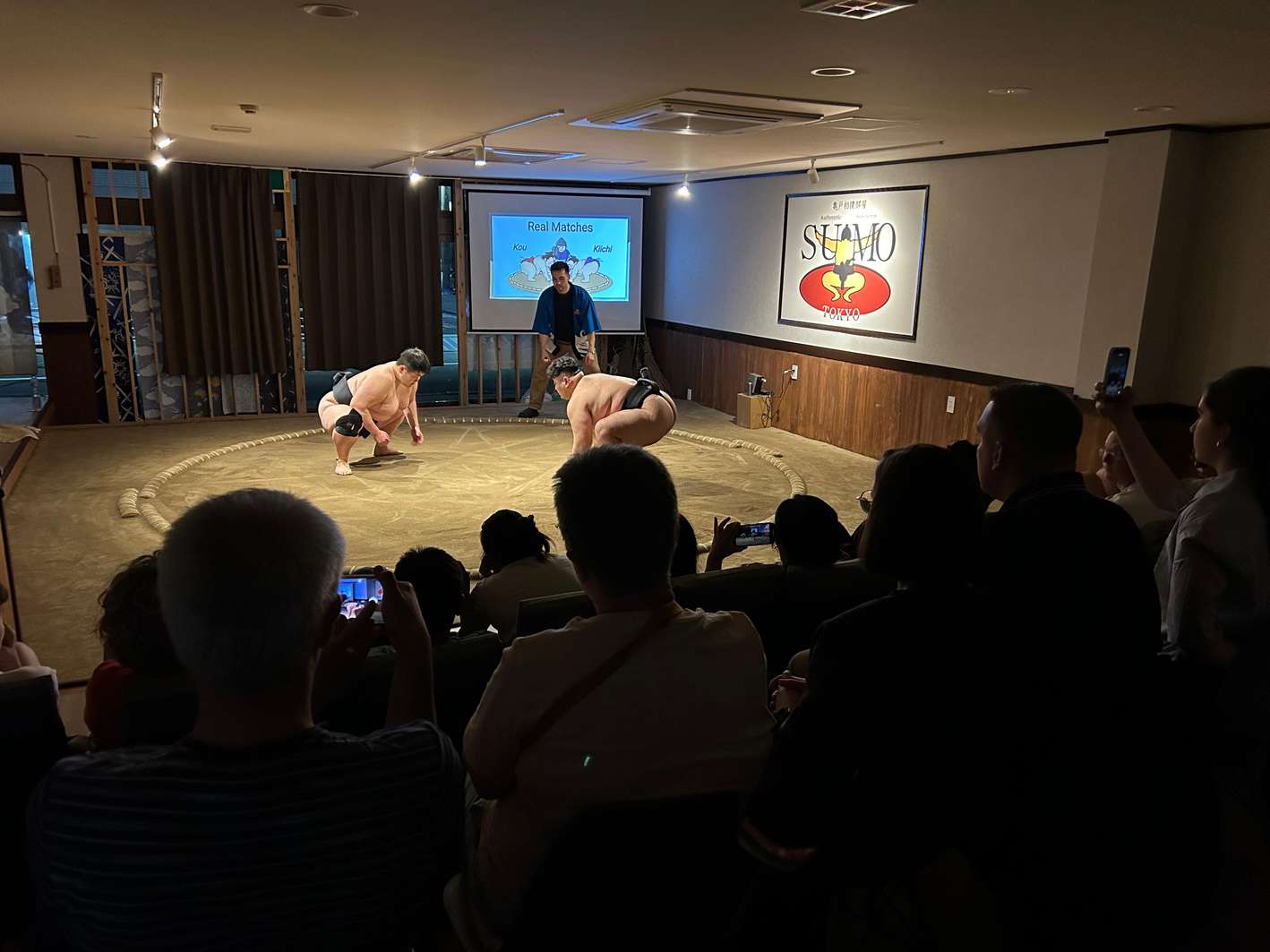
The bouts are choreographed. Dinner show matches are lighthearted choreographed demonstrations with comedy worked in, and no ranking or career rides on the result. This is the disappointment first-timers report most often, so set your expectations before you pay.
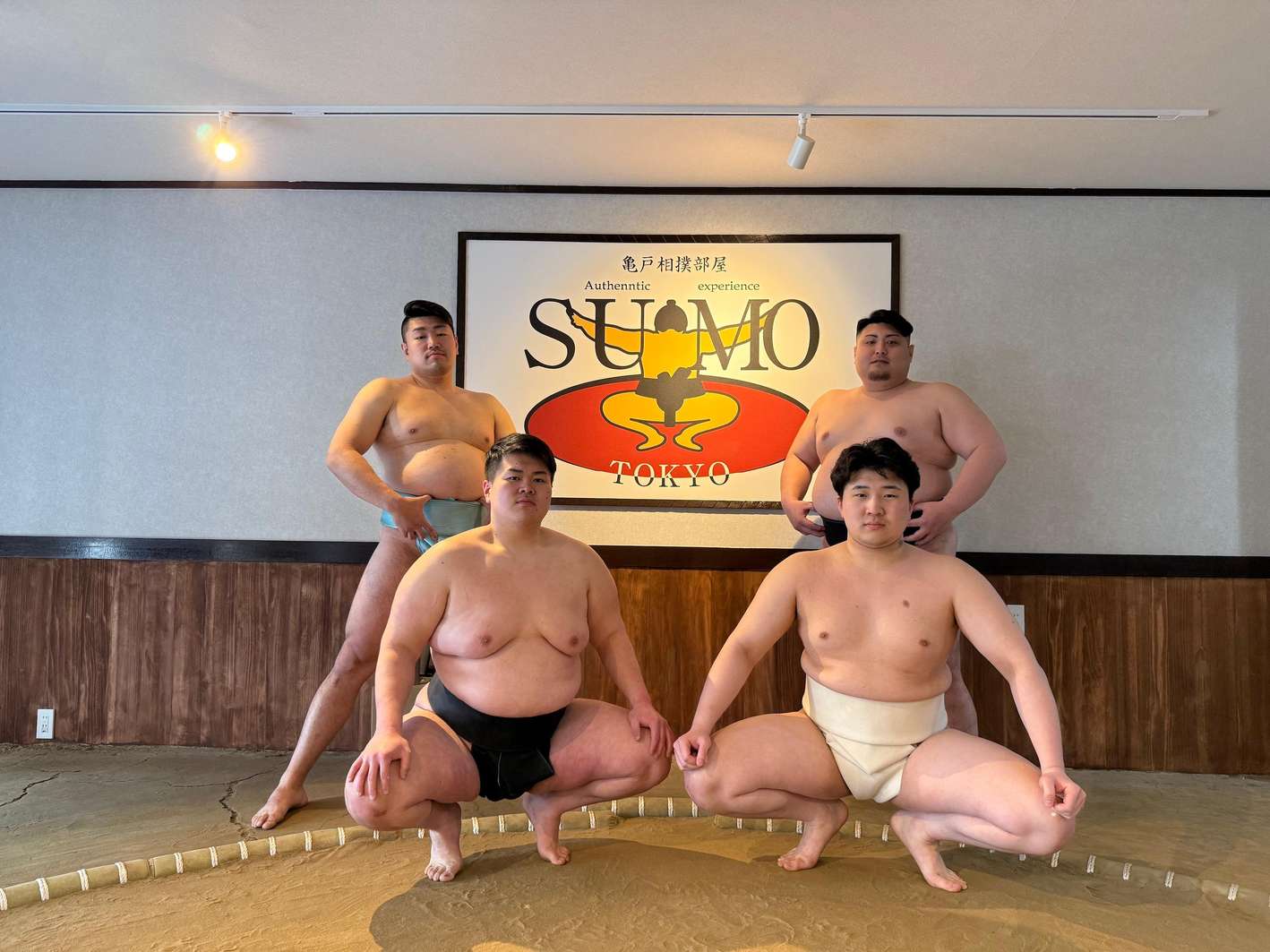
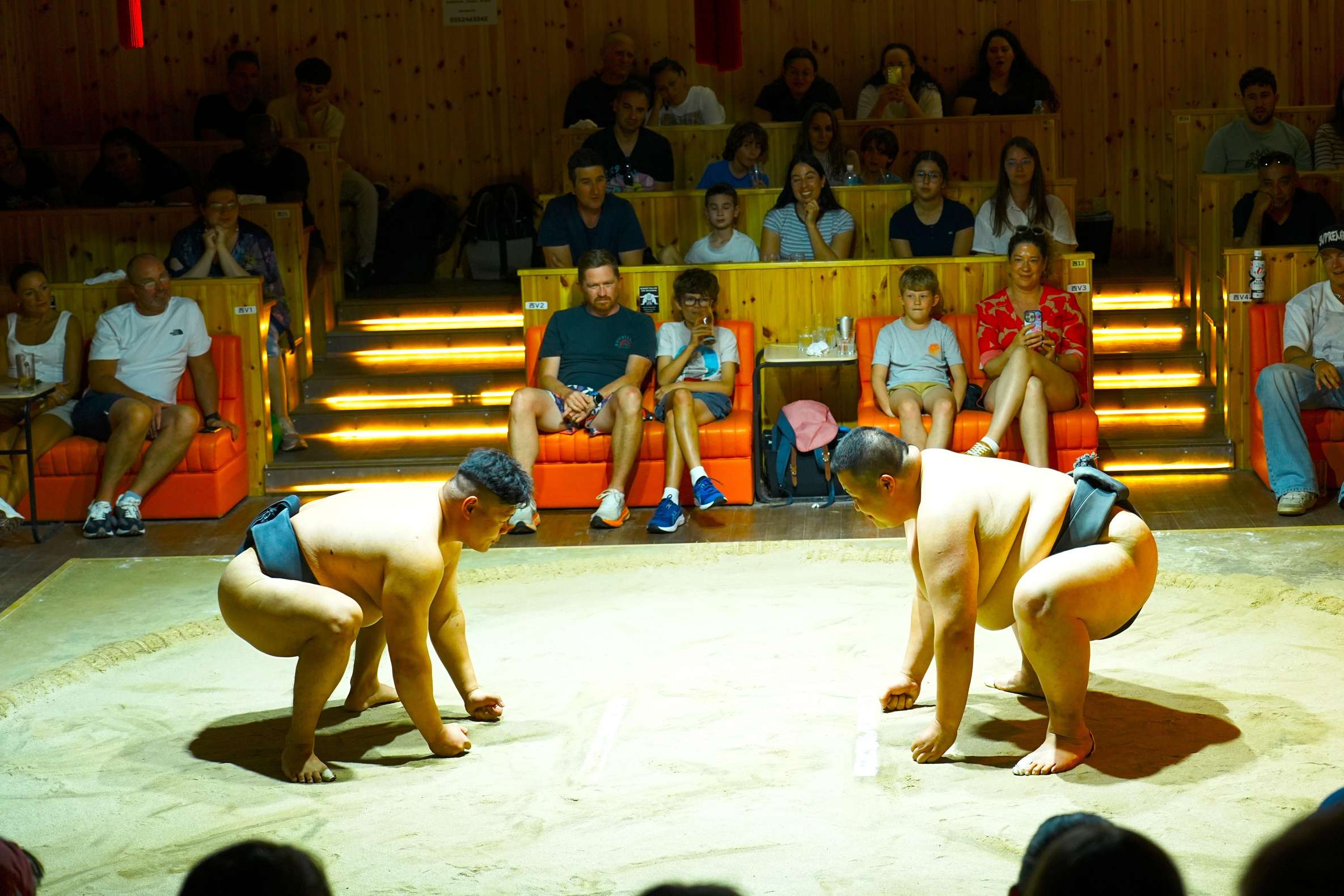
The performers are genuine retired professional sumo wrestlers who spent years in the sport. The techniques they show are the real ones, from shiko stomps to pre-bout salt rituals, explained in English by an MC so you understand what counts as a win and which moves are fouls.
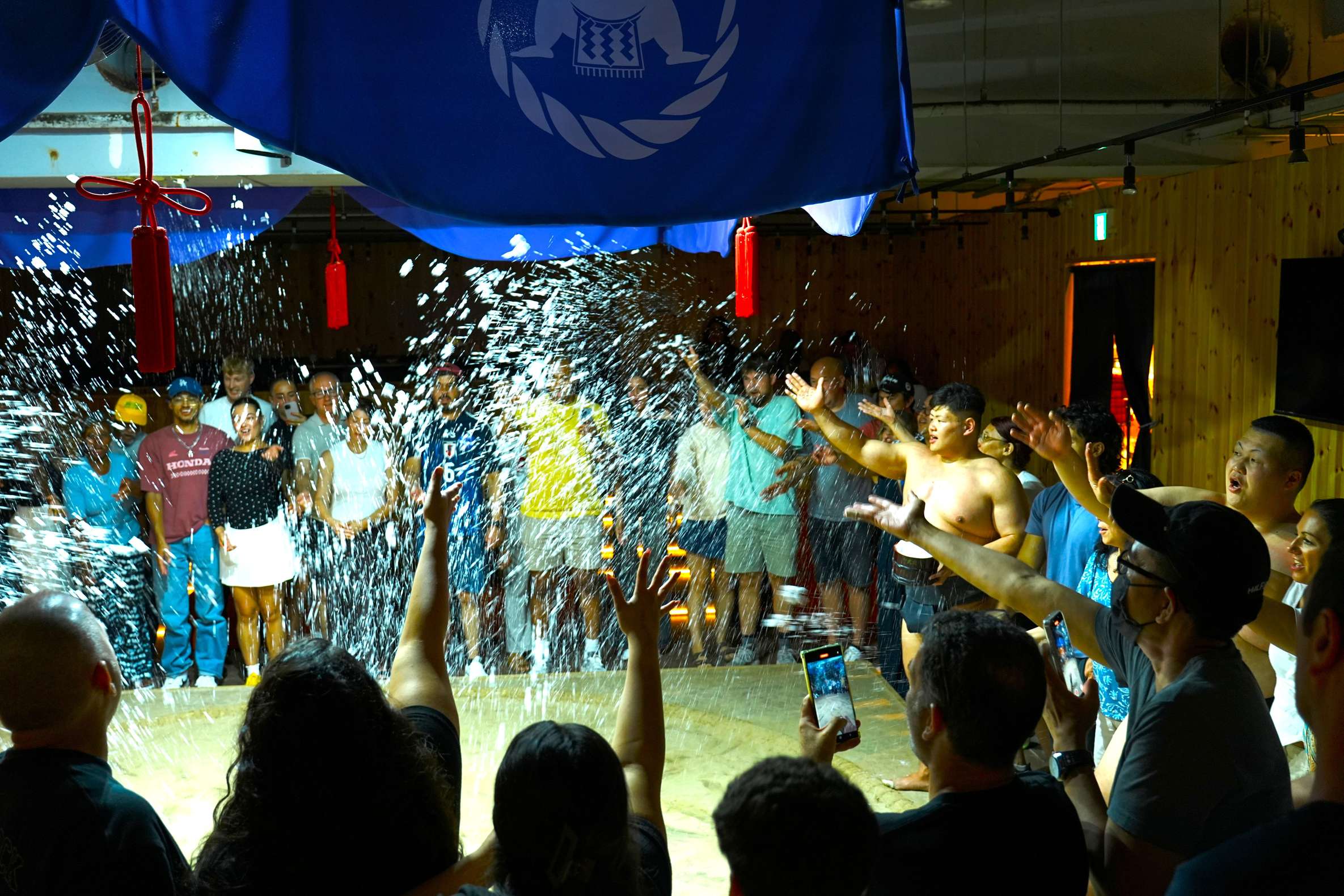
Some shows build properly. At the Ginza venue the evening climaxes in an elimination tournament among the wrestlers, a champion decided in the ring. At the Tokyo Tower show you can join a salt-throwing ritual and a question-and-answer session with the wrestlers on a real clay ring.
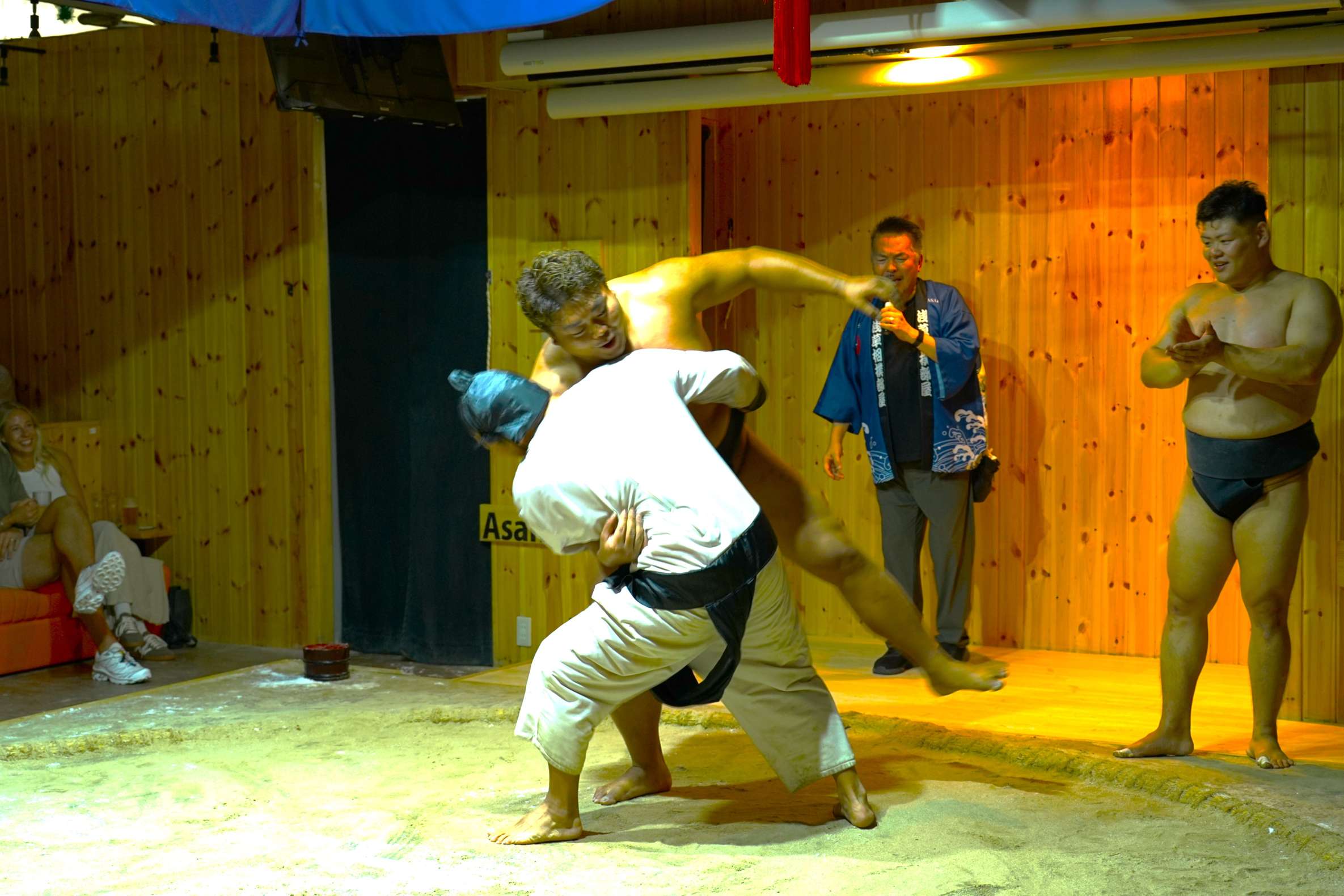
What is least authentic, people who go often say, is the audience part: volunteers in padded suits squaring off against a wrestler three times their size. It is also the segment people photograph most.
They are choreographed comedic demonstrations with no ranking at stake
The performers are genuine retired professional sumo wrestlers
If serious competition is what you came for, no restaurant delivers it. Official tournaments and morning practice sessions are where that lives. For dinner, theater is what you are buying, and the theater is good.
Chankonabe is the protein-rich hot pot wrestlers eat daily, simmered in dashi or chicken stock with chicken, napa cabbage, carrots, green onions and fried tofu. There is no single authentic recipe: every stable keeps its own broth, and the restaurants founded by retired rikishi around Tokyo cook the versions of the stables they came from.
The chicken, never beef or pork, is no coincidence. Wrestlers traditionally avoided four-legged animals because touching hands to the ground means losing a bout, and a fallen cow looks like a wrestler knocked down.
A chicken stands on two legs, the way you want to finish a match. Round chicken meatballs even echo the white circle of victory. Garlic in the broth is the tell of a proper chanko pot, something ordinary hot pot rarely carries.
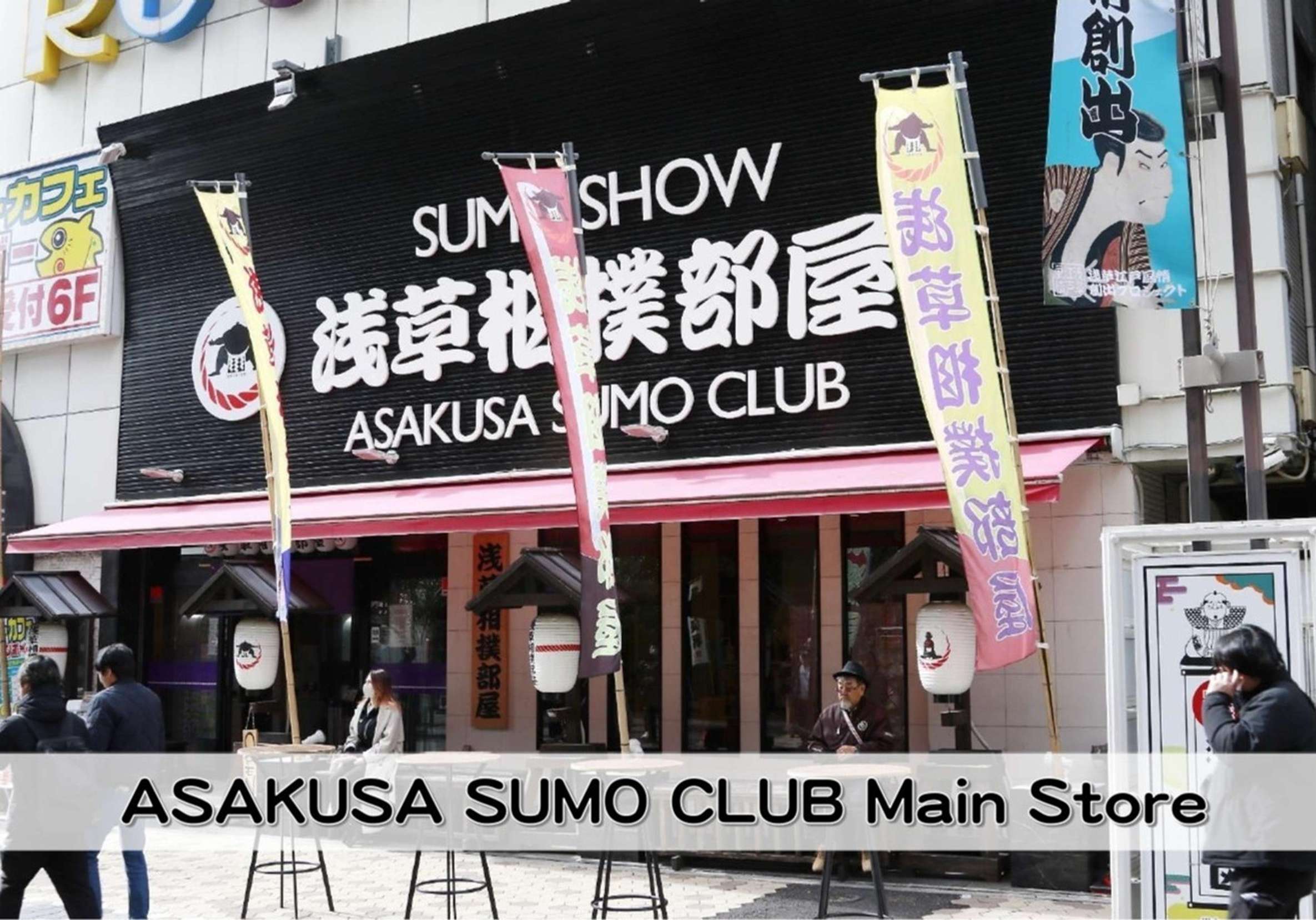
Quality runs a spectrum. At the Ryogoku specialists the pot is the whole point; Chanko Kirishima, two minutes from the Kokugikan, serves a recipe created by a former ozeki across eight floors. At the Asakusa Sumo Club the hot pot arrives all-you-can-eat alongside the show.
In Ginza the format changes to kaiseki, a set sequence of small courses, with chankonabe built into a full dinner at the 5 pm show, a lighter version with a drink at 8:30 pm, and paid upgrades to wagyu sukiyaki if you want it.
That is the Tokyo: Sumo Live Show & Authentic Kaiseki Dinner in Ginza at its best, a two-hour evening where the kitchen holds its own against the ring.
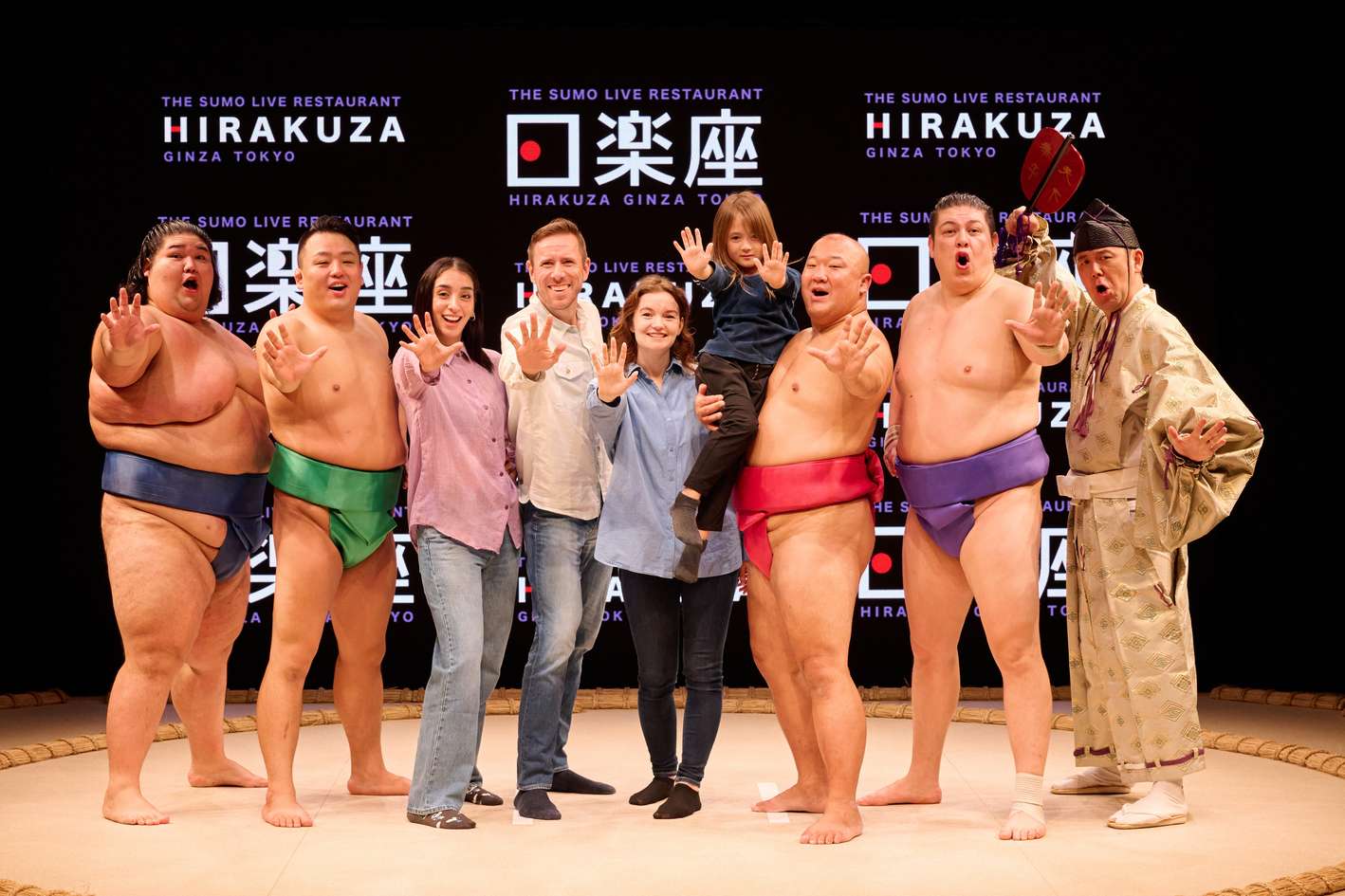
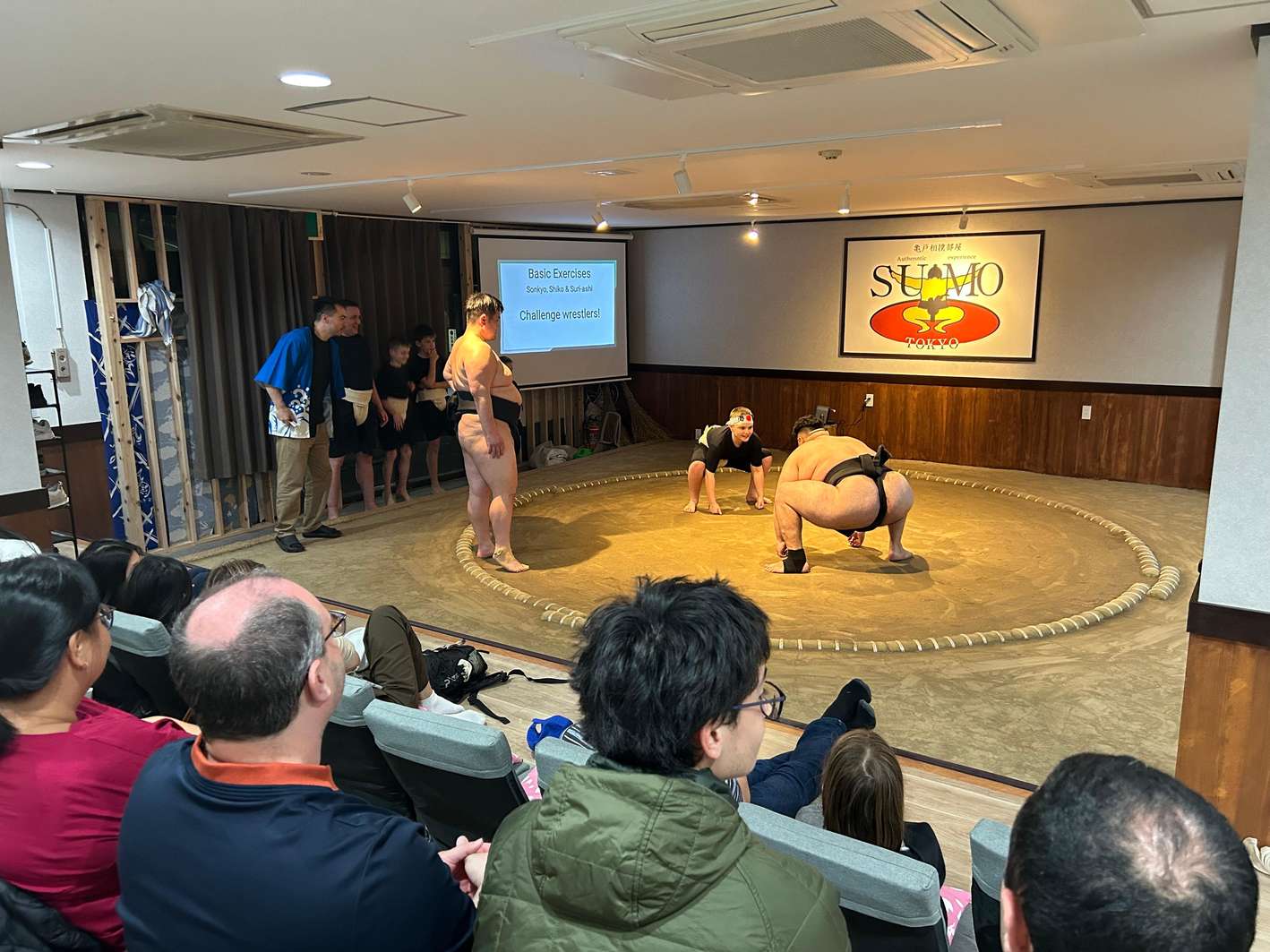
The bell for the ring challenge goes off, staff scan the room, and a handful of names get called. This is how most venues work: participation is by lottery, because only a few guests per show can step onto the dohyo. If you want your turn, volunteer the moment they ask.
When your name comes up, the venue supplies everything you wear, a real mawashi belt, a padded sumo suit, or a souvenir shirt, over your own clothes.
Shoes come off, and you step on the clay barefoot or in socks you do not mind dusting. Solo travelers are welcome throughout, and staff will take commemorative photos with your own phone for free, so nobody leaves without a picture inside the ring.
Beyond the challenge, most shows close with a dedicated photo and question session, typically about fifteen minutes, where you can ask the wrestlers anything. Many diners say this is the part they remember: the humor, the stories, the willingness to talk.
Stablemaster posts open to just one or two people a year, so most wrestlers exit the sport in their thirties
Some donate part of the proceeds to youth sumo training, and the wrestlers are genuinely happy to talk sumo with you
There is a reason they are so open. The wrestlers hosting you left competition behind with few places to go, and these shows let them keep the sport they gave their lives to. You are being hosted by men who lived it.

The Ginza dinner show takes same-day online reservations through its English website, up until 3 pm on the day of the show. That is the easiest booking in the whole field, and travelers who have tried email forms first say the English online route is far more reliable than waiting on a reply.
The traditional restaurants are another story. Ryogoku chankonabe specialists and sumo bars generally work by phone or their own Japanese sites, though some accept weeknight walk-ins. Every show bookable on this page runs in English, so once you have picked a show the language hurdle disappears.
Dietary needs are the real deadline. Vegetarian and vegan meals exist at several venues but must be reserved at least two days in advance; the Ginza show takes vegan requests until 3 pm on show day and halal three days ahead.
Some venues cannot do gluten-free at all but let you bring your own food, which solves it if you know in time.
Chankonabe broth can carry soy, wheat, fish or shellfish, and meat-free pots may share the same stock, so strict allergies need a direct conversation with the venue before you book.
Strict-schedule shows refuse late entry at the front desk, and late arrivals and no-shows get no refund Arrive early and recheck the start time the day before
Solo diners book single seats fine, though at some venues you may be seated alongside other guests, which past visitors usually count as part of the fun.

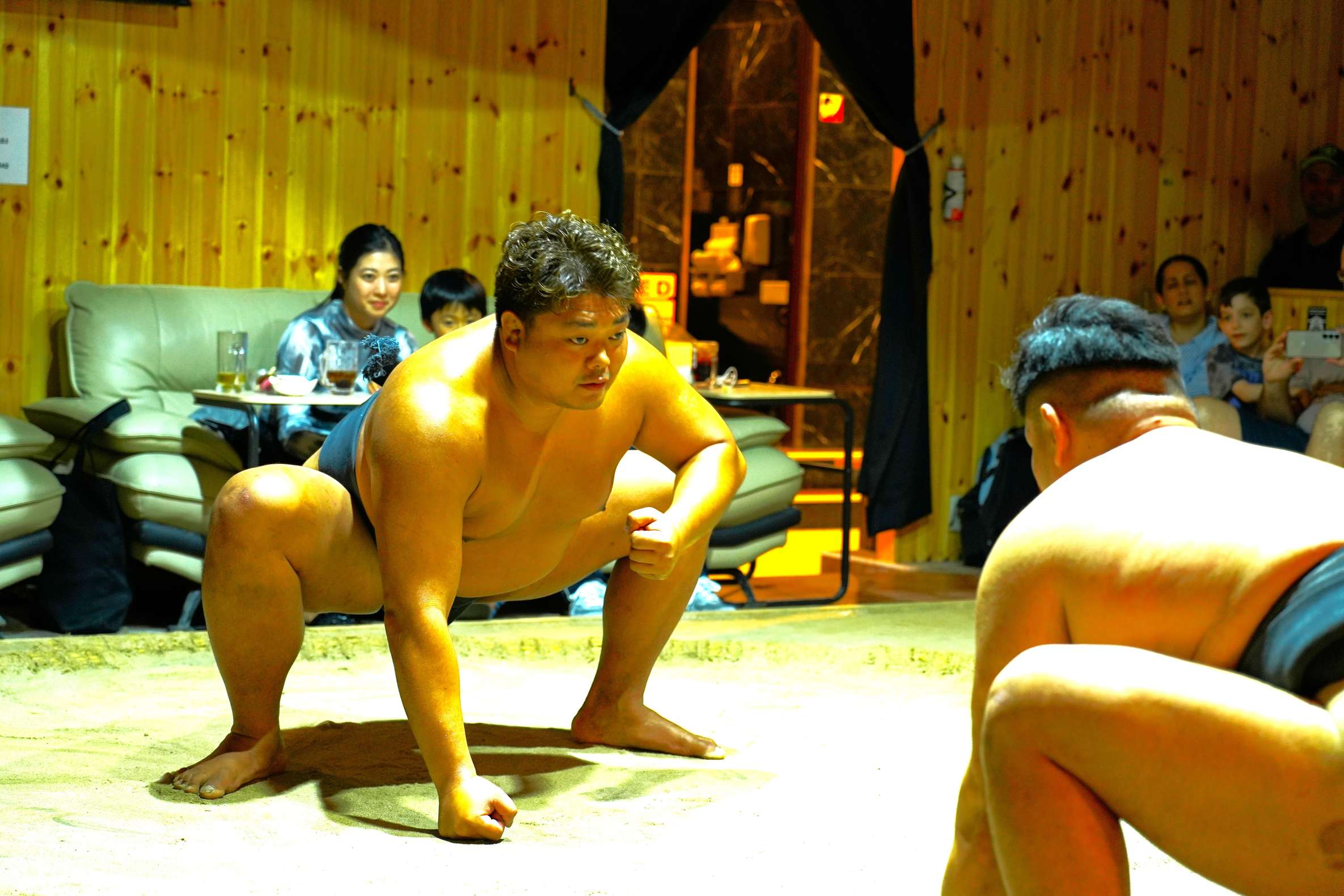
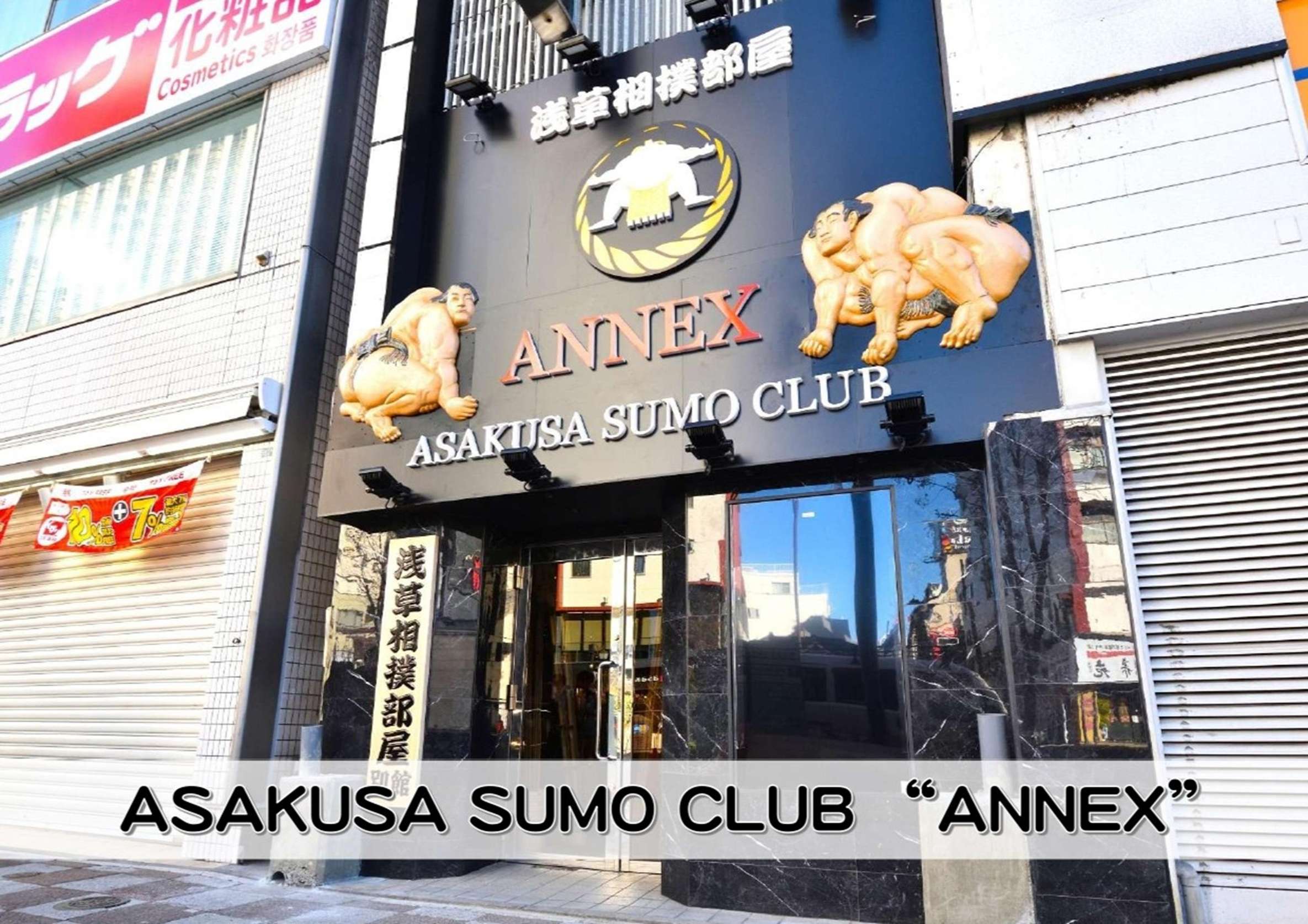
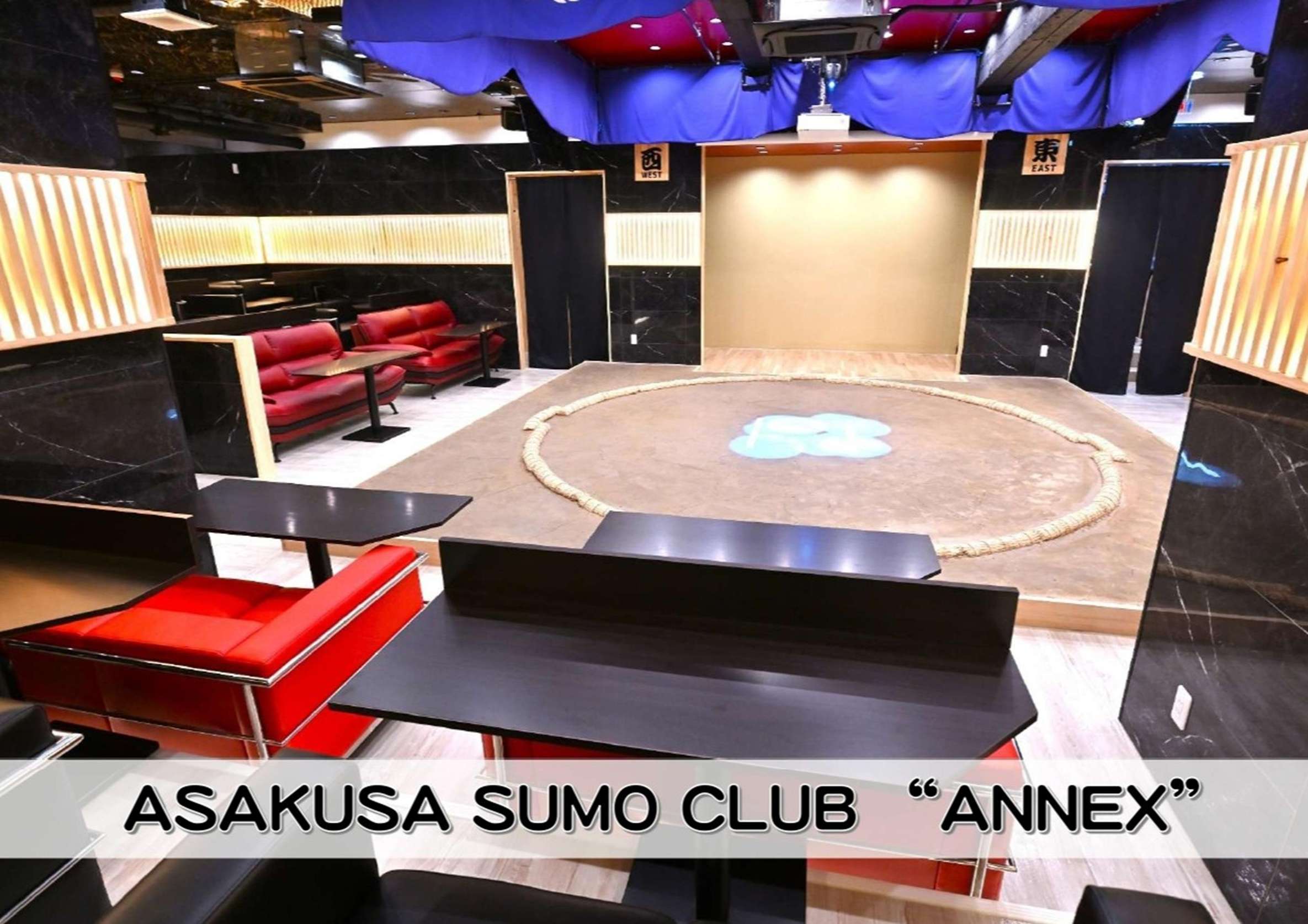
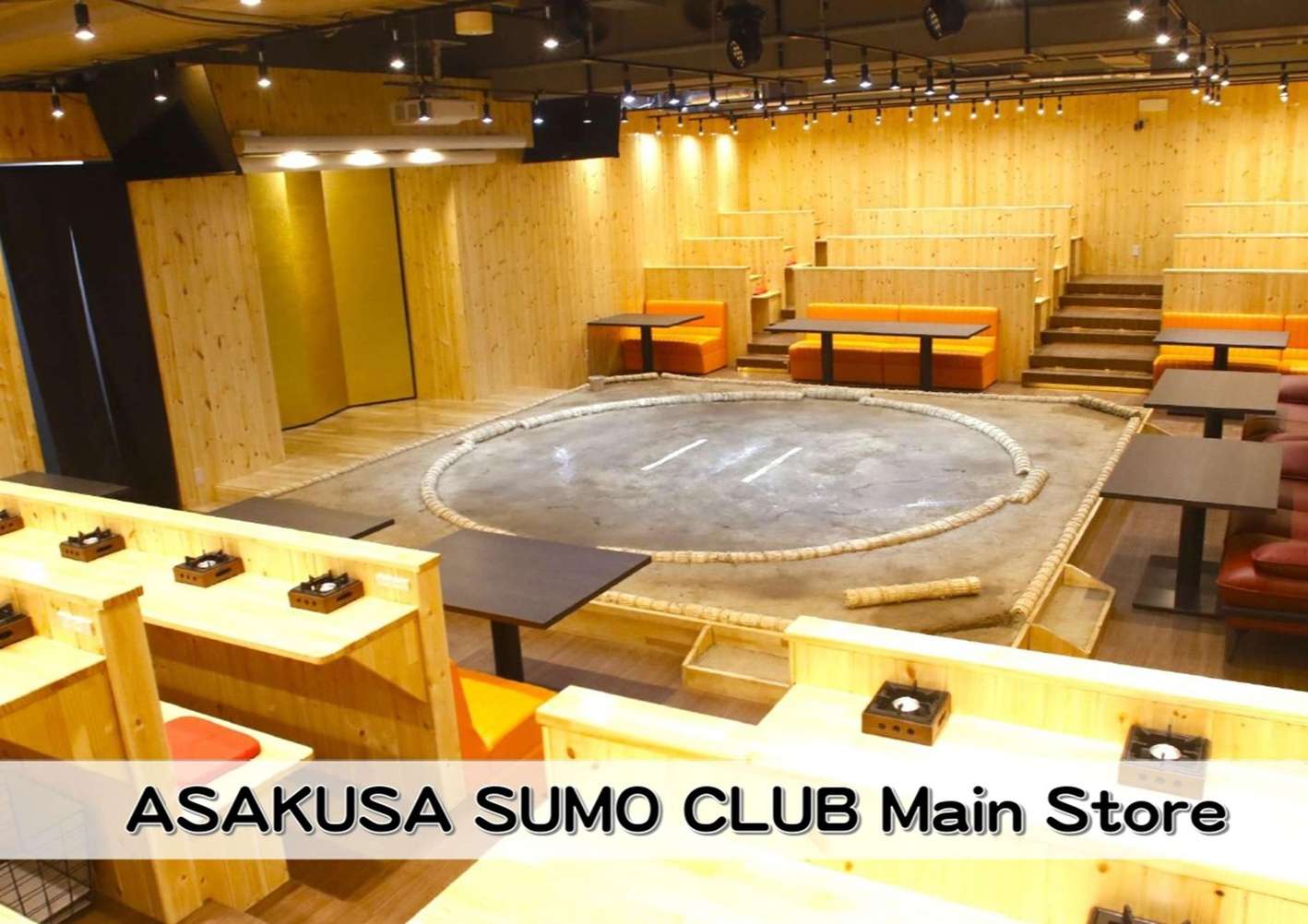
Each option puts you in a different room. The Asakusa Sumo Club Annex seats you around a central ring at standard tables or premium sofas, an intimate space where almost every seat sees the action.
The Hananomai branch near the Edo-Tokyo Museum stages its show in a room styled after an Edo-period kabuki theater, with private rooms modeled on Edo-era houses alongside. At Kappou Yoshiba you choose between floor seating, shoes off, or Western chairs.
Volume follows the format. Dinner shows run music, English commentary and comedy, and children are encouraged to cheer.
There is no minimum age to attend as a spectator; infants sit on a guardian's lap, though a few shows do not suit babies under one.
Ring challenges typically start at age five with a guardian alongside, and some family venues take children from four. Solo travelers, couples and groups of friends all turn up regularly, and the sake bars and premium whisky included at the top tiers exist for exactly that crowd.
The districts split cleanly: Ryogoku for quiet tradition, Asakusa and Ginza for show-plus-dinner, Shinjuku and Shibuya for show-only nights. Some venues, including the Shibuya club, sit up stairs and do not suit wheelchair users; the Asakusa venue keeps limited accessible seating, so mention it when you book.

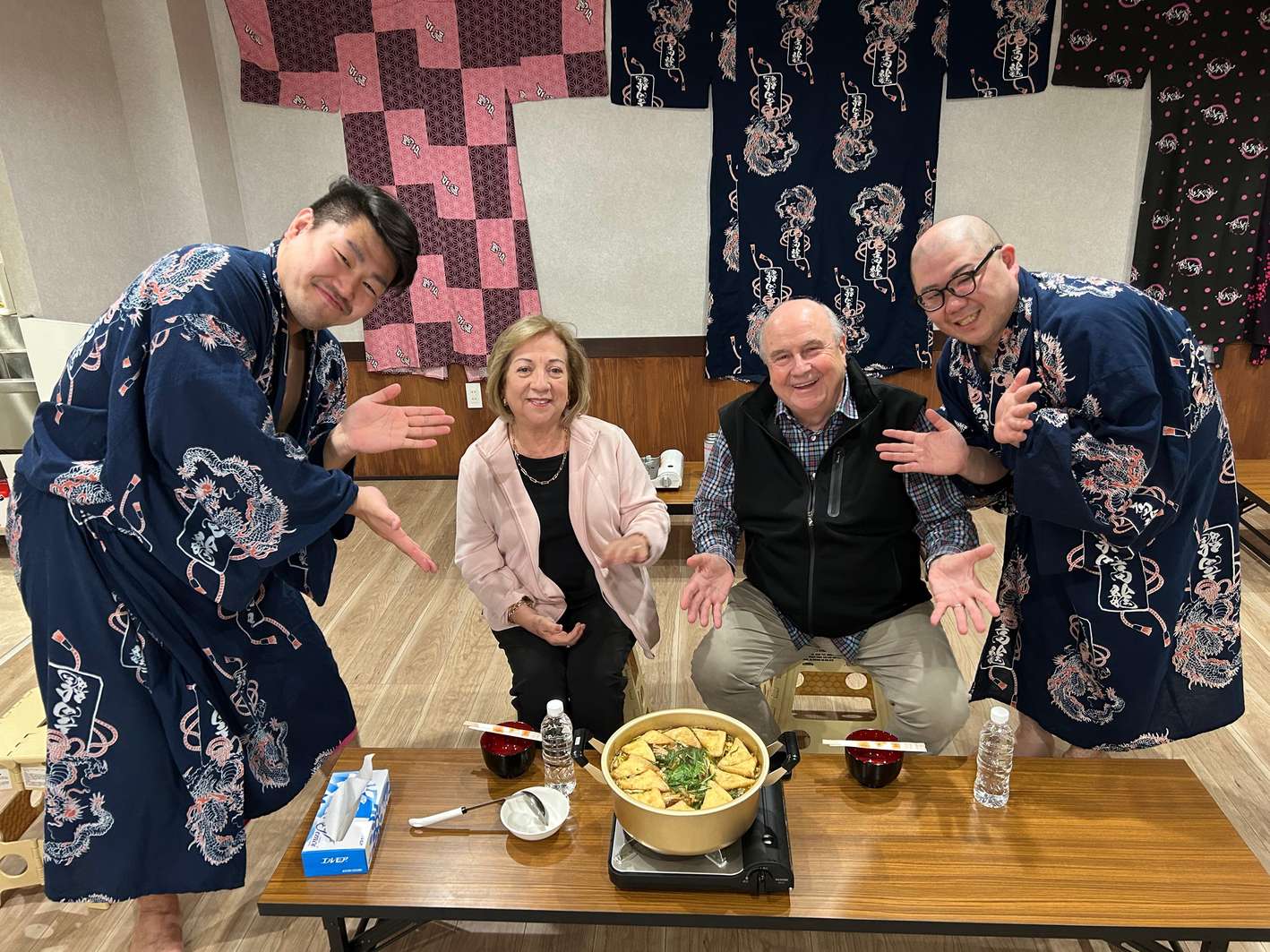
The pot arrives shared, bubbling in the middle of the table, and one rule governs it everywhere in Tokyo: never dip your own chopsticks into the main pot. Serve yourself with the communal ladle or skimmer, transferring cooked pieces to your own bowl.
Order matters too, if the pot is yours to build. Chicken, meatballs and the tough stems of napa cabbage go in first, because they need the longest cooking and they season the broth. Leafy greens, thin slices and enoki mushrooms come in later rounds, minutes apart, so nothing turns to mush.
A traditional full course runs long: appetizers and sashimi, a fried or flame-broiled dish, the hot pot itself, then a finishing dish of rice or noodles stirred into the remaining broth, which is the part wrestlers argue about most.
Dietary needs do not end at the pot. Vegetarian and vegan versions are available with advance notice at several venues, some can modify a vegetarian meal on the day itself, and a few offer pork- and alcohol-free options in place of formal halal certification.
If your needs are strict, say so when you book; the kitchen needs the notice.
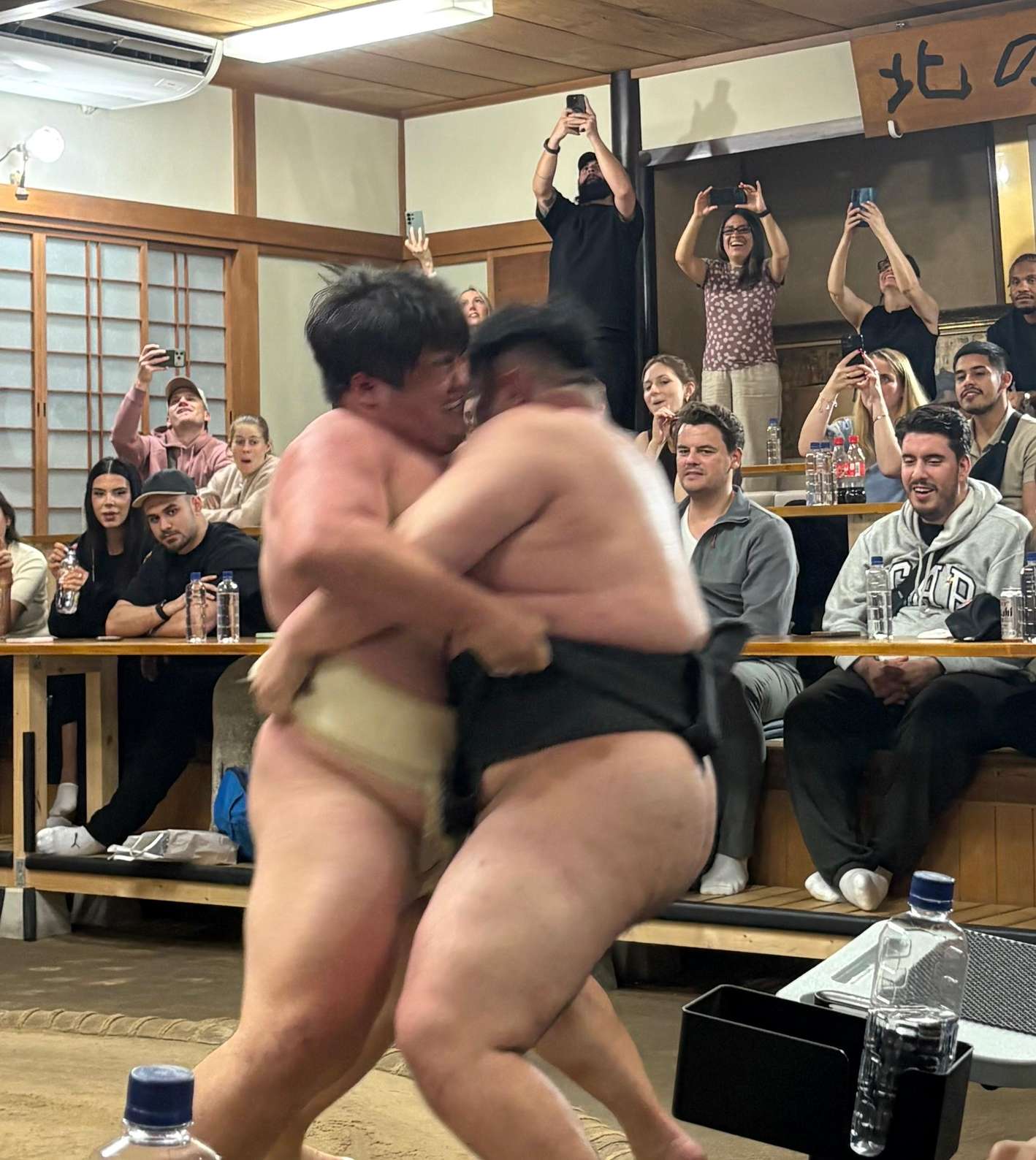
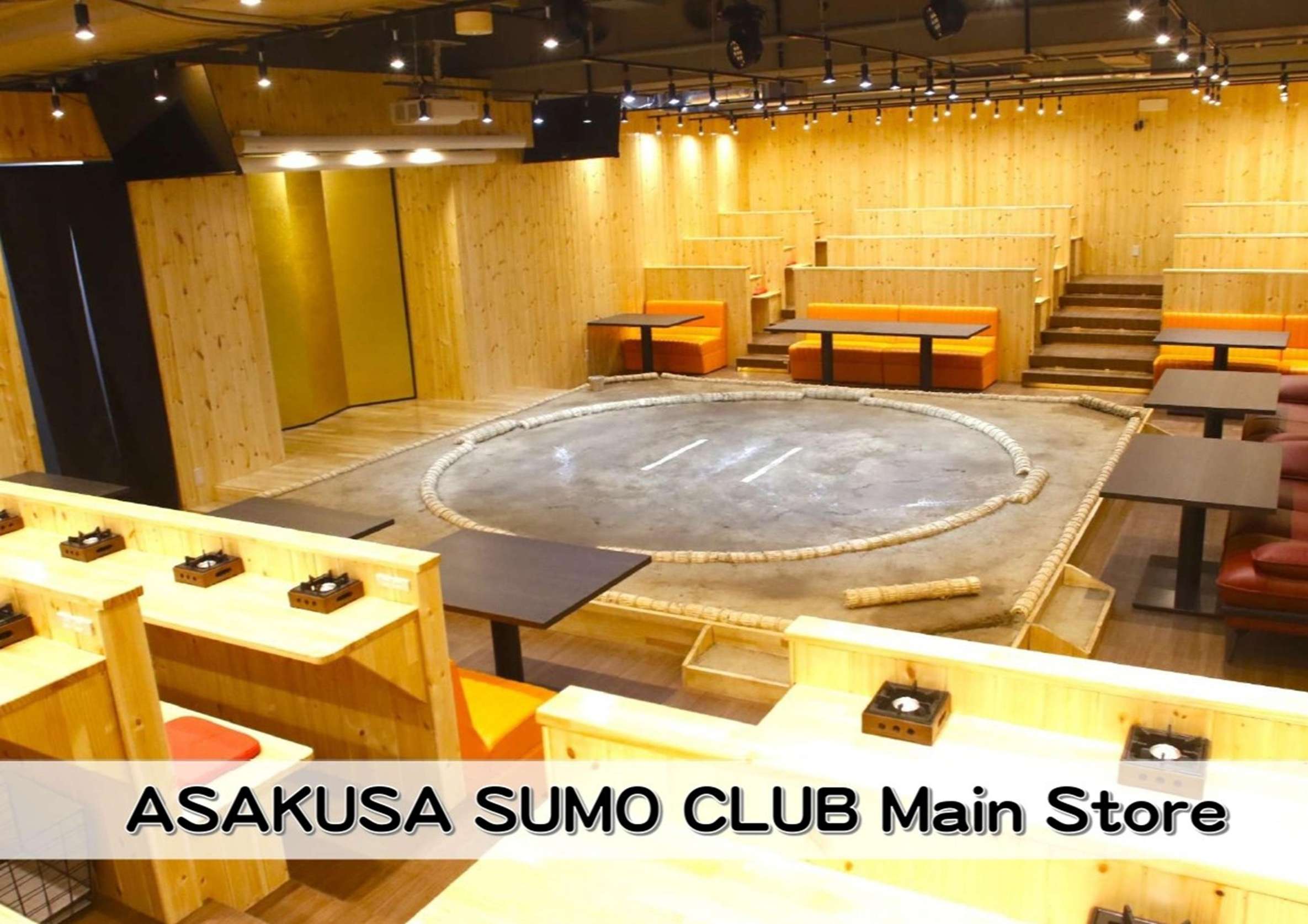
A sumo dinner show runs about two hours, and knowing the shape of it helps you plan the rest of your day. The first 30 to 40 minutes are meal service, courses arriving while the room settles and the pot warms.
Then the ring takes over: 20 to 30 minutes of demonstrations covering the basic stances, the training techniques, and exhibition bouts between the wrestlers.
The longest stretch, 50 to 60 minutes, belongs to the audience. Ring challenges run through this block, with volunteers in padded suits facing off against the pros, and it closes with a dedicated fifteen-minute session for commemorative photos and questions.
Seat locations are assigned by the venue at most shows
Stances, training techniques and rule explanations in English
Closes with a 15-minute commemorative photo and Q&A session
Photography and video are allowed during the show and the bouts alike, and you can film the ring drills from your seat, which is a contrast to the strict silence of stable visits that this site covers elsewhere.
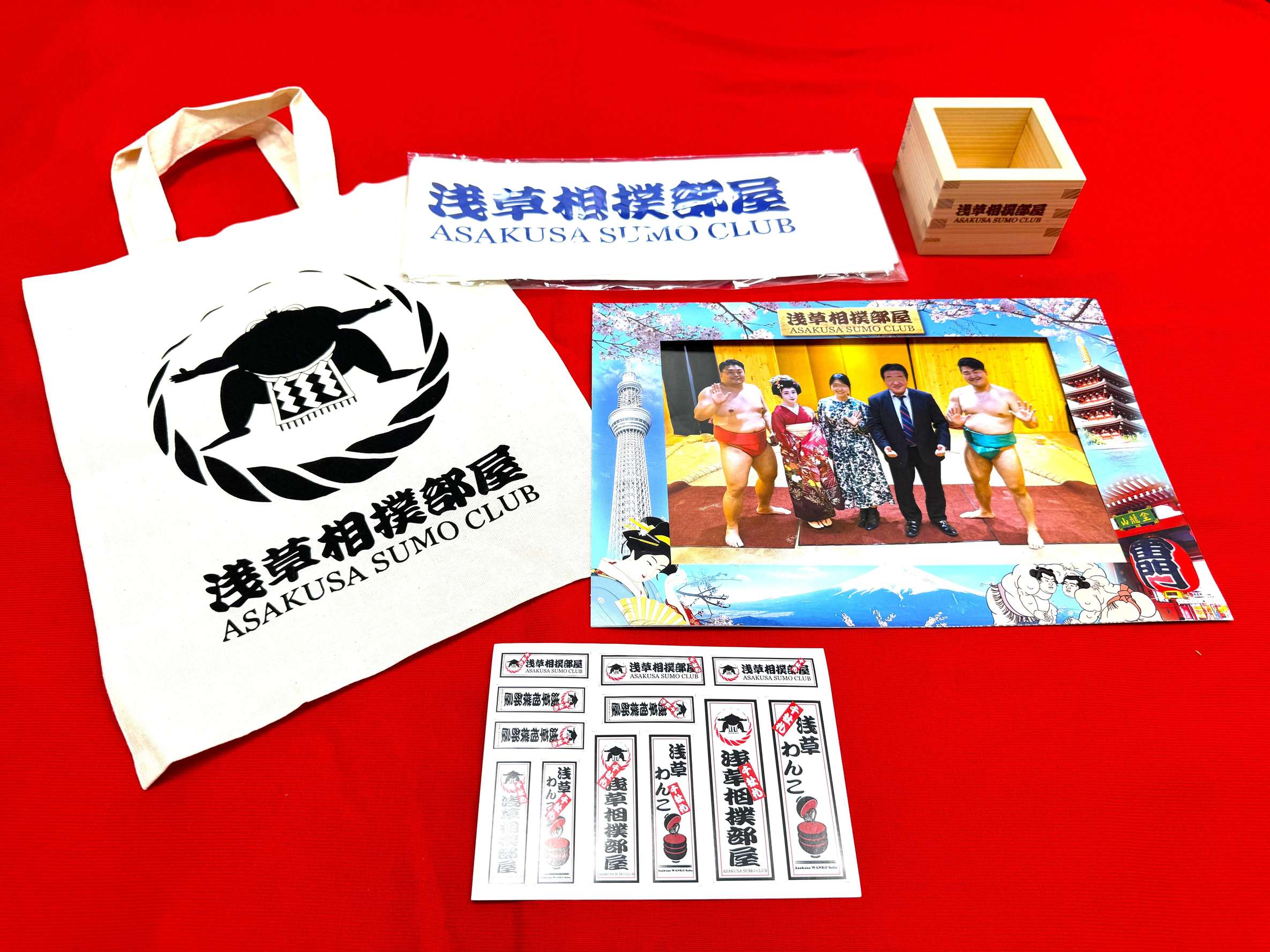
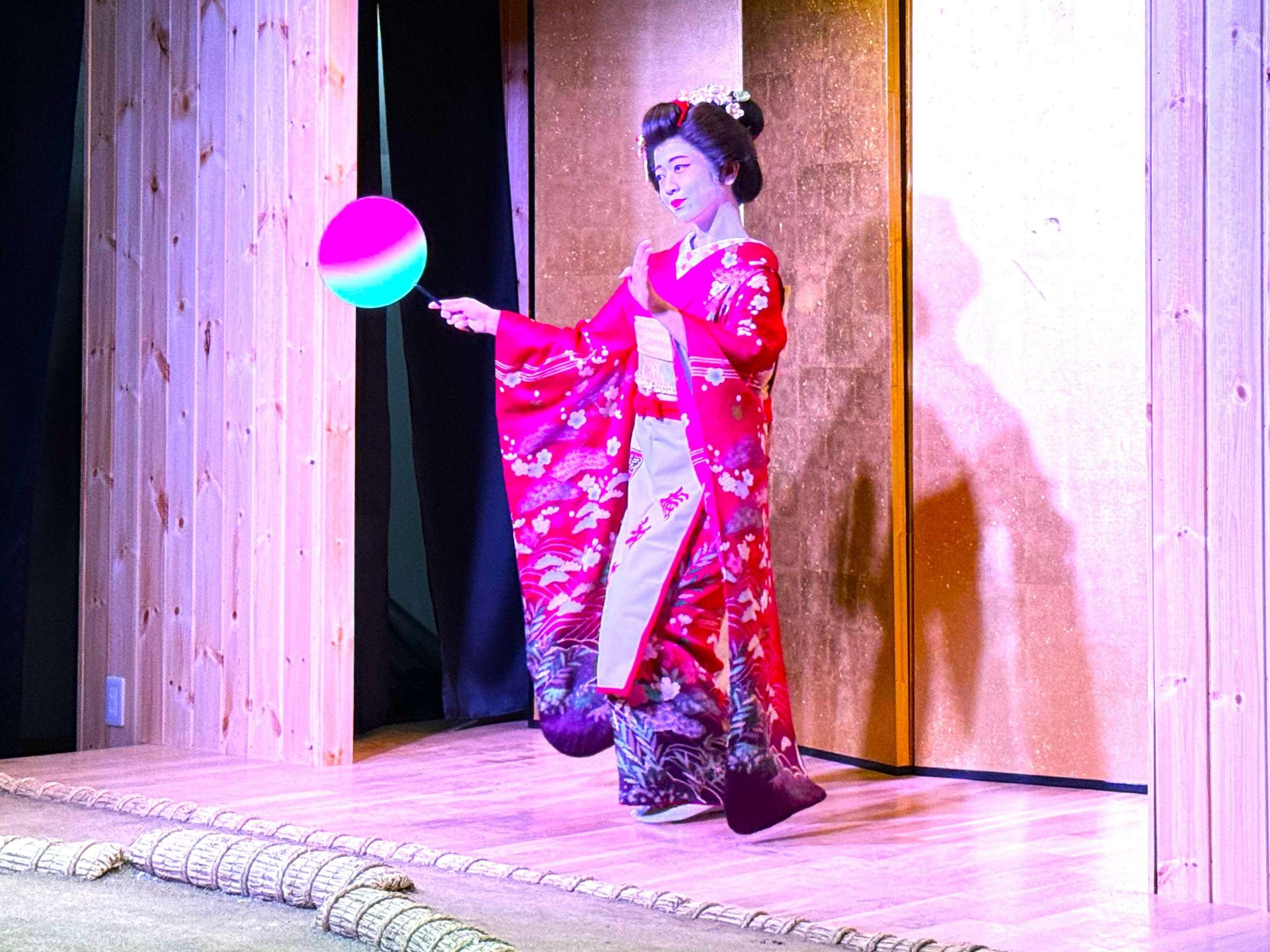
The Tokyo: Sumo Entertainment Show with Chicken Hot Pot & Geisha follows this arc exactly, with a geisha dance opening the evening before the wrestlers take the ring, unlimited chicken hot pot through the two hours, and a printed souvenir photo to carry out.
For some diners the theater gets in the way of the food. Ryogoku answers that. The district holds Tokyo's densest concentration of chanko restaurants, most founded by retired rikishi cooking their former stables' recipes, and walking its streets you may pass wrestlers in kimonos running errands between practices.
The neighborhood rewards an hour on foot: bronze yokozuna statues with handprint plaques along Kokugikan-dori, the Nomi no Sukune Shrine with its stone monuments listing every grand champion, and small shops selling wrestler-sized apparel and sumo-themed sweets.
The stables themselves stay closed to walk-ins, but you can watch morning training free from the sidewalk through the street window at Arashio stable.
Book ahead if your trip touches a tournament month. In January, May and September the popular chanko spots fill one to three weeks ahead, with tournament evenings and weekends the tightest.
The stables also empty out in March, July and November when the wrestlers travel to the regional tournaments, and everything goes quiet for about a week after each tournament ends.
The Tokyo Sumo Culture Masterclass & Authentic Chanko Nabe Lunch folds this walk and the meal into a relaxed three hours with a local guide. The full district guide at Sumo District in Tokyo takes it from there.
A sumo bar in Tokyo splits into two kinds, and it is worth knowing which one you are walking into.
The first kind wears the sport. Photos, ranking charts, signed handprints and cutouts of famous wrestlers cover the walls at places like Sumo Bar Kei-chan, where you can handle wrestlers' personal effects, try on a yukata, and practice your stance at the original ring starting lines preserved on the floor.
The menu is izakaya standard: draft beer, highballs, sake, shochu, fried chicken, edamame, pickles, plus wrestlers' miso, a garlic miso blend eaten with cucumber that few visitors have tasted elsewhere.
The second kind is run by the sport. A former wrestler named Tsuruheyama welcomes diners himself at Sumo Chaya Terao in Ryogoku.
Sumo Bar Kai-chan is operated by retired wrestler Kuniaki Nishino, who will sometimes pull out the sumo card game he invented and play it with guests. At Ulaan Baatar, retired pro Hakuba Takeshi sits and shares stories over dinner.
Either version costs a fraction of a dinner show and takes no performance to enjoy. Go for a drink and a snack before or after a show, or make the wrestler-run ones the destination on their own.
Dinner in Ryogoku puts more within reach than the restaurant door. The Kokugikan arena sits about two minutes from the station's west exit, and the Sumo Museum on its ground floor is free and small enough for a half hour.
Next to the station, the Edo Noren complex holds a full-scale replica dohyo you can stand beside, and five or six minutes south the Ekoin Temple marks where public tournament sumo began in the Edo period, its Chikara-zuka memorial stone standing on the old ground.
If the dinner only sharpened the appetite, Tokyo keeps sumo going all year. Morning training runs on most days, and at Arashio stable you can watch it free from the street window between 7:30 am and 9 am, no reservation.
February brings one-off retirement ceremonies and charity exhibitions at the Kokugikan, where you can watch active wrestlers and a topknot being ceremonially cut.
And if both tournaments and shows are sold out on your dates, professional wrestling at Korakuen Hall and other Tokyo venues runs a full calendar that scratches a similar itch, loudly and late into the evening.
A sumo restaurant Tokyo evening is one of the best nights you can build in this city, provided you book the version that matches your appetite. Want the food above all: Ryogoku, booked weeks ahead in tournament months.
Want food and wrestling together: a two-hour dinner show with unlimited hot pot, requested diets two days out and a good seat held for the lottery.
The Ryogoku quarter holds the Kokugikan, stable streets, hot pot restaurants and yokozuna statues, all in a short walk.
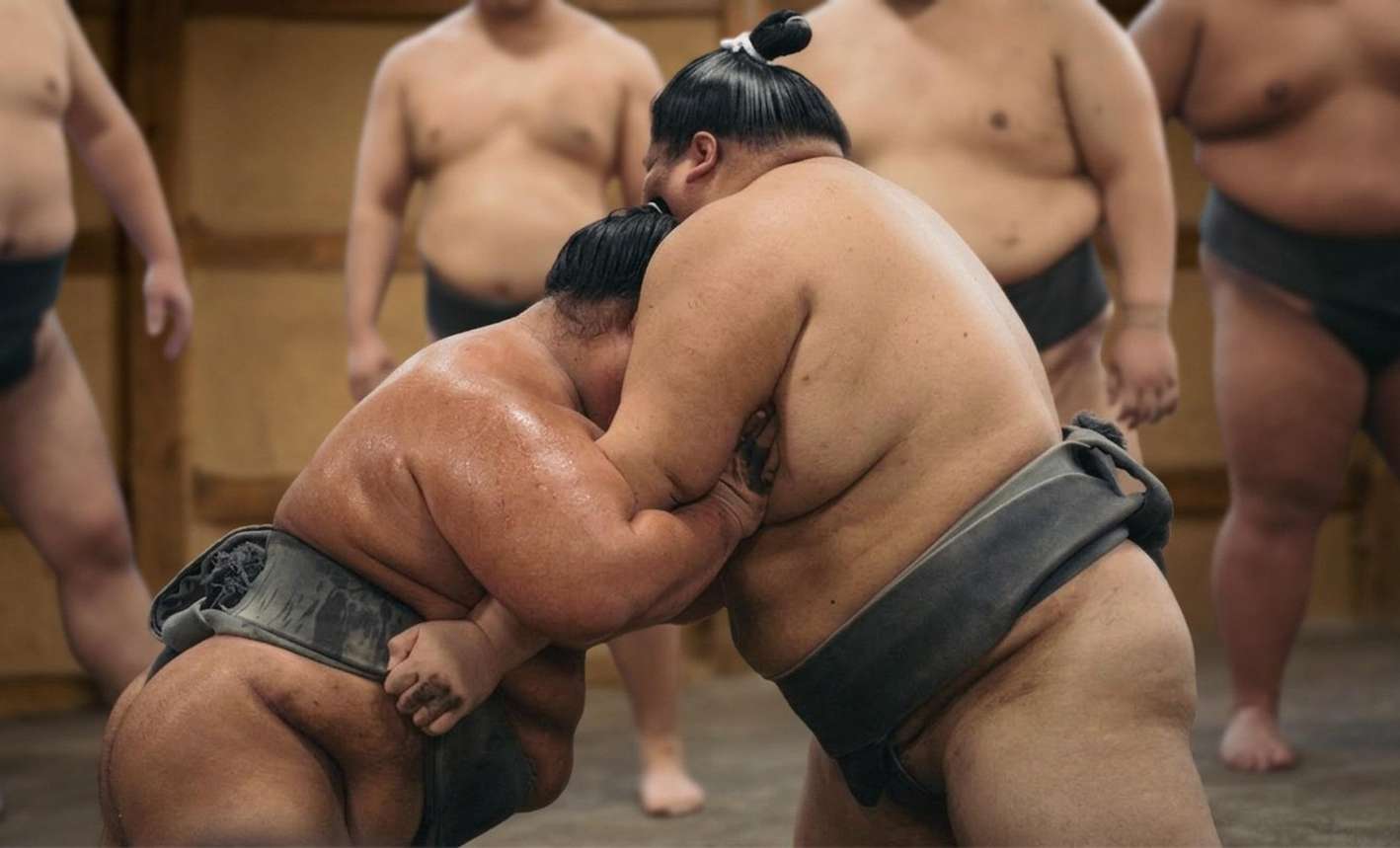
If sumo could happen in Osaka or Fukuoka too, this page sorts out which city and season fit your trip.
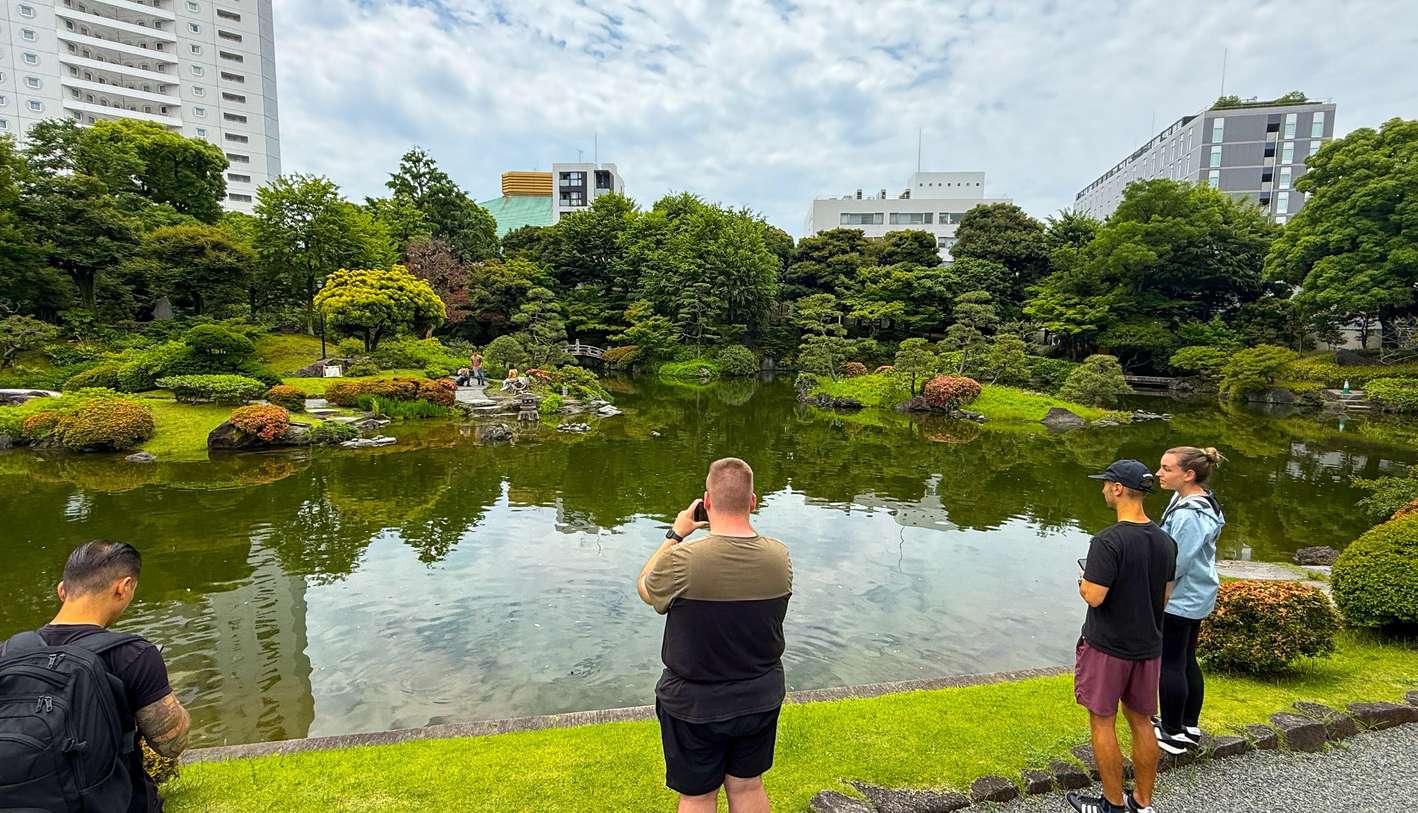
Swap comedy bouts for the real thing: how to sit quietly in a stable and watch wrestlers train at dawn.
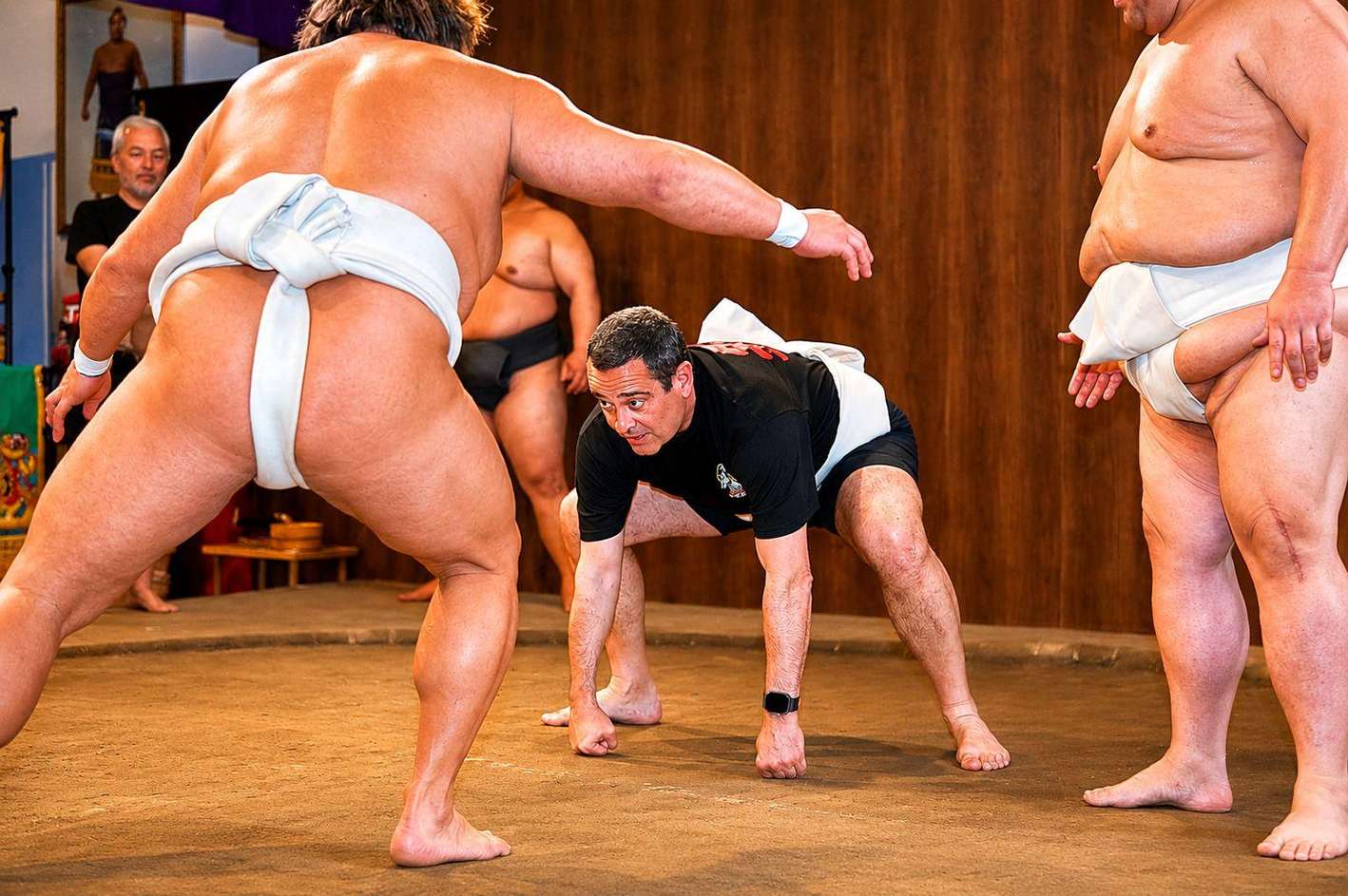
Rather eat chanko than watch? These gym lessons let you learn the stomp and the charge from former wrestlers.
Quick answers on chankonabe, dietary needs, booking, and what the show actually involves, so you can pick your table with confidence.
 Tokyo2026
It is the hot pot sumo wrestlers cook and eat daily in their stables. There is no single recipe. Each stable has its own broth, usually built on dashi or chicken stock with garlic, soy, miso, or salt.
Chicken is the traditional meat because a two-legged bird stands upright in the ring. Many Tokyo restaurants are run by retired wrestlers who cook their old stable's recipe.
The wrestlers are genuine former professionals, and their technique is authentic, but the matches are choreographed exhibition bouts built for entertainment, with comedy mixed in.
You get rule explanations, demonstrations of training moves, and a chance for audience volunteers to spar in the ring. If you want ranked, competitive sumo, an official tournament is the place for it.
Solo travelers book and enjoy these shows regularly. One thing to expect: at some dining shows, single guests share a table with other guests, so you may find yourself seated beside a friendly stranger rather than alone.
Vegetarian and vegan meals are available at several venues when you request them in advance, usually two days ahead. Halal varies: some venues offer dedicated halal meals with notice, others cannot provide one but let you bring your own food.
A few offer pork- and alcohol-free options instead of official certification. Chankonabe broth can contain soy, wheat, fish, or shellfish, so state your allergies when you book.
Most shows invite a few volunteers into the ring, and when many guests apply, participants are picked by lottery. Venues provide the sumo suit, mawashi belt, or padded costume to wear over your clothes.
Treat the challenge as a bonus of the evening. Solo travelers join too, and staff can take photos with your phone for free.
You take your shoes off before stepping onto the clay ring, in bare feet or clean socks you do not mind getting dusty. Loose, gym-style clothing works best since the moves involve crouching and squatting. Venues lend the wrestling gear, though loaner bottoms run adult-sized, so parents should pack well-fitting shorts for younger children.
At interactive tourist shows in Tokyo, women and children are welcomed onto the ring, which differs from professional sumo.
Ring challenges generally require children to be at least five years old with a guardian, and a few family-friendly venues allow children from age four. Traditional stables follow stricter customs, but those rules do not apply at these dining shows.
The shows themselves sell out on peak dates, so reserve your chosen day early. In Ryogoku, popular chankonabe specialty restaurants fill up one to three weeks in advance during tournament months in January, May, and September, with weekend and evening tournament dates needing the most lead time.
Most dining shows include one complimentary drink, often bottled water, with beer, sake, and soft drinks available for purchase. Premium seating tiers can add all-you-can-drink packages, and one Ginza venue pours unlimited Yamazaki whisky at the top tier and runs a sake bar on site.
A traditional Ryogoku chankonabe restaurant serves the authentic food in a quiet setting, with no performance, and the district has Tokyo's densest concentration of them.
A dinner show in Ginza or Shinjuku pairs the meal with live wrestling, English commentary, ring challenges, and photo sessions. If you want atmosphere with your hot pot, choose the show.
Yes, and it is easy: never dip your personal chopsticks into the shared pot. Use the communal ladle or skimmer to move cooked pieces to your own bowl. Hearty items like chicken and meatballs go in first, quicker-cooking greens and mushrooms in later rounds.
For a show, booking in advance is the safe move, and late arrivals risk being turned away without a refund at venues that run a tight schedule. In January, May, and September, when the Grand Sumo tournament comes to Tokyo, Ryogoku's chanko restaurants book up one to three weeks ahead.
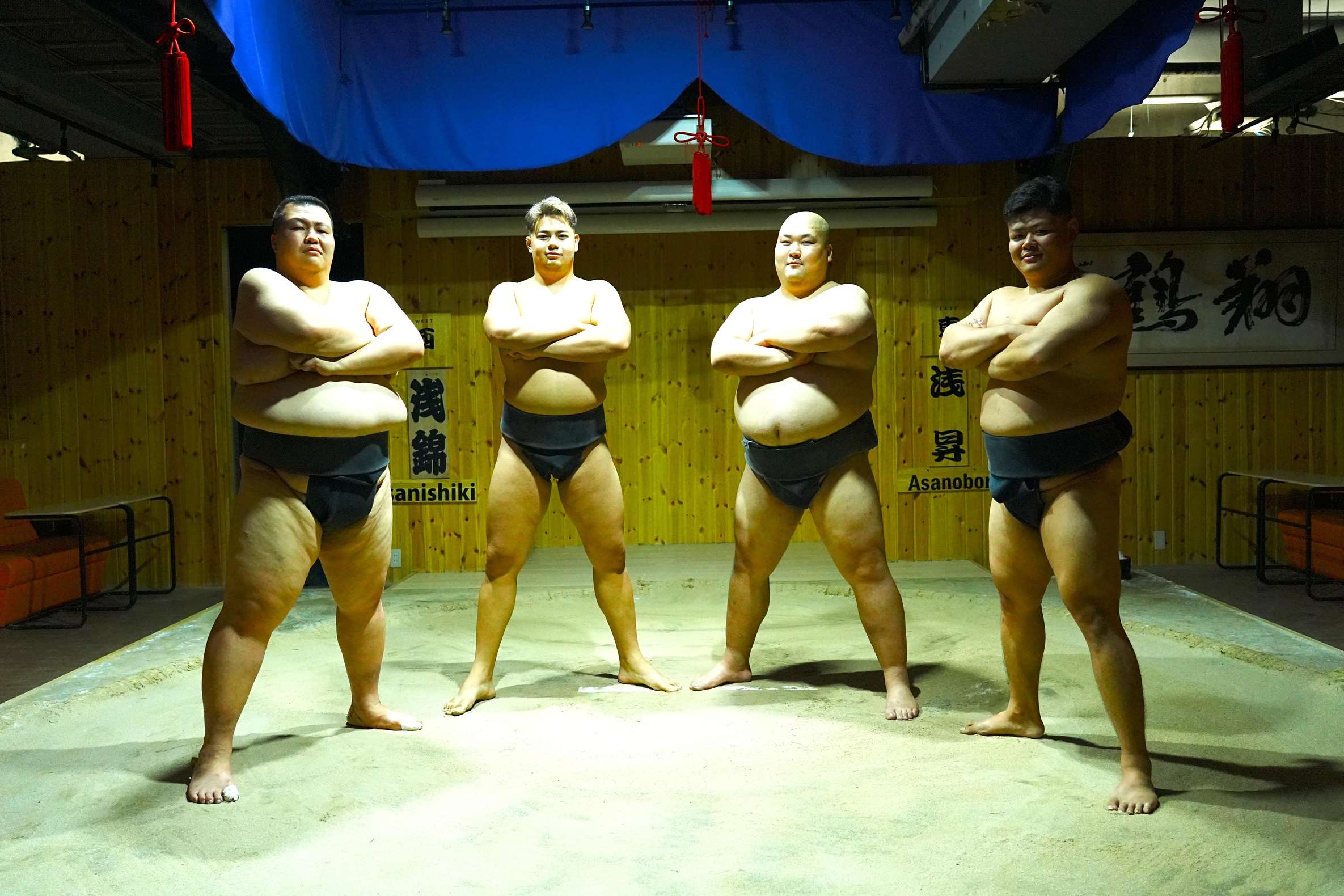
Watch retired wrestlers, a geisha dance, and all-you-can-eat hot pot in Asakusa, with free cancellation up to 24 hours before.